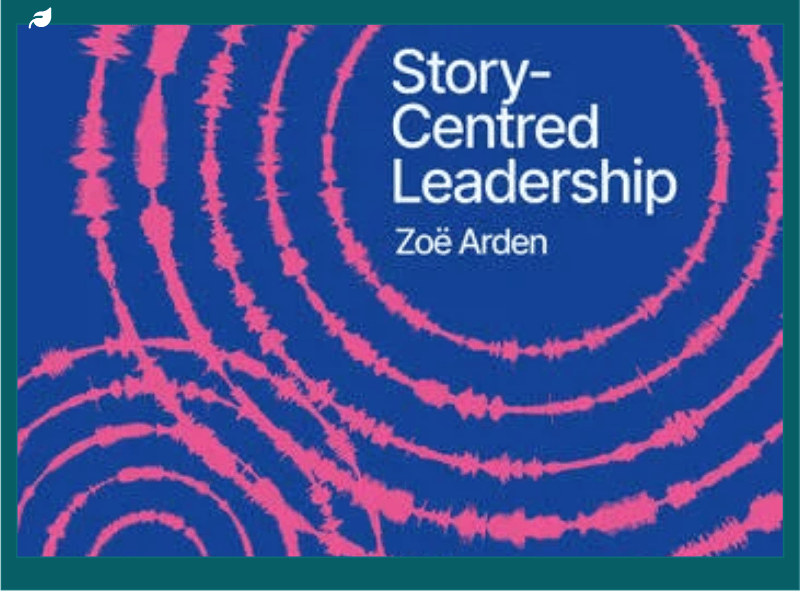
A new book by Zoë Arden argues that storytelling can help leaders navigate division, build trust and support collective action at a time of growing social and environmental strain.
As organisations and communities face rising levels of polarisation, conflict and uncertainty, leaders are under pressure to find new ways to connect with people and guide meaningful action. Story-Centred Leadership: Crafting Cultures of Change, published by Routledge, examines how storytelling can support leadership practice in this context, offering a structured approach grounded in lived experience and research.
The book is written by Zoë Arden, a Fellow at the University of Cambridge Institute for Sustainability Leadership, where she works at the intersection of leadership, communication and purpose. Arden has spent more than two decades advising organisations on narrative, culture and change, and has delivered leadership and storytelling workshops to more than 30,000 leaders worldwide.
Story-Centred Leadership brings together interviews with more than 100 people from different sectors and regions, alongside Arden’s professional experience. The book positions story not as a marketing tool, but as a way of understanding others, building shared meaning and supporting action in complex situations.
Stories As A Tool For Connection
Humans have used stories for thousands of years to pass on knowledge, make sense of uncertainty and strengthen social bonds. Arden argues that this capacity is still relevant, particularly as leaders grapple with global challenges such as climate change, geopolitical tension and social division.
Rather than relying solely on data, targets or directives, the book suggests that leaders who can listen to and share stories are better equipped to understand different perspectives. This approach can help surface values, build empathy and create space for collaboration, especially where trust has been eroded.
The book frames storytelling as a practice that begins with listening. Arden places emphasis on paying attention to the lived experiences of others, particularly those whose voices are often overlooked. By doing so, leaders can gain a clearer picture of the systems they are working within and the people affected by their decisions.
A Five-Stage Model For Story-Centred Leadership
At the core of the book is a five-stage circular model designed to guide leaders through the process of working with story in a practical way. The model reflects the idea that leadership and narrative are not linear, but ongoing and responsive.
The first stage, story listening, focuses on stepping into the experiences of others. This stage centres on curiosity and empathy, encouraging leaders to understand different viewpoints before seeking to influence or act.
Story building follows, where leaders learn how to shape the elements of a clear and relatable narrative. This stage looks at purpose, context and audience, helping leaders clarify what matters and why.
The third stage, story shaping, emphasises practice and reflection. Arden encourages leaders to test their stories with peers, gather feedback and refine their message. This process helps ensure that stories are grounded, relevant and credible.
Story sharing then looks at how narratives move through organisations and communities. The book explores how stories can spread informally, shaping culture, behaviour and shared expectations over time.
The final stage, story living, brings the focus back to the leader. This stage examines how personal behaviour, consistency and integrity reinforce or undermine the stories leaders tell. According to Arden, credibility comes not from polished words, but from alignment between narrative and action.
Grounded In Real-World Experience
Throughout the book, Arden draws on examples from interviews with leaders across business, civil society and public life. These accounts illustrate how storytelling shows up in everyday leadership situations, from navigating organisational change to addressing conflict within teams.
Rather than presenting storytelling as a performance skill, the book treats it as a relational practice. Stories are shown as something people already use, often unconsciously, to interpret events and guide decisions. The task for leaders, Arden suggests, is to become more aware of these narratives and work with them thoughtfully.
The book also reflects Arden’s academic background, linking practical guidance to research on leadership, communication and organisational culture. This grounding aims to make the material accessible without oversimplifying the challenges leaders face.
Relevance For Workplaces And Communities
Story-Centred Leadership is written for a broad audience, including senior leaders, managers, facilitators and those working in community settings. Its focus on culture, agency and connection speaks to organisations seeking to create healthier working environments and stronger relationships with stakeholders.
The book argues that stories can help people see their role within a wider system, supporting a sense of responsibility and possibility. In contexts where people feel overwhelmed or disengaged, shared narratives can help reconnect individual actions to collective outcomes.
Arden positions storytelling as a way to strengthen leadership capacity without relying on authority alone. By paying attention to how meaning is made and shared, leaders can support cultures that are more resilient and responsive to change.
Story-Centred Leadership: Crafting Cultures of Change by Zoë Arden is published by Routledge and is available from 5 December, priced at £29.99.