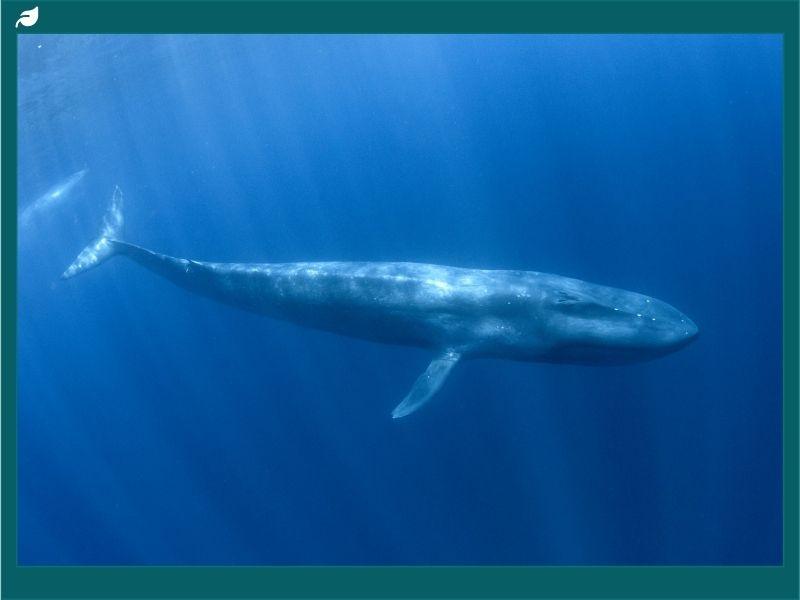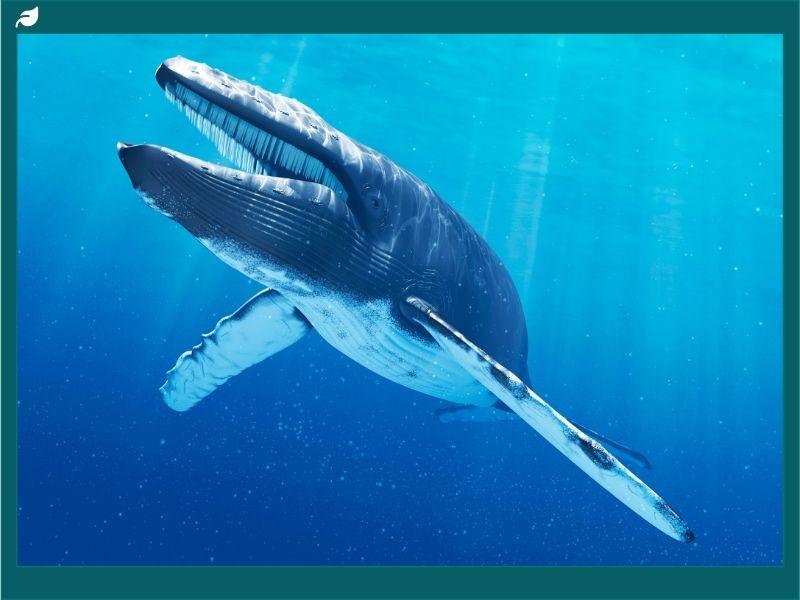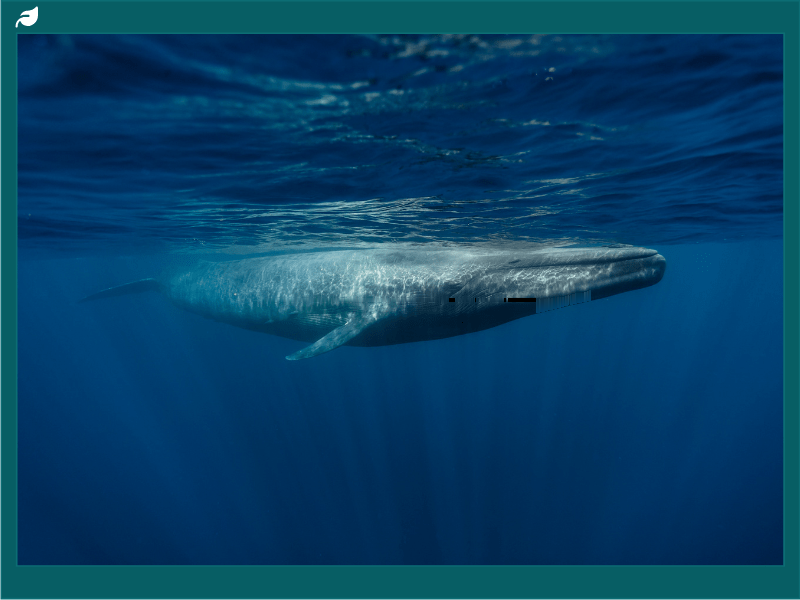
Something is missing from the ocean. Not a species, not a habitat. A sound. The deep, booming songs that blue whales once sent rolling across entire ocean basins are getting quieter, and scientists are genuinely worried about what that silence means. The National Institutes of Health reports that Northeast Pacific blue whale A calls have decreased in frequency at a rate of exactly 0.32 Hz per year over a 13-year period from 2006 to 2019, a measurable and consistent downward trend that underscores how thoroughly the acoustic character of these animals is shifting.
Blue whales are the largest animals on Earth. Their songs travel hundreds of miles through open water, carrying information about mates, food, and the basic business of survival. So when those songs start fading, it is not a minor acoustic curiosity. It is a warning from the largest creatures our planet has ever produced, and we should be listening harder precisely because they are singing less.
The Mysterious Silence of the Blue Whales
Marine biologists have started calling them the “quiet whales,” and the nickname is not a compliment. Researchers tracking blue whale vocalizations across multiple ocean basins have recorded a marked drop in vocal activity, and the trend is consistent enough to have moved from “interesting anomaly” to “active alarm” within the science community. The question is not really whether the silence is happening. It is why, and what it costs these animals to go quiet.
The Role of Whale Songs in Communication
To understand why the silence matters, you need to understand what the songs actually do. Blue whale vocalizations are not background noise or idle chatter. They are low-frequency pulses and moans, some dropping below 20 hertz, that carry functional messages across distances no other communication system in nature can match. A single call can travel hundreds of miles through deep water. The same NIH-published research also found that Northeast Pacific blue whale B calls are decreasing in frequency at a rate of 0.27 Hz per year, a slower rate than previously reported for the second half of the 20th century, suggesting the pace of change in these animals’ acoustic signatures has itself been shifting over time.
That range exists because blue whales need it. The ocean is enormous, individuals are spread thin, and finding a mate or coordinating a feeding run requires covering impossible distances in real time.
Songs anchor the blue whale’s social life. They help males signal fitness to females. They help scattered individuals locate each other near krill swarms. They carry information about migration corridors refined over generations.
Strip that away, and you are not just removing noise. You are dismantling the infrastructure of an entire species’ social behavior.
Recent study findings make the reduction in vocal activity hard to ignore. Whales are singing less frequently, and in some monitored regions, the drop is steep. The ripple effects start immediately. Reduced singing means fewer successful mate-finding encounters, which feeds directly into reproductive rates.
It means individuals struggling to locate feeding groups, which translates into nutritional stress. And nutritional stress in blue whales compounds fast, because these animals need vast quantities of food, primarily krill, just to maintain basic body function. When the songs go quiet, every linked system starts to wobble.
There is also a feedback loop worth naming. Stress suppresses vocalization in many marine mammals. So if whales are singing less because their environment has become more stressful, the silence itself makes their situation worse, compounding the original stressor and deepening the hole they are in.
Implications of Reduced Vocal Activity
The ecological implications of reduced blue whale vocal activity extend well beyond individual animals struggling to find partners. These are keystone creatures. Their health is a proxy for ocean health. When they start behaving abnormally, the ocean is usually already in trouble.
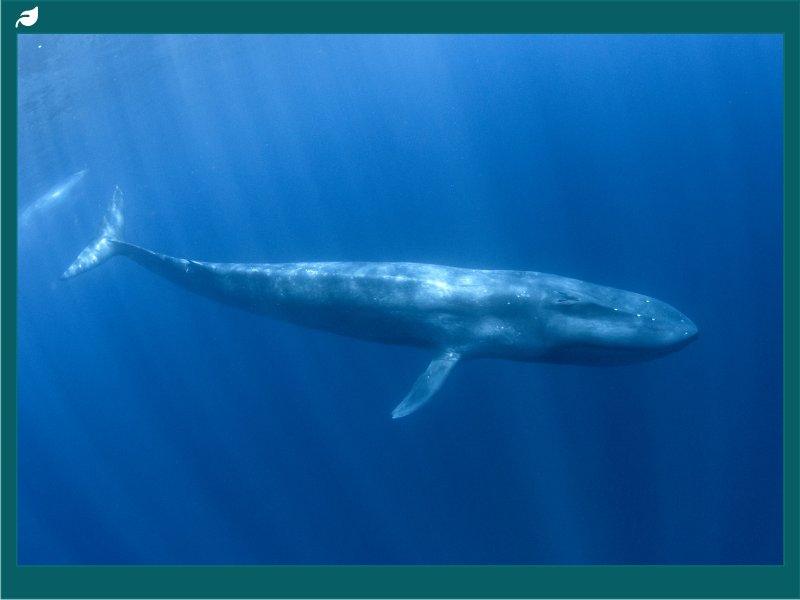
Breeding is the most immediate concern. Blue whale populations are still recovering from commercial whaling, and recovery depends on consistent reproductive success. Songs are central to that process. Without reliable mating calls traveling across open water, pairing becomes a matter of chance rather than design, and blue whales cannot afford that kind of inefficiency given how slowly they reproduce to begin with.
Navigation and foraging take a hit as well. Blue whales use vocalizations to locate dense krill patches, orienting themselves toward food through acoustic feedback across the water column. A whale that sings less, or that has stopped reading the acoustic environment accurately, is a whale that burns more energy searching and finds less food per effort. That energy deficit shows up in body condition, immune function, and reproductive readiness.
The science also points toward ocean noise pollution as a factor distorting or suppressing singing behavior, which means the problem is not purely self-generated. These whales may be going quiet in part because the ocean has become so loud that singing feels futile or dangerous, a behavioral response to an environment that no longer works the way it evolved to.
Potential Causes of Blue Whales’ Silence
The silence is not a single-cause problem. Two broad forces are pushing on blue whales simultaneously: environmental changes driven by climate shifts, and direct pressure from human activity. They interact and amplify each other, which makes the situation more urgent than either force would be alone.
Environmental Changes and Their Impact
Climate change is reshaping the ocean in ways that hit blue whales directly. Sea temperatures are rising, current patterns are shifting, and both of those changes destabilize krill populations at their source. Krill are small crustaceans, roughly the size of a paper clip, but they underpin almost everything a blue whale does. A single adult blue whale can consume around four tons of krill per day during peak feeding.
When krill become scarce or redistribute into areas that whales cannot easily access, the nutritional math stops working.
Warming water affects krill in multiple ways. Their preferred cold, nutrient-rich water shrinks as surface temperatures climb. Ocean acidification, driven by absorbed carbon dioxide, threatens the tiny phytoplankton that krill themselves depend on. Altered currents disrupt the upwelling events that historically concentrated krill into dense, predictable swarms.
Blue whales evolved their migration routes and their songs around the reliable locations of those swarms. When the swarms become unreliable, the whole system loses coherence.
The climate signal runs through all of this. It is not a distant threat for future generations of whales. It is already changing where krill live, how dense those populations are, and how predictably blue whales can find them. Physiological stress from poor nutrition suppresses vocalization and reproductive readiness simultaneously, which means a warming ocean is costing these animals on multiple fronts at once.
The Influence of Human Activities
Beyond climate, human activity layers on a set of pressures that are, in some ways, more immediately solvable even if they have proven stubbornly persistent. Shipping traffic is the loudest problem, almost literally. Commercial shipping routes cross blue whale habitat across every major ocean basin, and the low-frequency noise those vessels generate overlaps almost exactly with the frequency range blue whales use to communicate. The ocean these animals rely on for long-range singing has become, in heavily trafficked corridors, genuinely hard to hear across.
Naval sonar exercises and oil exploration seismic surveys add spikes of intense acoustic disruption on top of the constant shipping noise. Research has connected both to behavioral changes in cetaceans, including sudden course changes, strandings, and, relevant here, suppressed vocalization. A whale that associates singing with disorientation or stress will sing less. That is a learned behavioral shift that does not reverse quickly even when the source of noise is removed.
Overfishing compounds the krill scarcity problem. Industrial-scale krill fisheries operate in some of the same Southern Ocean waters where blue whales feed, pulling from the same concentrated swarms that whales have historically depended on. Increased vessel traffic from all sources raises the risk of direct ship strikes, which remain one of the leading causes of blue whale mortality in several regions.
The data gathered across recent studies draws a consistent picture: human activity and climate pressure are not independent variables. They interact. Shipping routes intensify in regions where warming has already pushed whales into new foraging areas. Krill fisheries operate in the same shrinking cold-water zones where blue whales concentrate as their traditional ranges warm.
The pressures stack.
To put the specific stressors in plain terms, the factors most actively threatening blue whale behavior and habitat include intensified shipping routes lifting background noise across migration corridors, naval sonar interference affecting whale navigation and orientation, oil exploration activity adding episodic but severe acoustic disruption, overfishing reducing krill availability in critical feeding grounds, increased vessel traffic raising direct collision risk, climate-driven feeding ground shifts that force whales into unfamiliar and noisier waters, and ocean acidification undermining the krill populations that anchor the entire food web.
None of these is a marginal issue. Together, they represent a sustained assault on every system a blue whale depends on to function.
Consequences for Marine Ecosystems
Blue whales are not passive residents of the ocean. They are active participants in its chemistry and biology. Their silence is a symptom, but their decline would be a cause of further damage. Understanding what happens downstream when these animals struggle is essential context for why the conservation urgency is real.
Extended Effects on Whales and Their Prey
The hunting connection between blue whales and krill runs in both directions. Whales use their songs as a kind of acoustic sonar, orienting toward the dense krill swarms that make feeding energetically worthwhile. When vocal activity drops, so does the efficiency of that process. Whales that cannot locate krill concentrations accurately end up burning energy in searches that yield less food, which deepens their nutritional deficit, which further suppresses the energy available for singing.
It is a cycle that accelerates deterioration.
Krill populations are not stable independent of what happens to whales, either. Blue whales play a documented role in nutrient cycling. Their feeding dives and surface behavior physically redistribute nutrients through the water column, supporting phytoplankton blooms that feed krill and, in turn, sustain the broader marine food web. Fewer whales feeding efficiently means less of that nutrient cycling, which means less support for the krill that the whales depend on.
The interdependence is tight.
The ripple extends further. Phytoplankton supported by whale-driven nutrient cycling also absorbs carbon dioxide. A less productive ocean surface, caused in part by fewer actively feeding blue whales, is an ocean that absorbs less carbon. The ecological consequences connect back to climate, closing a loop that makes protecting these animals more than a conservation sentiment.