Distinguishing between the jaguar and the leopard is a subject of interest for wildlife researchers and conservation professionals. Both species exhibit notable physical characteristics and share some behavioural traits, yet each occupies distinct ecosystems and demonstrates unique strengths.
Although their marked coats appear similar superficially, detailed examination reveals differences in spot patterns, body structure, and hunting strategies. Comparative analysis of these species enhances understanding of their ecological roles and underscores the significance of biodiversity in maintaining ecosystem stability.
Distinguishing Physical Differences Between Jaguars and Leopards
While both jaguars and leopards are members of the big cat family, they display distinct physical differences that make them unique. Understanding these differences not only aids in identification but also sheds light on how each wild cat has adapted to its environment.
From the body shape of each feline to the intricacies of their coat patterns, we’ll explore how these animals have evolved. The subtle but significant variations in their build and spots provide insights into their behaviours, survival strategies, and evolutionary paths.
| Characteristic | Jaguars | Leopards | Adaptation Purpose |
| Body Size | Larger, stocky build | Sleeker, more slender | Jaguars’ robust build aids in ambushing and overpowering large prey; leopards’ slender frame favors agility and climbing. |
| Head Shape | Broad with a strong jaw | Narrower with less pronounced jaw | A powerful jaw in jaguars assists in delivering a lethal bite; the leopard’s narrow head optimizes it for stealth and speed. |
| Coat Pattern | Large rosettes with central spots | Smaller rosettes without central spots | Coat markings provide camouflage; jaguars blend into dense forests, while leopards adapt to diverse environments. |
| Tail Length | Shorter tail | Longer tail | Aids in balance; the jaguars’ shorter tail suits aquatic environments, whereas leopards’ longer tail aids in arboreal agility. |
The following table delineates the key physical differences between jaguars and leopards and explains how these distinctions influence their ecological roles and survival strategies within their respective habitats.
Body Shape: How to Identify Jaguars and Leopards by Build
Body shape serves as a primary distinguishing feature between jaguars and leopards. Jaguars, native to the Americas, possess a robust, muscular build and a broad head, enabling them to exert significant force.
This stocky physique supports their predatory style, allowing them to subdue large prey with a single bite. Their shorter, sturdy limbs facilitate swimming, which is essential in their frequently flood-prone habitats.
In contrast, leopards, found in Africa and parts of Asia, have an elongated, athletic build. Their lean bodies and long tails enhance climbing ability and balance, supporting their adaptability to varied terrains.
These structural differences reflect evolutionary adaptations to their respective environments. The jaguar’s robust form is suited to aquatic and dense forest habitats, while the leopard’s agile build enables survival in diverse landscapes. Understanding these morphological distinctions provides insight into their ecological niches and survival strategies.
Coat Pattern: Unravelling the Feline Spots
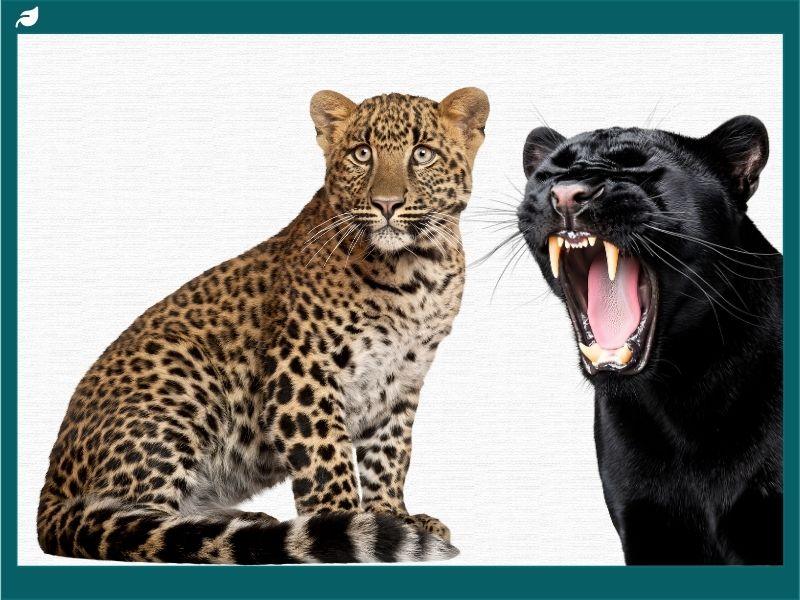
Analysis of jaguar and leopard coat patterns reveals both visual distinctiveness and adaptive significance. Jaguars display dark, bold rosettes with central spots, which facilitate camouflage in the dappled light of forest environments.
This patterning aids in ambush predation and evasion of threats. The arrangement of jaguar rosettes also serves as an individual identifier.
In contrast, leopards possess lighter, open rosettes without central spots, which provide effective camouflage across diverse habitats, including savannas and forests. Both species can exhibit melanism, resulting in black jaguars or black leopards, a genetic variant more common in leopards.
These melanistic individuals retain underlying rosette patterns and benefit from enhanced camouflage in dense forests. Coat pattern adaptations contribute to survival by supporting concealment and thermoregulation. The study of these patterns enhances understanding of evolutionary processes and ecological adaptation in large felids.
Exploring the Natural Habitats
The habitats of leopards and jaguars reflect their distinct ecological adaptations. Leopards occupy a range of environments across Africa and Asia, including savannas and woodlands, while jaguars are primarily found in the dense forests of the Americas.
Examination of their habitats provides insight into species-environment interactions and highlights conservation challenges associated with habitat change and fragmentation.
Where Leopards Roam in the Wild
Leopards demonstrate exceptional adaptability, inhabiting diverse environments across Africa and Asia, including savannas, rainforests, and mountainous regions. Their effective camouflage and versatile predatory strategies enable survival in varied landscapes.
Leopards maintain a broad diet, which supports their presence in multiple ecosystems. Solitary behavior and crepuscular activity reduce conflict with humans and other predators.
Leopards play a critical role in regulating prey populations and maintaining ecosystem health. However, habitat fragmentation and poaching threaten their survival, leading to isolated populations and reduced genetic diversity.
Conservation efforts prioritize the creation of wildlife corridors and the adaptation of land-use practices to mitigate human-wildlife conflict. Understanding leopard habitat use is essential for effective conservation planning.
To better understand the diverse habitats of leopards, consider these key aspects that highlight their ecological significance and survival strategies:
- Leopards adapt to both dense forests and arid deserts adeptly.
- Nocturnal habits minimize encounters with humans and predators.
- Their versatile diet includes over 90 known prey species.
- Camouflage abilities enhance hunting success and safety.
- Leaping ability allows them to drag prey into tree canopy hideouts.
- Solitary behavior reduces competition over limited resources.
- Conservation areas are essential to overcoming habitat fragmentation challenges.
Analysis of these ecological traits underscores the importance of leopards in ecosystem functioning and highlights the necessity of habitat protection.
Understanding Jaguars’ Preferred Environments
Jaguars are distributed throughout the Americas, from Mexico to South America, and are primarily associated with dense rainforests such as the Amazon. Their robust, muscular build is advantageous for swimming and ambush predation in riverine and wetland environments.
Dense vegetation provides both cover and opportunities for stealth-based hunting. Jaguars employ powerful bites to subdue large prey, a technique facilitated by their physical adaptations.
Their darker, denser rosettes enhance camouflage in biodiverse habitats. Jaguars face significant threats from habitat destruction, deforestation, and fragmentation, particularly due to agricultural expansion in the Amazon.
Conservation strategies focus on sustainable land management and the establishment of protected areas. As apex predators, jaguars are integral to maintaining biodiversity and ecological balance, making their conservation essential for ecosystem integrity in the Americas.
Analyzing Predatory Strategies and Strengths
Jaguars and leopards, both members of the Panthera genus, exhibit distinct predatory strategies and physical adaptations suited to their respective environments. Leopards utilize agility and stealth across diverse habitats, while jaguars rely on power and precision in rainforest ecosystems.
Analysis of their hunting strategies reveals mechanisms by which these species maintain ecological balance. This analysis demonstrates the evolutionary adaptations supporting their survival.
Leopard Hunting Techniques and Adaptations
Leopards demonstrate adaptability in hunting techniques, which supports their survival in diverse habitats. Their spotted coat provides effective camouflage, enabling stealthy approaches to prey.
Leopards are opportunistic predators with a broad diet, reflecting flexible hunting strategies. Crepuscular activity reduces encounters with other predators and humans.
Physical adaptations, including a slender body, powerful forelimbs, and retractable claws, facilitate rapid pursuit and efficient prey capture. Leopards frequently store kills in trees to avoid scavengers.
These traits establish leopards as key predators and underscore the importance of habitat protection amid ecological challenges.
Jaguar’s Unique Hunting Power and Behavior
Jaguars are distinguished by exceptional hunting power, relying on strength and specialised behaviour. Their direct approach, characterized by a powerful bite to the skull, is facilitated by a broad head and strong jaw muscles.
This technique enables predation on armored prey and is effective in dense forests and wetlands. Jaguars are solitary hunters, employing stealth and deliberate movement to ambush prey.
Their swimming ability allows them to hunt both terrestrial and aquatic species. These adaptations establish jaguars as dominant predators and highlight the necessity of conservation strategies that protect both the species and their habitats.
Jaguars and leopards are distinguished by unique characteristics. Jaguars dominate the Americas with strength and robust build, while leopards demonstrate adaptability across Africa and Asia.
Recognition of these differences emphasizes the importance of conserving their respective habitats. Both species serve as apex predators and are vital to ecosystem function.