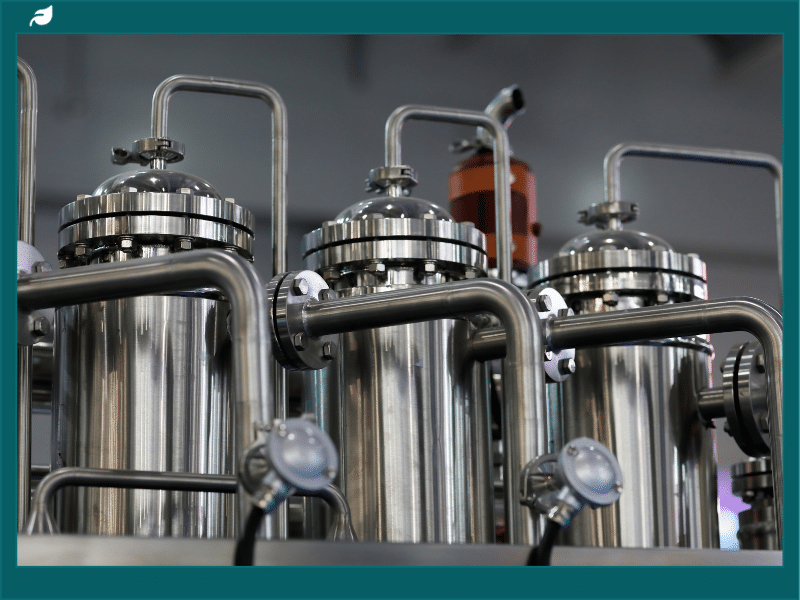
In food manufacturing, sustainability is not only about the materials used to build equipment. It also depends on how much usable product a facility produces from its ingredients—and how much water, energy and cleaning chemistry it consumes along the way. Mixing tanks influence all four outcomes. A well-matched vessel can help prevent rejected batches, support more efficient cleaning and heating, and remain in service for years when maintained appropriately.
The environmental benefits are not automatic. They come from matching the tank, agitator, temperature controls and cleaning arrangements to the process, then measuring results against a baseline. The following practical examples show where manufacturers can make a difference.
1. Preventing Off-Spec Batches Reduces Food Waste
Uneven blending, undissolved ingredients, settled solids and inconsistent temperatures can create batches that require rework or disposal. For sauces, dressings, beverages and dairy formulations, the correct agitator type, speed range and vessel geometry help achieve consistent product distribution without excessive shear or aeration.
Consider a plant producing 1,000-liter batches. If better process control reduces the amount of product rejected or lost from 3% to 1% per batch, that is 20 liters of product retained per batch. Across 200 batches, the illustrative difference is 4,000 liters of product—not counting the upstream water, ingredients, packaging and energy embodied in that product. This is an example calculation, not a measured savings claim.
To establish actual waste reduction, manufacturers can track first-pass yield, rejected batch volume, rework frequency and residual product left in the vessel. Bottom outlet design, drainage and suitable mixing at low fill levels can also affect product recovery.
2. Reducing CIP Water and Chemical Use
Cleaning-in-place (CIP) is essential for many hygienic food processes, but cleaning cycles can consume substantial water, chemicals and heat. Tanks designed with effective spray coverage, drainability and accessible product-contact surfaces may support shorter or more repeatable cleaning cycles when cleaning effectiveness is verified.
Useful conservation measures include conductivity-based rinse endpoints where appropriate, avoiding unnecessary rinse time, recovering suitable final-rinse water for a subsequent pre-rinse, and reusing cleaning solutions within a properly engineered and controlled CIP system. Reuse must be assessed for food safety, soil load, cross-contamination and sanitation requirements; not every rinse stream is suitable for recovery.
For example, reducing fresh-water consumption from 500 to 400 liters per cleaning cycle saves 100 liters, or 20%, per cycle. At 250 cycles annually, the illustrative saving is 25,000 liters of fresh water. Actual savings require measurement and must never come at the expense of validated cleaning performance.
Chemical consumption should be evaluated separately by tracking solution concentration, dosing, disposal volume and recovery practices. Better cleaning control can reduce unnecessary chemical discharge, but it does not justify lowering the required cleaning concentration or contact time.
3. Cutting Heating and Cooling Demand
Many food products are mixed while being heated, cooled or held at a controlled temperature. Jacketed stainless steel vessels can transfer thermal energy through the tank wall. Insulation, appropriate batch sizing, agitation and temperature control can reduce avoidable heat losses and excessive processing time.
As a simple illustration, if a process uses 100 kWh of heating energy per batch and insulation or operating improvements lower that measured requirement to 90 kWh, the saving is 10 kWh per batch, or 10%. At 200 batches, that is 2,000 kWh annually. The calculation is illustrative; it is not a universal performance claim for jacketed tanks.
Where technically and economically appropriate, facilities can also evaluate heat recovery from hot product or cleaning streams to preheat incoming water. Heat-exchanger design, temperature approach, hygienic separation and process scheduling determine whether recovery is feasible. Energy meters and batch-level consumption records provide a more reliable basis for claims than equipment features alone.
4. Supporting Material Circularity and Longer Equipment Life
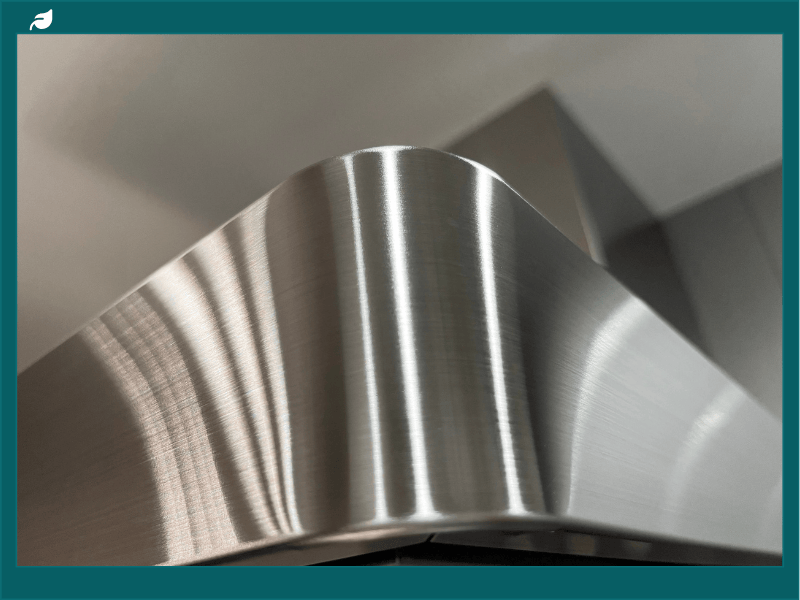
Stainless steel is durable, corrosion-resistant when correctly specified, and recyclable at end of life. Both 304 and 316L grades are used in food-processing equipment; the choice depends on product chemistry, chloride exposure, cleaning agents and operating conditions. Choosing the correct grade can help avoid premature corrosion, repair and replacement.
Stainless steel production commonly uses recycled scrap, and end-of-life stainless steel can be recovered and recycled. However, recycled content varies by producer and product, and recyclability does not mean a tank has zero environmental footprint. Manufacturers seeking quantified claims should request material-specific recycled-content information or environmental product declarations from suppliers.
Maintenance also matters. Appropriate cleaning chemistry, inspection of welds and seals, and timely repair help keep vessels fit for service. A longer usable life can spread the environmental burden of fabrication over more production years, while the final outcome depends on actual service life and end-of-life recovery.
5. Designing a Tank Around Resource Efficiency
Sustainability-oriented tank selection starts with measurable process requirements rather than a generic “green” specification. Manufacturers should assess:
- Product recovery: expected residual volume, outlet design and drainability.
- Mixing performance: viscosity, solids, impeller type, shear sensitivity and operating fill range.
- Water and chemical use: CIP spray coverage, cleaning verification, rinse endpoints and feasible recovery.
- Thermal performance: jacket sizing, insulation, batch temperature profiles and heat-recovery opportunities.
- Material longevity: compatible stainless steel grade, finish, weld quality, maintainability and supplier documentation.
When evaluating stainless steel mixing tanks, food manufacturers should compare lifecycle resource use and product yield alongside purchase cost and nominal tank capacity.
Measuring the Environmental Impact
Before and after equipment upgrades, record a consistent set of indicators: liters of rejected product per batch, fresh-water liters per CIP cycle, cleaning chemical consumption per cycle, kWh per batch, and maintenance or replacement history. Normalize results for batch size, product mix and sanitation requirements. This makes sustainability improvements auditable rather than anecdotal.
Conclusion
Stainless steel mixing tanks can contribute to more sustainable food manufacturing by helping plants retain more usable product, manage cleaning resources, limit avoidable thermal losses and keep equipment in productive service. The strongest results come from fit-for-purpose engineering, verified sanitation practices and transparent measurement—not from assuming that stainless steel or automation alone guarantees savings.
Frequently Asked Questions
Can better mixing really reduce food waste?
It can reduce waste associated with uneven mixing and off-spec batches when the agitator and vessel are correctly selected. Plants should verify improvements through first-pass yield and rejected-product data.
Can CIP rinse water be reused?
Sometimes. Suitable final-rinse water may be recovered for a later pre-rinse in a properly designed system, subject to contamination controls and the facility’s sanitation requirements.
Are stainless steel tanks environmentally sustainable?
They can support long service life and end-of-life recycling, but total impact depends on material sourcing, manufacturing, use-phase energy and water, maintenance and recovery.
How should energy savings be verified?
Measure energy consumption per comparable batch before and after a change, controlling for batch size, product temperature, process duration and production conditions.
Editorial note: Numerical examples in this article are illustrative calculations, not facility case studies or guaranteed equipment performance. Any published industry-specific statistics should be independently sourced and verified.