The pygmy chimpanzee, more commonly known as the bonobo, is an intriguing primate species renowned for its peaceful social structures and endangered status. Native to the dense rainforests of the Democratic Republic of Congo, bonobos share 98.7% of their DNA with humans, making them one of our closest relatives. Yet, despite their significance, their population faces critical challenges from habitat destruction, poaching, and the bushmeat trade. Understanding these gentle primates is essential for their conservation, as they offer extraordinary insights into human evolution, social behaviors, and the urgent need for ecological preservation.
Overview of the Pygmy Chimpanzees
The pygmy chimpanzee, stands out among great apes due to its distinctive traits and behaviors. Known scientifically as Pan paniscus, these apes are noted for their intelligence, complex social structures, and remarkable empathy. While often overshadowed by their primate cousins, the chimps, bonobo apes share a considerable amount of genetic makeup with humans. The Congo Basin, particularly the Salonga National Park, provides a unique habitat for these fascinating creatures. Yet, their existence in these dense forests remains precarious, highlighting the urgent need for a deeper understanding of their characteristics and habitats.
Physical Characteristics and Behavior
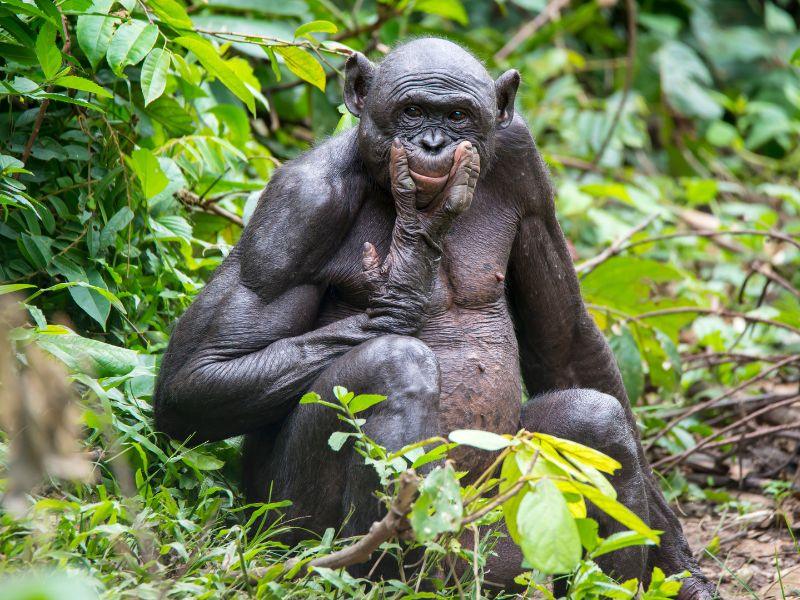
The pygmy chimpanzee, more commonly recognized as the bonobo, exhibits distinct physical features that set it apart from its relatives within the great apes family. Despite their smaller stature compared to common chimpanzees, bonobos possess a slender build, with an average height of about 3 feet when standing upright and weighing between 60 to 85 pounds. Their facial expressions are particularly notable due to their dark, expressive eyes and charming lips, which are often curled into a characteristic smile. Unlike most great apes, bonobos possess longer, hairier heads with a noticeable absence of brow ridges, lending them a more delicate appearance.
Behaviorally, the pygmy chimpanzee is famed for its peaceful disposition, contrasting starkly with the more aggressive nature typically associated with other chimpanzee species. Socially, bonobos engage in extensive physical grooming, a behavior that fosters strong bonds within their community. This commitment to maintaining harmonious relationships extends into their complex social systems, which are matriarchal in nature. Female bonobos often hold dominant roles, leading groups that can range from a few individuals to large bands wandering the bonobo habitat of the vast Congo Basin. Beyond social connections, these apes communicate using a sophisticated array of vocalizations, gestures, and facial expressions, showcasing their intelligence in navigating interpersonal interactions.

Habitat and Distribution in the Congo
The bonobo apes inhabit a unique ecological niche within the dense rainforests of the Congo Basin, with their distribution primarily confined to this central African region. Unlike the common chimpanzee, which occupies a broader range across Africa, the pygmy chimpanzee’s habitat is distinctly limited within the boundaries of the Democratic Republic of Congo, specifically in the Salonga National Park. These lush and remote forests provide the bonobos with the necessary resources to thrive, including a rich variety of fruits, leaves, and small animals that compose their diet.
The Congo’s lush environment supports a dynamic ecosystem within which the pygmy chimpanzees coexist with diverse wildlife. Yet, despite the richness of their habitat, bonobos face significant threats from deforestation and encroachment by human activities, reducing their already restricted range. Conservation efforts within this region focus heavily on protecting these critical habitats, recognizing that the balance of the ecosystem is tightly intertwined with the presence of these apes. Effective conservation strategies are vital not only for the survival of the bonobo but for the broader environmental health of the Congo Basin, underscoring their importance in maintaining biodiversity.
The Status of Pygmy Chimpanzees as Endangered Species
The pygmy chimpanzee, commonly known as the bonobo, is classified as an endangered species, residing primarily within the Congo’s lush forests. Habitat loss due to human activities like deforestation and agriculture is a prominent factor leading to their endangered status. Moreover, the geographical limitations of their habitat in Africa further stress their population. Recognizing these threats, conservation efforts have intensified, focusing on sustainable and protective measures. Entities such as the WWF are actively involved in preserving these creatures. Understanding the pending threats they face and the initiatives underway is crucial for their continued survival and biodiversity preservation.

Causes Leading to Their Endangered Status
The endangered status of pygmy chimpanzees, or bonobos, is intricately connected to the pressures exerted by habitat loss and human encroachment. The Congo Basin, where they primarily reside, is undergoing rapid deforestation as land is cleared for agriculture and logging. This deforestation disrupts their natural environment and severely limits the available resources these intelligent apes rely on for survival. As their habitat is further fragmented, the pygmy chimpanzees find themselves restricted to increasingly isolated patches of forest, impacting their ability to find food and maintain social structures.
The need for land in Africa for agricultural expansion exacerbates the pressure on these fragile ecosystems. With the human population growing, the demand for farmland swallows more of the bonobo’s habitat. Additionally, the illegal wildlife trade—though less commonly impacting bonobos directly compared to other species—poses a significant threat. This trade often targets primates in general, making bonobos vulnerable as collateral victims due to the difficulties in distinguishing them from more heavily traded relatives.
Political instability in regions such as the Democratic Republic of Congo adds another layer of complexity to conservation efforts. It restricts the ability of organizations to conduct necessary research and implement protective measures, leaving the pygmy chimpanzee more vulnerable. This intersection of environmental and human challenges underscores the urgency for tailored conservation strategies that not only aim to protect the habitat but also address broader socio-political issues that contribute to the bonobo’s endangered status.
Conservation Efforts and Protective Measures
Conservation efforts for the endangered pygmy chimpanzees have gained momentum in recent years, driven by the need to address the multifaceted threats they face. Organizations like the WWF have been instrumental in implementing protective measures that focus on habitat preservation and sustainable management practices. One such approach involves the establishment of protected areas like the Salonga National Park, which provides a secure habitat for bonobos against the backdrop of rampant deforestation and human encroachment.
Besides creating protected environments, there’s a concerted effort to engage local communities in conservation initiatives. By integrating the needs of the local populace with conservation goals, these efforts aim to reduce the incidence of habitat loss. Education programs and sustainable agriculture practices are promoted, reducing the need for further land clearance. These initiatives not only help in safeguarding the remaining habitats but also foster a sense of ownership and stewardship among local communities, ensuring long-term commitment to conservation.
Research is another cornerstone of conservation efforts, as understanding the social structures, behaviors, and ecological needs of the pygmy chimpanzees is vital for their protection. Partnerships with universities and research institutions facilitate studies that inform conservation strategies. Additionally, international collaboration ensures that there are cohesive strategies across borders, as conservation isn’t confined to one nation. Such multilayered efforts are crucial in providing a robust framework to safeguard these endangered species, securing their future in the face of growing environmental challenges and helping maintain the critical biodiversity of the Congo Basin.
The Importance of Protecting Endangered Species
Protecting endangered species like the pygmy chimpanzee is crucial for maintaining the balance of ecosystems and preserving biodiversity. These animals, particularly the great apes found in Africa, play a vital role in their habitats, often acting as indicators of a healthy ecosystem. The fragility of these species underscores the interconnectedness of life on Earth and highlights how human activities can have far-reaching consequences for wildlife. The loss of such species can lead to the disruption of ecosystems, impacting not only other animals but human communities as well. Thus, their protection ensures the continued health and resilience of our planet’s biodiversity.
The Role of Biodiversity in Ecosystems
Biodiversity is the cornerstone of healthy ecosystems, supporting processes that sustain life on Earth. The incredible variety of species, from microorganisms to the magnificent great apes, contributes to essential ecological functions such as nutrient cycling, water filtration, and carbon storage. Within this diversity, species like chimpanzees serve as ecosystem engineers, dispersing seeds that contribute to forest regeneration and providing balance within predator-prey dynamics. This intricate web of life enhances ecosystem resilience, allowing it to withstand and recover from disturbances, such as natural disasters and human-induced changes.
In regions like the Congo Basin, where pygmy chimpanzees, also known as bonobos, reside, biodiversity plays an even more critical role. These forests, rich in species diversity, are among the most productive ecosystems on the planet, storing vast amounts of carbon that help mitigate climate change. The loss of even a single species can alter these complex systems, leading to a cascade of detrimental effects. For example, the decline of chimpanzees in these African forests could hamper seed dispersal processes, ultimately affecting forest structure and composition.
Beyond ecological benefits, biodiversity nourishes human life by providing food, medicine, and raw materials essential for various industries. Indigenous communities often depend on this biodiversity for their livelihoods, cultural practices, and spiritual well-being. Thus, protecting species isn’t merely an environmental issue; it’s an economic and social imperative as well. Ensuring the survival of endangered species like chimpanzees enriches our natural heritage and provides insight into genetic adaptability, offering opportunities for scientific discoveries that can benefit humanity. Consequently, conserving biodiversity ensures the stability and sustainability of ecosystems upon which all life depends, underscoring the need for coordinated global efforts in wildlife conservation.