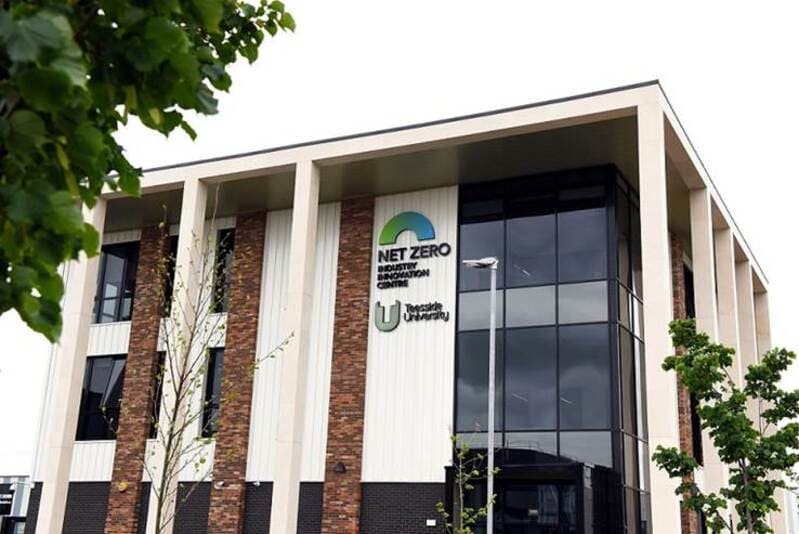
SigmaRoc’s GreenCem unit, focused on ultra low carbon concrete, has entered a pivotal partnership with Teesside University’s Net Zero Industry Innovation Centre (NZIIC), led by materials scientist Professor David Hughes. The collaboration, announced this month, marks a significant step in aligning academic expertise with industrial innovation in the UK construction sector.
“This partnership represents a major step change in our innovation capability,” said Michael Roddy, Managing Director UK & Ireland at SigmaRoc.
The collaboration aims to embed academic excellence directly into GreenCem’s research, development, and commercialisation processes, enhancing the company’s capacity to deliver scalable, low-carbon construction solutions. It comes at a time when the UK’s construction industry is under increasing pressure to meet legally binding emissions targets, including a cut of over 80% in national greenhouse gas emissions by 2035.
A Strategic Move Towards Industrial Decarbonisation
GreenCem’s alliance with Teesside University’s NZIIC will focus on a comprehensive technical review of GreenCem’s low-carbon research and development pipeline. It also includes assessing future product opportunities and exploring broader innovations in decarbonisation and industrial digital systems.
“We’re entering a new era for GreenCem,” said Roddy. “With Professor Hughes and the Net Zero Team now fully aligned with our ambitions, we are substantially expanding both our technical depth and execution capacity.”
Professor Hughes, Associate Dean for Research & Innovation at Teesside University, described GreenCem as “positioning itself at the forefront of sustainable construction, bringing proven technologies and expert partnerships together to deliver the next generation of low-carbon materials.”Teesside University
Industry Context: Low-Carbon Concrete’s Role in Net Zero Targets
Concrete production is one of the most carbon-intensive processes globally, contributing to around 8% of global CO2 emissions according to the Global Cement and Concrete Association. Reducing this footprint has become a priority for both public and private sector stakeholders aiming to meet international climate commitments.
GreenCem’s focus on ultra low carbon concrete is aligned with broader efforts within the cement and construction ecosystem to substitute high-carbon materials with alternatives like geopolymers and alkali-activated cementitious materials (AACMs). Professor Hughes’ expertise in these technologies underscores the significance of this new partnership.
The UK government’s legally binding net zero strategy prioritises industrial decarbonisation, with the construction sector identified as a key area for emissions reduction. Collaborations like GreenCem’s with Teesside University reflect a growing trend of integrating academic research directly into commercial innovation pathways.
Integrating Academic Research with Industry Scale
The collaboration will see NZIIC deploy a specialist team from its cutting-edge facilities to validate and enhance GreenCem’s existing technology platforms. It also includes close coordination with SigmaRoc’s Ventures team, which invests in emerging technologies across the cement and construction ecosystem.
“We are bringing together innovation, research, and scale to deliver truly sustainable solutions to industry,” said Professor Hughes.
This initiative highlights SigmaRoc’s broader strategy of aligning its industrial footprint with sustainability goals. The company’s approach includes investments in circular economy solutions, industrial digitalisation, and technology-neutral low-carbon materials.
Teesside University’s Net Zero Industry Innovation Centre
Launched to support the UK’s decarbonisation agenda, the NZIIC is a flagship centre at Teesside University dedicated to material innovation, circular economy models, and industrial digitalisation. Professor Hughes leads the university’s Net Zero theme, with work spanning AI- and machine-learning-enabled solutions alongside advanced industrial process design.
For GreenCem, the partnership adds depth to its validation and commercialisation of ultra low carbon cement and concrete technologies. The company builds its approach around collaboration with world-class institutions to develop scalable decarbonisation solutions for the construction sector.
The collaboration with NZIIC places SigmaRoc and GreenCem among a select group of industry players actively shaping the future of sustainable building materials. It also reflects a broader shift towards embedding net zero strategies at the heart of commercial operations, beyond compliance into proactive innovation.
As industrial sectors work toward meeting tightening emissions regulations, partnerships like this one signal a growing maturity in the UK’s green industrial ecosystem. By integrating academic leadership with real-world industrial application, GreenCem and Teesside University are positioning themselves as key contributors to the UK’s journey to net zero.