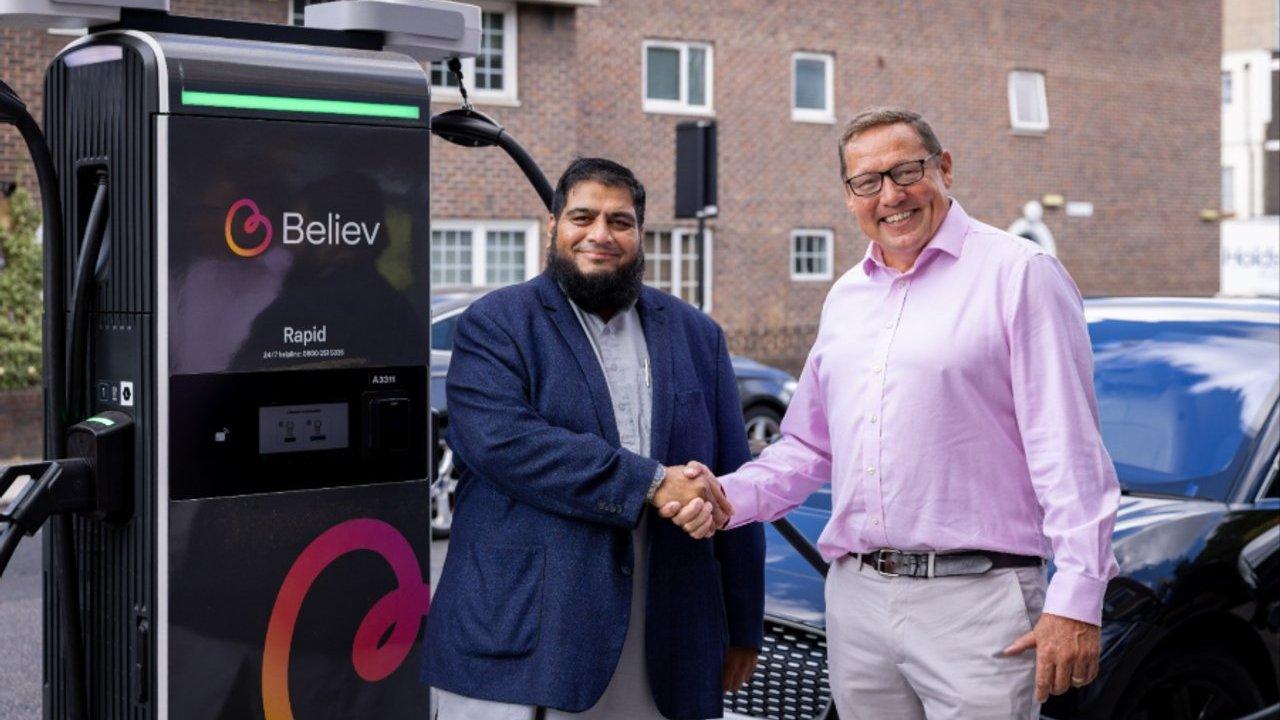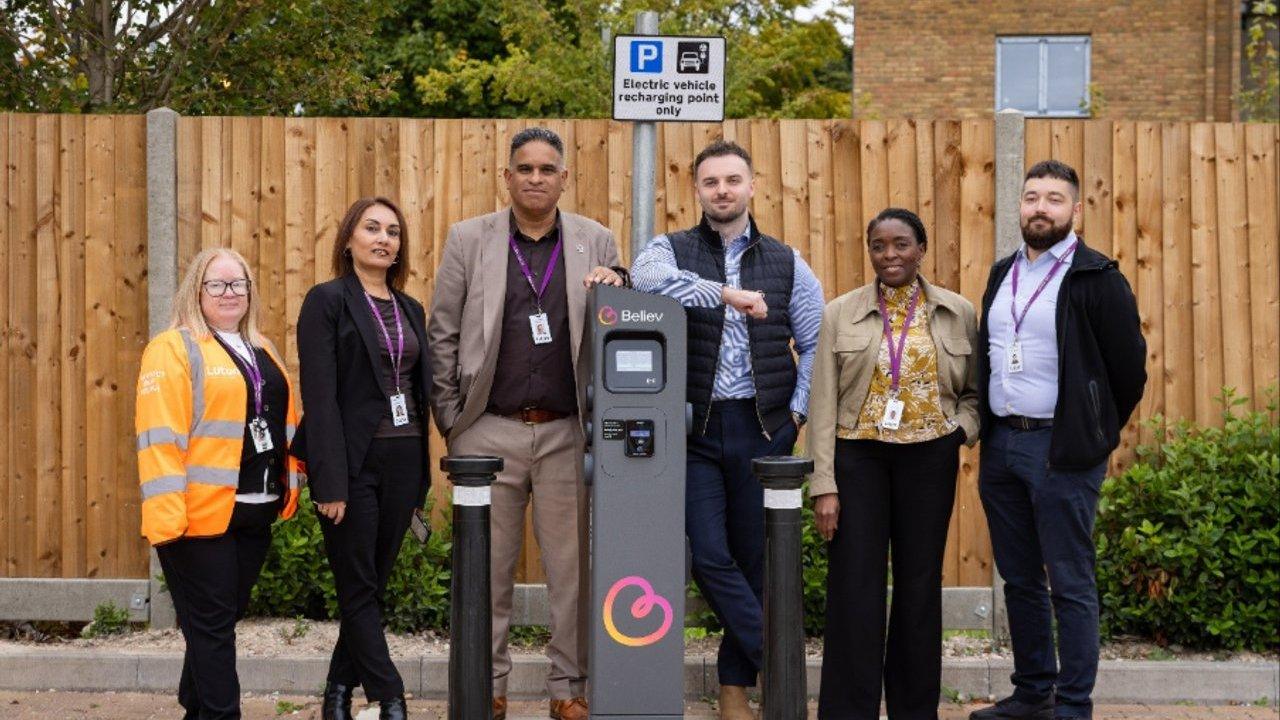
Believ has installed 10 Standard Plus chargers across Luton Council-owned residential car parks, extending a partnership intended to make electric vehicle charging more accessible for residents without private driveways. The new charge points are ready to use and can be expanded as local demand develops. More than a third of Luton residents, 35%, do not have access to off-street parking, making public residential infrastructure an important part of the borough’s electric vehicle transition. Believ is fully funding, planning, installing, operating and maintaining the network.
Charging Where Residents Live
The installation focuses on council-owned residential car parks, bringing charging closer to people who may otherwise face limited options for owning and using an electric vehicle. The approach responds directly to the difference in access between households with private parking and those who rely on shared or on-street spaces.
The 10 new chargers are Standard Plus units, a category previously termed fast charging and recategorised by the Department for Transport. Their installation gives Luton a starting point for a larger residential network, with further deployment available if use increases.
Guy Bartlett, CEO at Believ, said:
“By expanding the network, we’re helping more residents make the switch. It will also help reduce road transport emissions and support cleaner air for all across the community.”
Accessible Infrastructure Design
The chargers are PAS 1899 compliant, following the UK specification that provides guidance for accessible electric vehicle charging infrastructure. This is particularly relevant in shared residential settings, where the physical layout of charging bays affects whether infrastructure can be used by a broad range of residents.
Units will be installed in the carriageway, with hatching at ground level intended to support ease of use. By combining accessible design considerations with a residential location, the project addresses practical barriers that can affect uptake beyond the availability of a charger alone.
The operator will take responsibility for the full delivery cycle, from planning and installation through to operation and ongoing maintenance. That arrangement allows the council to add infrastructure without funding the project directly, while retaining a route to expand provision as demand changes.
Supporting Luton’s Sustainability Plans
The charging programme supports Luton Council’s wider sustainability strategy, which targets net-zero carbon emissions by 2040. Residential charging hubs form one part of that work, alongside plans to transition the council fleet and public transport to electric vehicles.
The strategy also includes an objective for a 100% low-carbon airport fleet by 2030. Expanding local charging provision can help connect these broader transport ambitions with residents’ day-to-day travel choices, especially for council housing tenants who do not have access to private charging at home.
Cllr Adrees Latif, Portfolio Holder for Sustainable Development and Highways at Luton Council, said:
“Access to convenient EV charging is an important part of supporting residents who want to make the switch to an electric vehicle, but who may not have their own driveway or off-street parking.
Cllr Adrees Latif, Portfolio Holder for Sustainable Development and Highways at Luton Council, said:
“These new charge points are the first we have installed specifically to support residents living in council housing, helping to make EV charging more accessible in locations where it is needed.
Cllr Adrees Latif, Portfolio Holder for Sustainable Development and Highways at Luton Council, said:
“This is part of our wider work to improve EV charging provision across Luton and support residents in making more sustainable travel choices. We will continue to look at opportunities to expand the charging network and make it easier for more people to make the transition to electric vehicles.”
A Scalable Local Network
The Luton project illustrates how council and charge point operator partnerships can focus on the residents most likely to be excluded from home charging. Rather than treating driveway access as a requirement for electric vehicle ownership, the network places charging in residential car parks where it can serve households using shared parking facilities.
For Believ, the work continues its role as a charge point operator delivering publicly accessible infrastructure. For Luton Council, the 10 chargers establish its first installations specifically intended to support residents living in council housing. With capacity for expansion, the programme gives the borough a practical foundation for making electric travel more available across its communities.