Sustainable Business Magazine speaks to Darwin Telemaque, Chairman of the Port Management Association of the Caribbean, about how and why the organisation is upending the global maritime industry for the better.

The Port Management Association of the Caribbean (PMAC) provides a collaborative forum and advocates on behalf of its members. It was established in 1998 as a successor to the Port Management Association of the Eastern Caribbean and has become a primary industry body for the region. PMAC’s remit covers all port activities including operations, supply chains, training, and strategy. Most importantly, the Association has become a hub through which ports across the Caribbean have collaborated to become better and stronger..
Darwin Telemaque, Chairman of PMAC, tells Sustainable Business Magazine about PMAC’s raison d’etre and why it plays such an important role for countries throughout the Caribbean:
“PMAC is the only port association in the region born out of the need for smaller ports to have a platform to advocate for their development. Most global port-related activities and equipment cater to large ports, as do many digital solutions. This focus is understandable as large ports can purchase multiple cranes at once which is often unaffordable to smaller ports, so the suppliers focus on the larger ports. In addition, as small, single-port islands we found ourselves with a dearth of management capacity and accordingly PMAC was founded.
The Association has since created a space, supported by governments, that enables regional ports to collaborate, share information, discuss outcomes and difficulties, and be truly open and transparent so that we can effectively serve our individual markets. We have worked hard to cultivate an environment that emphasizes collaboration over competition.
Through sharing ideas and experiences, we identify member ports that have developed better solutions to common challenges, enabling us to implement those improvements collectively. As small ports, we are compelled to work within our means and persevere through challenges, particularly those related to equipment; our equipment is often outdated but we find a way to make it work. In that sense, if a mechanic at one port devises a way to optimise the use of equipment that may be common to multiple ports, we could share that technique throughout the Association.
Currently, we have grown to include 24 regional ports. While not a massive number, our membership continues to increase steadily by one or two ports annually, and we are grateful for every member. We take pride in being an open and collaborative group; everything we learn, we want to share and every achievement we have is an opportunity for collective growth. If a solution works well for one of us, it might very well benefit us all.”
Serving the people
PMAC has a very specific angle on sustainability, one borne out of its circumstance as a grouping of mostly government-owned entities.
“First and foremost, we have established that we’re not competing members. Secondly, we recognized that most of our members are the only port entity providing services to their respective islands, meaning they are monopolies. Accordingly, they are providing services to both citizens and the private sector, meaning their roles have both a commercial and a social component.
With that in mind, it is understood that we have to structure our ports so that they are not driven exclusively by commercial but also by social interests. We are primarily here to serve our people and social sustainability should also be at the core of what we do.
While we aspire to be compliant with International Maritime Organization (IMO) regulations, GHD strategies or Carbon Intensity Indicators (CIIs), we agree that the delivery of services to our citizens who are the primary owners of the ports is the most critical sustainability factor that we want to maintain.”
The reason for such commitment to social sustainability is clear: most islands in the Caribbean are connected only by shipping.
“The transport modality we have is singularly maritime by nature.” explains Mr. Telemaque. “Ports are therefore the most critical assets we have on our islands. We are not connected by road or rail, and the cost of air transportation is high. At the same time, we don’t produce very much so our core supplies – food, clothing, shelter – flow through our ports.
Getting the right corporate governance structure and operational focus in place is therefore important. We then create a workforce that understands the mission of delivering services for the people. That is the driving force of PMAC. We build sustainability around the capacity to maintain a good quality of life by delivering efficient, cost-effective port services to the private sector and our people.”
One size doesn’t fit all
One of the biggest demands that PMAC and the Caribbean maritime industry faces is the CII. This metric was developed by the IMO and measures the fuel efficiency of a ship through its carbon emissions. However, a quirk of its design has presented nations throughout the Caribbean with challenges.
“We live in a region where short sea shipping is the only mode of service.” Mr. Telemaque states. “It just so happens that when the matrix of the CII is evaluated, short sea shipping becomes the most significant contributor to the index due to the number of stops a ship makes. According to the CII, a ship can sail from Hong Kong to California and get an A rating because it only makes one stop. Yet if a ship sails for Antigua to Dominique, stopping at St Kitts and Nevis, which is less than 200 miles in total, it receives a D rating because there are three stops.
That’s not the only issue though. As I’ve said previously, most of our islands have a single port, with outdated equipment having been constructed predominantly in the 1960s by the British and Canadian governments for handling breakbulk pallets and boxes, not containers. In addition, being popular tourist destinations there might be a cruise liner docked for a whole day which already poses berth capacity and operational challenges. Accordingly, ports require cargo ships to stay at anchorage for too long and when the cargo ship eventually docks, the equipment isn’t optimal which slows down the unloading process. In some cases, it can take up to 20 hours to unload a single vessel.
When regulatory agencies are punitive to that ship because it steamed for that long, there needs to be a conversation. The delays aren’t the ships’ fault but the repercussions can discourage them for returning to our ports.”
This is one of the biggest issues facing PMAC right now. The Association therefore aims to make the Caribbean port industry’s voice loud enough that global authorities can’t ignore it, and in so doing achieve results that benefit the region and its citizens. Mr. Telemaque is advocating a solution to the IMO.
“We can’t move the islands any closer and can’t connect them with bridges, so I’m suggesting that short sea shipping should be exempt from the CII, given its unique operational challenges and constraints. Alternatively, in environments where short sea shipping is necessary, we should end the calculations for emissions from a ship at the port’s pilot station, so that it eliminates the time at anchorage which may be related to the port, or the time at port, which varies based on port equipment and the quality and efficiency of the port itself.”
There are real human consequences to the model as it stands. “We cannot have a global system that is meant to save the planet while hurting our people in the process. That is not a good strategy. PMAC is taking this fight to the IMO on behalf of all our ports. It’s not a very popular action to take, but I strongly believe that we shouldn’t ignore the good for the perfect.”
27th Annual General Meeting
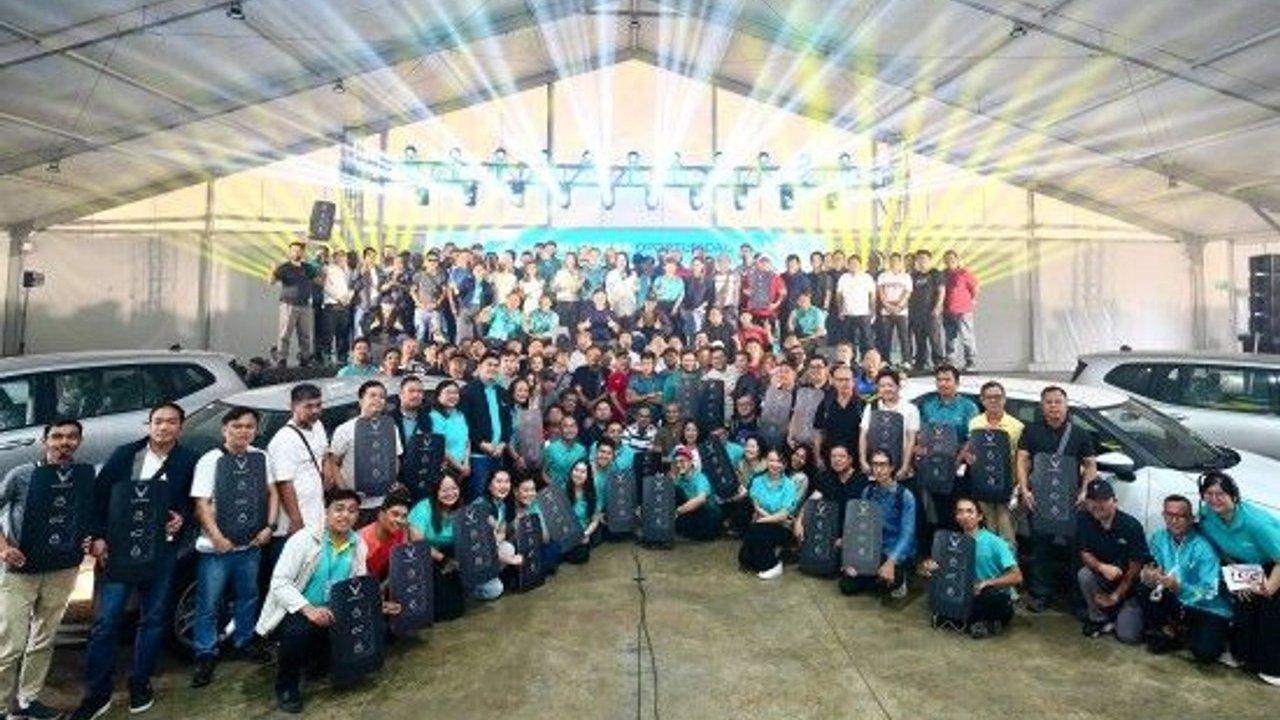
PMAC recently held its 27th Annual General Meeting (AGM) in Suriname. This is the Association’s key event, drawing together members from across the region to discuss issues such as CII’s inherent challenges for the Caribbean and laying the groundwork for solutions.
“We acknowledged in the end that the AGM is one of PMAC’s major achievements.” says Mr. Telemaque. “The port and staff in Suriname were unbelievable. Antigua – my country – hosted the event last year and we attempted to make it the best event possible because it was in the Chairman’s home. However, it was clear Suriname decided they wanted to outdo Antigua.
The event itself highlighted a global environment that is evolving and how PMAC is ready to engage its members, preparing them for what is to come, and illustrating the dependencies each port has upon each other. We established two new Associate Member committees, with Risk and Resilience being one of the most engaging. The whole idea of sustainability was highlighted throughout the forum, with concrete goals discussed. We are pushing for achievement of those goals to be shared at our next webinar. We didn’t have that sort of dynamism before it came out of Suriname.”
We committed to expanding implementation of the Maritime Single Window, a digital platform that logs ship movements across all IMO member states. In the Caribbean it has so far only been executed in Antigua and Barbuda, but we are now on track to roll it out across multiple islands for the first time. PMAC is coordinating training through the IMO and Port Authority of Antigua and Barbuda, and the Port Authority is also paying some of the costs of this program. At present, the training is occurring in St Lucia, St Kitts, St Vincent, Grenada, and Dominica. Then we’ll move onto Montserrat, Anguilla, and Aruba.”
The AGM also attracted more than just PMAC’s members, as Mr. Telemaque explains:
“One of the highlights too was the speech from the President of Suriname. To be at a port meeting in a country the size of Suriname and have the President attend with his cabinet and Speaker of the House, was really unbelievable.
He was present throughout the opening ceremony and delivered a mandate to ports to come forth and advise governments of strategic requirements for port sustainability and development. He stated that as experts who know how to do this, we can suggest what’s needed. We couldn’t have asked for a better and more impactful mandate than that.
The fact is also that a month and a half later the President attended a CARICOM meeting of Heads of State where he spoke about the necessity for CARICOM to recognise the role and responsibility of PMAC, thus giving our association the gravitas needed to be heard at a regional and even global level.
Consequently, ports are reaching out in greater numbers and with more consistency, providing better input and responses to their needs as well as responding to the needs of others.”
Shaping the Future
With PMAC going from strength to strength, it’s clear that the future looks bright for the Association and its members. Mr. Telemaque emphasizes how important PMAC’s role is for the future not just of regional ports but for all of the countries’ citizens as well.
“I recognize that there is a dearth of effective representation of ports at a global level, and especially small ports. I would like to suggest that PMAC transition from being an Association towards more of a regulatory entity that focuses on ports, providing the standards for operations, safety and training. I want to ensure we focus on sustainable change management, improving the quality of people that are coming up the ranks.
There is no global institution that is advocating for small islands ports. What I ultimately want to see is a global forum where PMAC and small islands ports in the Pacific, as well as others in India, South and Central America, and around the world that don’t now have a voice can confer and work as one. I would call such a grouping the Global Port Management Association for Small Island Ports. We all face the same issues, with ports being responsible for the national security of their people, and it’s essential that we share and help each other.
PMAC is driving the initiative to create the global association. If we can do it, then it will create a brighter future for all small island ports and the people that rely on them. We can set a stage where we are heard and push for the creation of software and equipment priced attainably for us and play a serious role in discussions around ship sizes, efficiency metrics, environmental sustainability measures, and other matters that the global institution ignore right now.
Our people have a voice and needs which we must meet. That reality is driving PMAC to play a role in the future of shaping global island port architecture.”