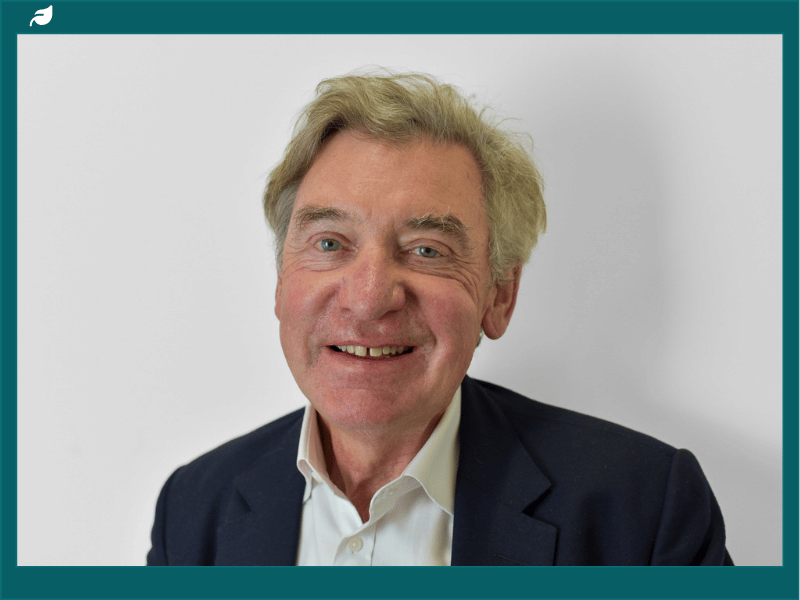
Sir Nigel will chair LUC’s Trustee Board and oversee accountability of the Company Board, as the employee-owned consultancy strengthens its governance model to support long-term performance and employee representation.
He brings experience from across law, business, and higher education. Sir Nigel began his career at Baker McKenzie, where he became Managing Partner and European Chairman, before moving into industry as Managing Director of McLaren Group. He later served as vice-chancellor of the University of the Arts London from 2008 to 2021.
Alongside his executive roles, Sir Nigel has held positions across a range of charities and organisations, including LAMDA, The Art Fund, Creative UK, Universities UK and Crisis. He was knighted in 2019 for his contribution to higher education and the creative industries.
LUC Chief Executive Rob Booth said the appointment reflects the organisation’s focus on governance and purpose. “We’re genuinely delighted that Sir Nigel joins us as Independent Trustee,” he said. “Having led or chaired over a dozen socially focussed organisations, his experience will prove invaluable in heading our new governance structure.”
Booth linked the appointment to the consultancy’s founding principles. “When LUC was founded 60 years ago, it was intended to bring together a diverse range of perspectives and disciplines to solve complex and shared challenges. Sir Nigel’s experience at the intersection between science, art and business perfectly embodies this ethos,” he added.
The Trustee Board forms part of a revised governance framework introduced during LUC’s anniversary year. The changes include the creation of both Trust and Management Boards, designed to give employees a stronger role in shaping the direction of the business.
Employee ownership models have become more prominent in the UK in recent years, particularly among professional services firms seeking to align long-term business performance with staff engagement and accountability. Governance structures such as trustee boards are often used to represent employee interests and ensure oversight of leadership decisions.
At LUC, the Trustee Board is intended to act as a bridge between employees and the company’s leadership, while supporting transparency and long-term planning. Sir Nigel’s role will include chairing this board and ensuring that governance processes remain aligned with the company’s values and objectives.
Commenting on his appointment, Sir Nigel Carrington said: “For 60 years LUC has played a crucial part in managing the many unique opportunities, and challenges, that our diverse environment and landscape poses.”
He also pointed to the significance of the company’s ownership model. “As a fully independent employee-owned business, LUC’s Trustee Board plays a critical role in representing staff interests. I’m honoured to be joining an organisation whose people-centred, impact-driven values align with my own.”
Founded in 1966 by environmentalist Max Nicholson, LUC was one of the first multidisciplinary environmental consultancies in the UK. The firm provides services including planning, impact assessment, landscape design, ecology, and geospatial analysis to public and private sector clients.
The consultancy has grown to a team of more than 300 professionals, with offices in London, Bristol, Edinburgh, Glasgow, Sheffield, Cardiff, and Manchester. It operates as a fully employee-owned business, a structure that shapes both its governance and its approach to project delivery.
Environmental consultancies such as LUC play a central role in supporting planning, infrastructure development, and land use decisions, particularly as regulatory expectations around environmental assessment and sustainability continue to evolve. Governance structures are increasingly under scrutiny in this context, as firms balance commercial activity with environmental and social responsibilities.
LUC’s updated governance framework is intended to reinforce its long-standing focus on interdisciplinary working and independent thinking. The company has maintained a consistent emphasis on environmental stewardship and sustainable development throughout its six decades of operation.
The appointment of an Independent Trustee is designed to provide external oversight while maintaining alignment with the firm’s internal culture and employee ownership model. By separating governance responsibilities across boards, the structure aims to support accountability and clarity in decision-making.
As the company marks its 60th anniversary, the introduction of the Trustee Board and Sir Nigel’s appointment signal a formalisation of governance arrangements that reflect both its heritage and its future direction.