A new report from the United Nations University Institute for Water, Environment and Health (UNU-INWEH) finds that the rapid expansion of critical minerals extraction, driven by demand for clean energy and digital infrastructure, is creating severe environmental and public health impacts that are largely borne by vulnerable communities in Africa and South America.
The investigation, titled Critical Minerals, Water Insecurity and Injustice, examines how the benefits of technologies such as electric vehicles, renewable energy systems, and artificial intelligence infrastructure are concentrated in wealthier regions, while the environmental and social costs are experienced elsewhere. It raises concerns about governance gaps in global supply chains and the uneven distribution of risks and rewards associated with the energy transition.
“Technological disruptions are needed and useful. But we should be aware of and proactively address their unintended consequences if we want the whole world to equally benefit from them,” says UNU-INWEH Director Kaveh Madani, who led the investigation team. “You cannot call a transition green, sustainable, and just if it simply moves the environmental harm from the rich to the poor, and from one group of people or region to another.”
Water stress and environmental impacts
The report identifies water use as a central issue in critical minerals extraction. Mining operations for lithium and other minerals require significant volumes of water, often in regions already experiencing scarcity.
In 2024, global lithium production of around 240,000 tonnes consumed an estimated 456 billion litres of water. According to the report, this is equivalent to the annual domestic water needs of 62 million people in sub-Saharan Africa. Around 16% of critical mineral reserves are located in high water-stress regions, increasing pressure on local water systems.
Case studies highlight regional impacts. In Chile’s Salar de Atacama, lithium mining accounts for up to 65% of regional water use, contributing to groundwater depletion. In Bolivia’s Uyuni region, water shortages linked to mining activity are affecting quinoa production, a key local food source.
Environmental impacts extend beyond water consumption. The report estimates that each tonne of rare earth minerals produced generates approximately 2,000 tonnes of toxic waste. In 2024 alone, global rare earth production produced an estimated 707 million metric tonnes of toxic waste.
Rising demand and systemic risks
Demand for critical minerals continues to increase in line with global climate targets. The report notes that meeting the Paris Agreement goals could require a ninefold increase in lithium demand and a doubling of cobalt and nickel demand by 2040.
“Without effective control mechanisms, the very targets designed to protect the planet can accelerate water, and health, and injustice crises in the communities least responsible for causing climate change,” says Prof. Madani, recently named the Stockholm Water Prize Laureate for 2026. The report describes critical minerals as the “oil of the 21st century”, drawing parallels with historical patterns in fossil fuel extraction where resource-rich regions often saw limited local benefit. It warns that without policy intervention, similar patterns may emerge in the energy transition, creating new areas of concentrated environmental and social impact.
Health impacts in mining regions
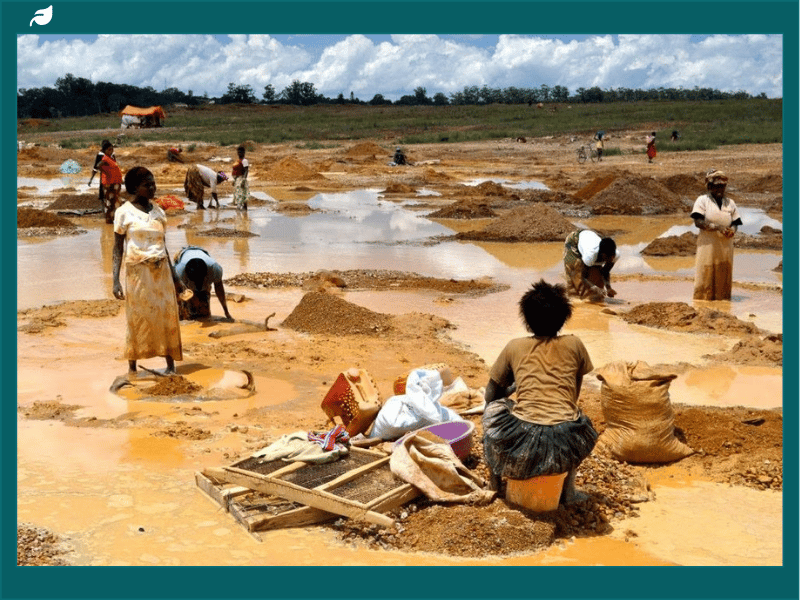
The report documents a range of health effects associated with mining-related water contamination and pollution. In the Democratic Republic of Congo (DRC), where cobalt production is concentrated, surveys show that 72% of people living near mining sites reported skin diseases, while 56% of women and girls reported gynecological issues.
Data from maternal health facilities in mining areas also indicate elevated rates of birth defects compared to non-mining regions. These include neural tube defects at 10.9 per 10,000 births and lower limb defects at 8.8 per 10,000 births.
Communities in mining regions also report psychological stress linked to environmental degradation and uncertainty. The report cites evidence of increased anxiety and depression associated with water insecurity and long-term exposure to pollution.
Child labour remains a concern, with approximately 30% of mining sites in the DRC employing children, often without adequate safety protections. At the same time, more than 70% of the country’s population lives on less than $2.15 per day, despite its significant mineral resources.
“The green energy transition is among the most important undertakings of our time. But the evidence we’ve gathered shows that the communities doing the actual digging, breathing the dust, and losing access to clean water are largely excluded from its benefits,” says UNU-INWEH scientist Dr. Abraham Nunbogu, the report’s lead author.
Governance and supply chain challenges
The report attributes many of the identified issues to weaknesses in governance and oversight of global supply chains. Limited access to reliable data on water use and pollution at mining sites makes it difficult to assess impacts or enforce accountability.
“If we don’t correct the governance failures driving this, we will have built the clean energy economy of the future on the same extractive injustices as the fossil fuel economy of the past,” says Dr. Nunbogu.
Ownership structures also affect the distribution of economic benefits. In the DRC, more than 80% of mineral output is controlled by foreign industrial mines, limiting the share of revenues retained locally.
The report notes that these challenges are not confined to developing regions. It cites the proposed Thacker Pass lithium mine in Nevada, which could require up to 3.5 billion litres of water annually, and the 2014 Mount Polley mine disaster in Canada, which released approximately 25 million cubic metres of waste into surrounding waterways.
Policy recommendations and next steps
The report calls for changes in how critical mineral supply chains are governed at the international level. Recommendations include mandatory due diligence standards, legally binding requirements for ethical sourcing, and stricter controls on pollution and wastewater management.
It also calls for independent monitoring of water use and contamination, as well as investment in recycling technologies to reduce reliance on primary extraction. Circular economy approaches, including the recovery of minerals from used batteries and electronics, are identified as a potential pathway to reduce environmental pressure.
Additional measures include legally mandated benefit-sharing agreements with affected communities, stronger public health systems in mining regions, and the adoption of low-water extraction technologies.
“Water insecurity is not a side effect of critical mineral mining, it is a systemic outcome of how the global supply chain is currently designed and governed,” says Prof. Madani. “Without binding international standards, mandatory disclosure, and genuine community co-governance, the demand surge projected for the coming decades will make the current situation dramatically worse.”
The report links these issues to progress on several UN Sustainable Development Goals, including clean water and sanitation, good health and well-being, and reduced inequalities.
“This rigorous, evidence-based investigation by UNU scientists addresses a problem the world urgently needs to confront,” says Prof. Tshilidzi Marwala, UN Under-Secretary-General and Rector of the United Nations University. “A transition that deepens poverty, undermines access to clean water, and concentrates health burdens on the world’s most marginalized communities is not a transition toward the UN’s Sustainable Development Goals. It is a step away from them. We cannot give up on the digital transition but we need to do it right.”