Tom Blackwall is Head of Raw Materials at Finlays. He is a world-renowned coffee specialist and experienced commodity buyer and futures market trader, and has been with Finlays for 20 years. Written by Helen Hume
For many years, traceability was considered a sustainability initiative — a worthwhile investment that differentiated progressive businesses from the rest of the market. In 2026, that is no longer the case. Traceability has become fundamental to how we source tea and coffee, manage risk, protect our supply chains and create value for customers.
The conversation has changed. Customers no longer ask whether products are traceable; they ask how confident we are in the data, how resilient our supply chains are, and whether we can demonstrate that the people producing our tea and coffee are doing so legally and responsibly. Regulations such as the EU Deforestation Regulation have undoubtedly accelerated this shift, but legislation is only one driver. Climate change, geopolitical uncertainty, evolving consumer expectations and increasing scrutiny of global supply chains have all reinforced the need for greater transparency.
However, the biggest challenge is not collecting data. It is building trusted relationships that enable good data to exist in the first place.
Data Alone Is Not Enough
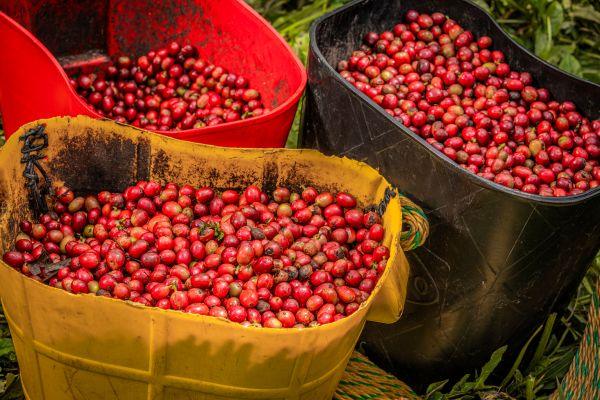
Tea and coffee supply chains remain some of the most fragmented agricultural systems in the world. Millions of smallholder farmers produce crops across dozens of countries, often selling through cooperatives, factories, exporters and traders before the product reaches its final destination. Every transaction creates an opportunity for information to be lost, misunderstood or disconnected from the physical product.
Technology has transformed what is possible. Satellite imagery, GPS mapping, mobile applications and digital platforms have dramatically improved our ability to map farms and monitor supply chains. These tools are invaluable, but they should never be mistaken for the solution itself. Technology can record information, but it cannot replace trust. It cannot build long-term partnerships with producers, nor can it create the confidence needed for suppliers to openly share information during periods of uncertainty.
The reality is that traceability begins long before data enters a system. It starts with relationships. The suppliers that consistently provide high-quality, reliable traceability data are rarely those with the most sophisticated software. They are the suppliers who have invested years in working alongside farmers, understanding local challenges and developing transparent ways of doing business. That trust cannot be established overnight, and it certainly cannot be created by regulation alone.
This is particularly important because traceability is not a static exercise. Farms change ownership, families divide land between generations, new plots are cultivated and environmental risks evolve. Information that was accurate twelve months ago may no longer reflect reality today. Maintaining robust traceability therefore requires continuous engagement rather than periodic compliance exercises.
Climate Change and the Need for Supply Chain Agility
Climate change adds another layer of complexity. Weather volatility is changing where tea and coffee can be grown, affecting yields, quality and production timing. Buyers increasingly need to diversify origins and develop alternative sourcing strategies to manage supply risk. Every new supplier introduced into the network brings another traceability challenge. The ability to rapidly assess, onboard and verify new supply chains has become a strategic capability rather than simply a procurement activity.
At the same time, commercial realities cannot be ignored. Coffee and tea are global commodities operating in highly competitive markets. Customers expect security of supply, consistent quality and competitive pricing, even during periods of market disruption. Maintaining fully segregated, traceable supply chains often introduces additional costs through dedicated storage, logistics, administration and verification. As sourcing leaders, our responsibility at Finlays is to balance these commercial pressures without compromising the integrity of our supply chains.
It’s about the impact on people
There is also a danger that our industry becomes overly focused on compliance rather than impact. Traceability should never become a box-ticking exercise. Knowing the exact GPS location of a farm tells us very little about whether that farmer is building a resilient business, adapting to climate change or earning a sustainable income. Likewise, collecting thousands of data points achieves little unless that information is used to make better sourcing decisions.
The real value of traceability lies in what it enables. When we understand our supply chains in detail, we can identify where climate risks are emerging, where agronomic support is needed, where biodiversity can be protected and where investment will deliver the greatest benefit. We can target sustainability programmes more effectively, improve productivity, strengthen farmer livelihoods and ultimately create more resilient supply chains for our customers.
This is where the role of sourcing is evolving. Procurement can no longer be viewed solely as securing raw materials at the best commercial value. Modern sourcing teams are becoming custodians of supply chain resilience. They are responsible for understanding environmental risk, social impact, regulatory compliance, commercial continuity and long-term supplier capability, all while continuing to deliver quality, availability and value.
Collaboration is key
None of this can be achieved in isolation. The most successful traceability programmes I have seen are built on collaboration. Producers, cooperatives, exporters, manufacturers and retailers all have a role to play. Too often, different buyers ask suppliers for similar information in different formats, creating unnecessary duplication and administrative burden. As an industry, we have an opportunity to simplify expectations, improve interoperability between systems and spend more time acting on data than collecting it.
In an uncertain world, traceability gives confidence
Looking ahead, the organisations that will succeed are those that view traceability not as a regulatory requirement but as a strategic asset. Businesses that truly understand their supply chains will respond more quickly to disruption, invest more effectively at origin and build stronger partnerships with both suppliers and customers.
Ultimately, traceability is about confidence. Confidence that we know where our tea and coffee comes from. Confidence that our suppliers share our values. Confidence that we are protecting forests, respecting people and complying with evolving legislation. And perhaps most importantly, confidence that the decisions we make today are helping to secure the future supply of tea and coffee for generations to come.
That future will not be delivered by technology alone. It will be built through trusted partnerships, shared responsibility and a long-term commitment to investing in the people at the very beginning of our supply chains. The journey towards full traceability is ongoing, and perfection remains difficult to achieve. However, organisations that embrace traceability as part of a broader commitment to responsible sourcing will be better positioned to manage risk, meet evolving customer expectations and build resilient supply chains capable of supporting the tea and coffee industries for generations to come.
About Finlays
Finlays is a global supplier of tea, coffee, botanical and fruit-based ingredients and solutions to many of the world’s best-loved beverage brands, retailers and foodservice operators. We exist to empower our customers to create a world where every sip brings joy, something we are uniquely placed to achieve thanks to our global scale, trusted partnerships, and over 200 years of experience in beverages. With a heritage stretching back to 1750, today we operate across five continents and place sustainability at the heart of all we do, supporting the long-term prosperity of our industry and all those connected to it.
About Sustainable Future 2030
Sustainable Future 2030 is Finlays’ approach to “taking action today for the beverages of tomorrow”. It sets ambitious commitments on three core areas of Climate Net Zero, Sustainable Supply and Our People.