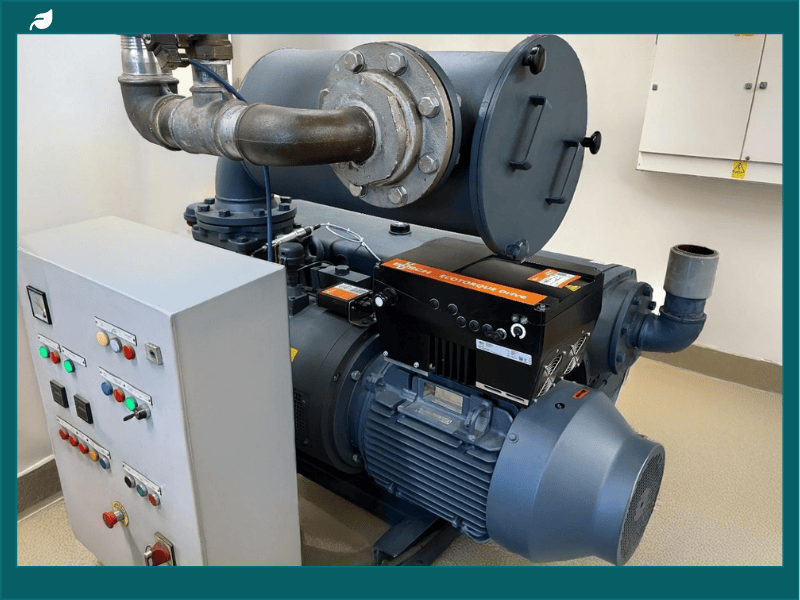
Kepak McIntosh Donald, one of Scotland’s largest red meat processors, has reduced energy consumption on its vacuum packaging lines by retrofitting existing pumps with variable speed drive technology from Busch Vacuum Solutions. The upgrade has delivered measurable savings while supporting the company’s carbon reduction objectives.
Operating from a site just outside Aberdeen, Kepak runs multiple chamber-type vacuum packaging lines to process and preserve fresh meat for distribution. Reliable vacuum supply is central to maintaining shelf life, product quality and daily production targets.
Improving Efficiency In High-Demand Operations
To reduce energy use and improve operational efficiency, Kepak worked with long-standing partner Busch Vacuum Solutions to retrofit ECOTORQUE variable speed drive technology onto its existing R5 oil-lubricated rotary vane vacuum pumps. The system adjusts pump speed in line with real-time demand rather than running continuously at a fixed frequency.
Previously, the pumps operated at 50 Hz regardless of whether packaging chambers required vacuum. This meant energy was consumed even during idle periods. With ECOTORQUE installed, pump speed now slows during lower demand and switches into Eco-mode when no vacuum is needed.
By aligning pumping speed with process requirements, Kepak has cut unnecessary electricity use and reduced associated CO2 emissions. The change also reduces mechanical strain on equipment, supporting longer service intervals and extended pump lifetime.
Vacuum Packaging At Scale
Kepak’s packaging process relies on four main vacuum lines. Portions of meat are placed into barrier bags and loaded into chamber machines. Once the lid closes, a Busch R5 rotary vane vacuum pump and booster evacuate air from the chamber to the required vacuum level. Sealing bars then create a hermetic seal before the chamber returns to atmospheric pressure.
Removing oxygen from the pack extends shelf life and helps preserve colour, texture and taste. Consistent vacuum performance is essential to avoid disruption.
“Our packaging machines typically run from six in the morning until at least four in the afternoon,” explains Malcolm Baillie, Kepak’s Engineering Manager. “Uptime and reliability of the vacuum supply are absolutely essential to keep product moving.”
Trial-Based Approach Delivers Measurable Data
The opportunity for improvement was identified during a site visit by Busch specialists, who proposed a monitored trial rather than a theoretical projection. ECOTORQUE was installed on one chamber packaging machine, and energy use was measured before and after the retrofit.
“Busch didn’t come to us with just a sales pitch,” noted Malcolm Baillie. “They brought data and a trial plan to measure actual energy use before and after, so we could see the difference for ourselves.”
A power logger recorded baseline energy consumption over one week. After installation of the variable speed drive, a second week of monitoring provided a direct comparison.
“The technical team from Busch stayed on site to fine-tune the VSD controls so they synchronized perfectly with the machine’s cycle,” added Malcolm Baillie. “That hands-on support is what really created value for us.”
Energy Savings And Cost Reductions
The monitored trial showed weekly energy consumption falling by more than 64%. During active production, energy use decreased by around 26%. The most significant reductions occurred during breaks, when Eco-mode cut energy consumption by 94% compared with previous continuous operation.
Average power consumption during active production fell from 16 kW to 11.8 kW. Over the trial week, this equated to savings of approximately 903 kWh, worth around £207, based on an energy price of 23p per kWh and 50 production weeks per year. On an annual basis, this represents potential savings of around £10,350 per machine.
“The projections Busch provided were already attractive,” said Malcolm Baillie. “But the actual trial results were even better.”
Reduced Wear And Extended Service Life
Beyond lower electricity use, Kepak expects operational benefits from reduced mechanical wear. Running pumps at lower speeds during idle periods decreases stress on vanes, bearings and other components. Lower oil temperatures also slow oil degradation, extending maintenance intervals.
These factors contribute to improved reliability and lower total cost of ownership. The variable speed system also allows pump speed to increase up to 60 Hz if required, providing up to 20% additional capacity without installing new equipment.
Supporting Carbon Reduction Targets
Kepak operates under group-wide targets to reduce its carbon footprint and improve energy performance. Projects that deliver verified reductions in electricity consumption contribute directly to those objectives.
“We are continually working with our sustainability teams to cut waste and improve efficiency,” explains Malcolm Baillie. “This project not only saves energy but also reduces our carbon impact per package.”
Following the successful trial, Kepak has extended ECOTORQUE retrofits to other suitable pumps on site and is planning wider deployment across additional Kepak locations.
Busch Group Profile
Busch Vacuum Solutions is part of the Busch Group, one of the world’s largest manufacturers of vacuum pumps, vacuum systems, blowers, compressors and gas abatement systems. The group also includes Pfeiffer Vacuum+Fab Solutions, incorporating gas abatement systems previously offered by centrotherm clean solutions.
The Busch Group employs more than 8,000 people in 44 countries and operates 23 production plants across Europe, Asia and North America. Headquartered in Maulburg, Germany, the family-owned company reports annual consolidated revenue of close to 2 billion Euro.