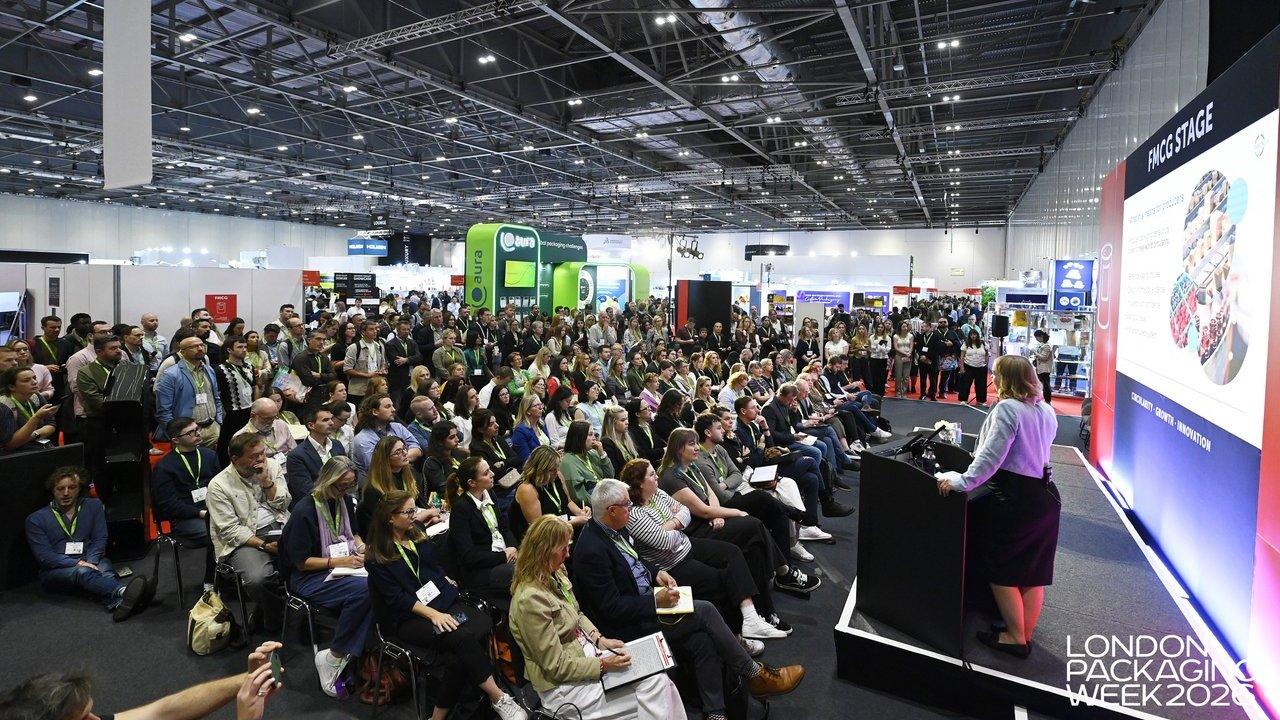
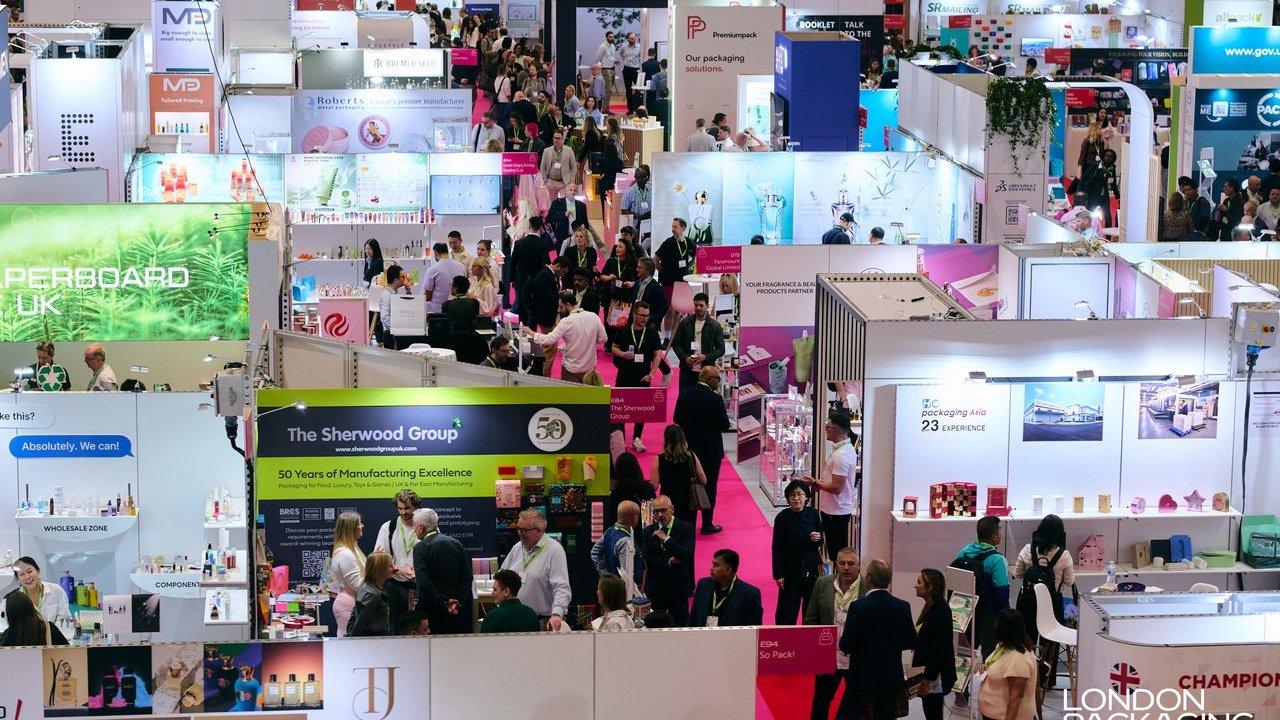
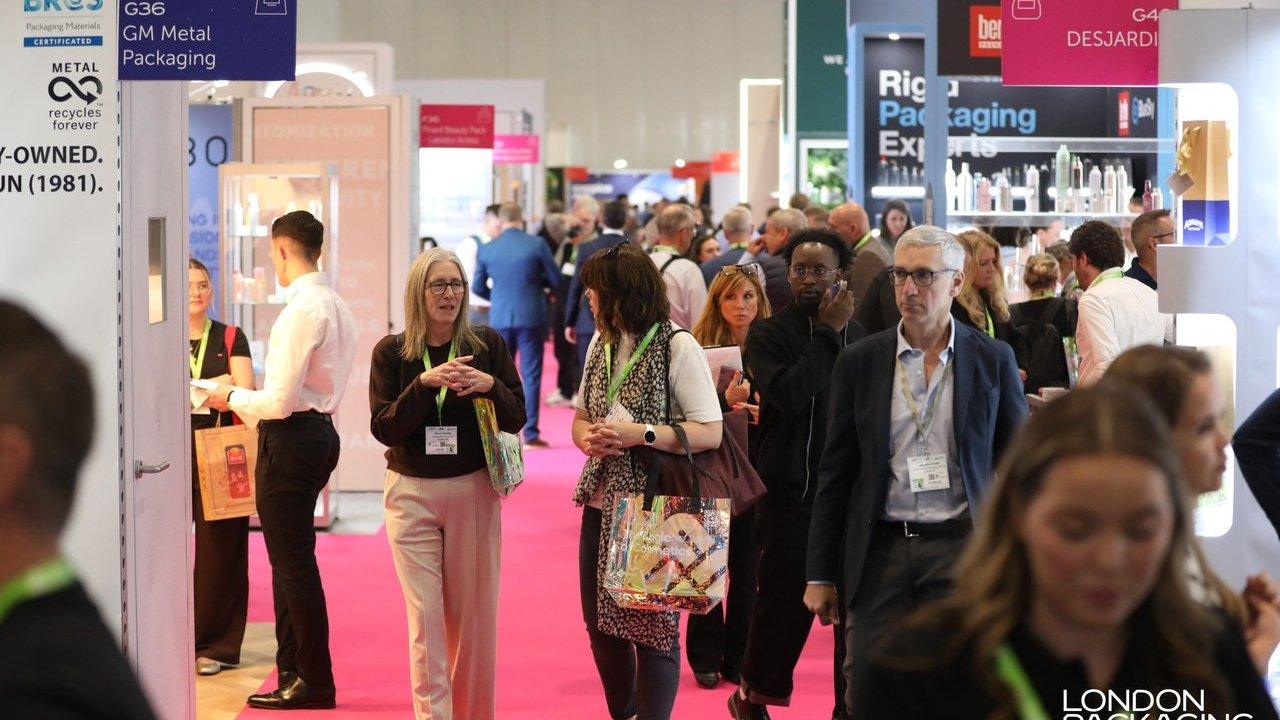
Easyfairs has opened London Packaging Week 2026 at Excel London, bringing together thousands of packaging and brand professionals across two days on 16 and 17 September. Built around the theme of Discovery, the exhibition combines four co-located events spanning luxury, drinks, beauty and FMCG packaging. The opening day placed circular economy delivery, Extended Producer Responsibility and deposit return systems firmly on the agenda, alongside design, materials and packaging innovation. With hundreds of exhibitors and a full programme of talks, the show offered a useful meeting point for a sector balancing creative ambition with material and regulatory change.
Discovery Across Packaging Sectors
London Packaging Week’s opening programme emphasised the continued value of face-to-face exchange for an industry facing practical questions around design, recyclability, supply chains and consumer experience. The show’s four-event format brought specialists from different packaging markets into one venue, allowing shared concerns around sustainability and innovation to be discussed across categories.
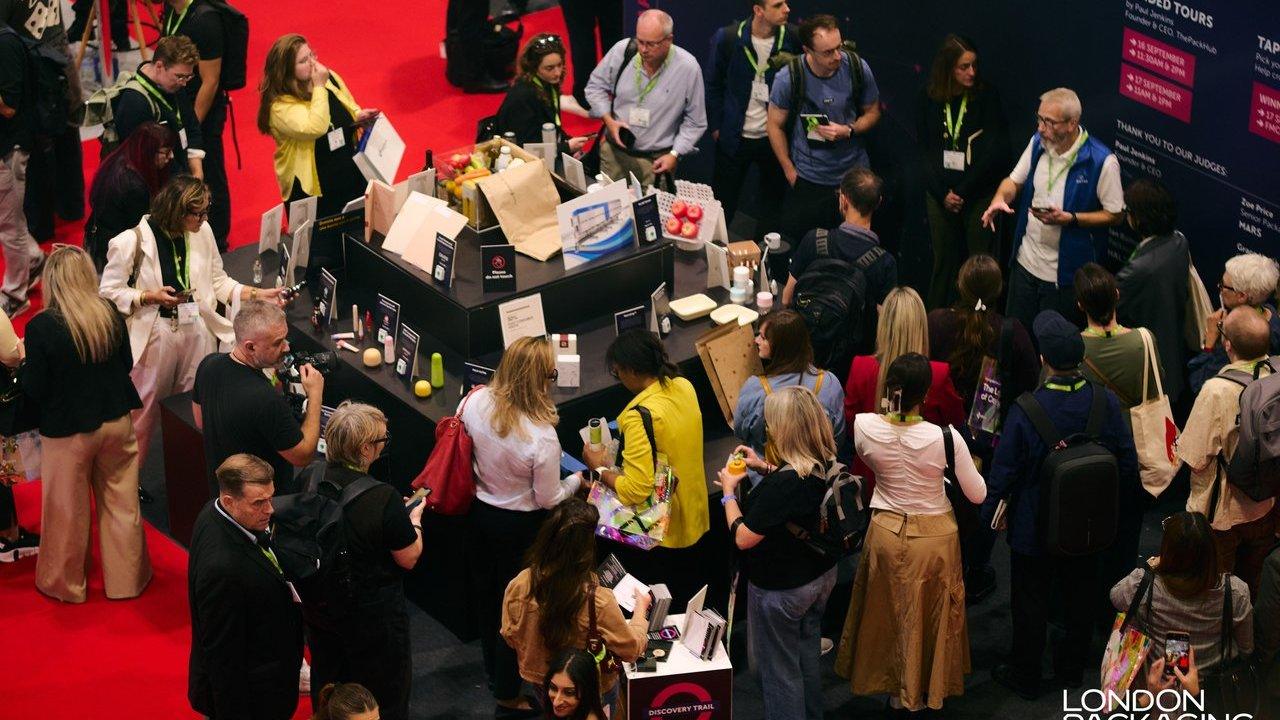
The event also used its opening session to highlight young talent and the role of industry platforms in supporting new perspectives. That focus aligned with the show’s Discovery theme, which positioned the programme as a place to encounter emerging ideas as well as established packaging expertise.
Josh Brooks, Divisional Director – Packaging Portfolio at Easyfairs, said:
“We take our role as a forum for everyone in the supply chain very seriously. We want it to be a place where business can happen, of course, but in doing that we try to create spaces that are inspiring, fun, warm, and welcoming.
“I’m particularly proud of the way the show has platformed and promoted young talent from across the sector. For those looking to discover fresh ideas and forward-thinking perspectives, London Packaging Week has always been the place to do that. But our approach to young talent proves we don’t just talk about the future; we try to make it happen. It’s so gratifying to see the Excel full of people who share that goal with us.”
EPR Data And Recycling
One of the first day’s central sustainability sessions examined Extended Producer Responsibility, with Esther Carter of UK EPR scheme administrator PackUK presenting data on packaging recyclability. The discussion addressed how clearer information on materials entering the market can support the direction of recycling systems and future policy delivery.
PackUK’s recyclability assessment methodology uses a red, amber and green traffic-light approach. Carter reported that approximately 20% of packaging on the market is classified red, meaning it is fundamentally incompatible with the recycling system as it currently operates. She also identified a need to improve the quality of recycling outputs through evidence-led action.
Esther Carter, Chief Strategy Officer at PackUK, revealed:
“We will soon publish a five-year strategy that lays out our roadmap for delivery. We now have more data about the packaging that is being put onto the market. Our recyclability assessment methodology uses a simple red, amber, or green traffic light system, where red material is fundamentally incompatible with the recycling system as it exists today, and we see in the latest data that about 20% of packaging on the market is red.
“One in seven producers are exclusively putting red material onto the market, while about 75% are putting in a blend of red, amber, and green. For balance, about 10% of producers are exclusively putting green materials onto the market. This data and evidence will support our roadmap going forwards to drive higher quality recycling outputs.”
Preparing For Deposit Returns
The planned introduction of the UK deposit return scheme in 2027 was another major subject of discussion. At the FMCG Stage, the ‘DRS countdown: From 2026 readiness to 2027 reality’ panel brought together retail and beverage sector voices to consider the operational preparations required before implementation.
Naomi Brandon-Bravo of the British Retail Consortium discussed the scale of the task for retailers, including logistics, collection systems and the need to avoid consumer confusion. Reverse vending machines are already being installed in some stores, indicating that the scheme is moving from planning into implementation.
Naomi Brandon-Bravo, Sustainability Policy Advisor at the British Retail Consortium, admitted:
“It’s been a massive learning journey to understand the scale and complexity that this scheme (DRS) brings. It’s a huge operation, but it’s clear retailers are committed to that October 27 deadline, and we are very much in the implementation stage now. In some cases, we’re already seeing these massive reverse vending machines being put in stores.
“There’s still a long way to go, there’s a lot to collaborate on and accelerate. We need to get those final pieces of the scheme in place to make sure we don’t end up with a confused consumer base. Retail needs to rally around logistics, the collections, and how we get materials out of stores.”
For beverage businesses, the scheme will affect product portfolios, packaging formats and value-chain coordination. Carlsberg Britvic Sustainability Director Tom Fiennes described the programme as both a sustainability initiative and a major operational undertaking.
Tom Fiennes, Sustainability Director at Carlsberg Britvic, said:
“We’ve got over a thousand SKUs that are going to be affected by the deposit return scheme. It’s very, very big. My assessment is that we’re moving from a ‘will we, won’t we’ situation into operational readiness. Everyone needs to be playing their part in the whole value chain. If any element of that isn’t working, it’s going to cause a problem.
“We have a programme in place with 13 different workstreams, so we know how complicated it is. It’s a sustainability project, but it’s also a huge transformational programme and a once-in-a-lifetime generational opportunity. We shouldn’t lose sight of the benefits deposit returns will bring to our nation, to the quality of recycling, and to the reduction of litter. Despite how complicated it might seem, we are very determined to make sure we deal with those complexities and come up with solutions.”
Design And Material Decisions
Alongside policy and recycling infrastructure, London Packaging Week examined how design teams and materials specialists can respond to market pressures. A session titled ‘End of the brief’ considered the relationship between agencies, in-house creative teams and AI, while exhibition-floor participants focused on tools that can improve packaging development decisions.
Crux Product Design highlighted the potential for testing and simulation techniques used in aerospace to provide more detailed insight into packaging performance. Vioneo, meanwhile, called attention to sourcing, production, material reduction, reuse and circularity when assessing plastics.
Rhoss Adams, Senior Applied Science Engineer at Crux Product Design, said:
“The tools that aerospace engineers and rocket scientists are using are set to innovate high technology industries. We’re bringing them over to the packaging industry, using testing and simulations to provide a level of understanding that is unattainable through physical testing. That allows brands to make more informed decisions where there might otherwise be an unknown.”
A Forum For Industry Progress
The event’s first day also introduced a live podcast studio, including a recording of Kantar’s Future Proof podcast featuring Carlsberg Britvic’s Head of Marketing Capability Michelle Atkinson. Her contribution placed inclusive design within a wider conversation about consumer needs, occasions and accessible product enjoyment.
With a second day of talks, live events and the Innovation Awards ceremony still to come, London Packaging Week has assembled a strong programme around the practical work shaping packaging today. Its blend of policy debate, technical development and creative discussion reflects an industry where circularity depends on cooperation from material suppliers through to retailers, brands and consumers.