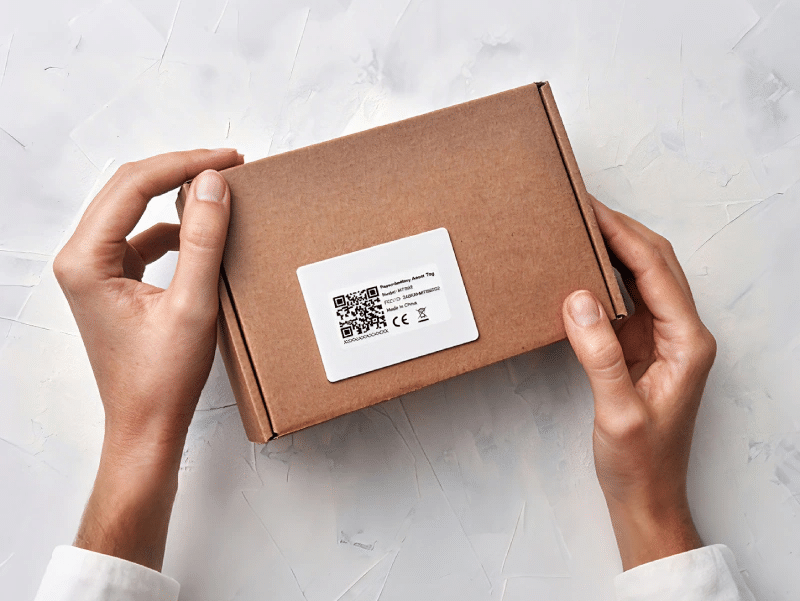
Customers and partners physically handle packaging, so it’s one part of a business’s environmental footprint that people see up close. It’s also a part you can act on yourself. Decisions like box size, board grade and how much void fill goes in can often be made in-house. The idea isn’t complicated: give each product the material, space and protection it needs, and not much more. Custom boxes cut to the size of what you ship (rather than the closest stock carton on the shelf) are one straightforward way of getting there.
What Packaging Efficiency Actually Means
It’s easy to assume efficiency just means using less packaging. Partly true.
A carton that’s too flimsy, or so roomy the product knocks about inside, fails as well. Just in a different way. The goods might arrive damaged, and if a replacement then has to be picked, packed and sent, the materials, energy and freight behind the first delivery were effectively wasted.
What you’re after is balance. Use no more board, wrap or filler than the product calls for and keep empty space inside the box to a minimum, but leave enough strength for handling and stacking in transit. The outside of the box matters too, because a carton that sits neatly on a pallet makes better use of each load.
The Hidden Costs of Oversized Packaging
Oversized cartons tend to be a convenience problem. A warehouse that only keeps a handful of standard sizes will put each product into whichever box is closest without being too small, then stuff the gap.
Because the costs land in different places, they’re easy to overlook.
Shipping air is the first. Say a box is a third empty. It still takes up its full volume in the truck or container, and if that load fills up by space before it reaches its weight limit, fewer orders fit on it. Volumetric weight adds to this. Many carriers charge on whichever is higher, the parcel’s actual weight or a weight calculated from its dimensions, which is why a big box can cost more to send even when what’s in it is light.
More boxes also means more board. The empty space then usually gets packed with paper, foam or plastic so the product doesn’t slide around, because goods that move in transit are more prone to damage. An underfilled carton gives less support when others are stacked on it. At the other end, the customer is left to deal with the surplus board and loose fill.
In one order, none of this seems like much. Over a year of shipments it adds up to material and freight that do nothing for the product.
How Custom Boxes Improve Packaging Efficiency
Right-sizing goes straight at the problem, and it starts with a tape measure. Custom boxes are typically specified by internal dimensions, meaning the length, width and height of the space inside, so the box is made to fit the product rather than the other way round.
Size is one part. Board strength is the other, and it matters just as much. Common single-wall grades are around 3 to 4 mm thick and often suit lighter goods, while heavier items, or cartons that will sit low in a tall stack, may need a double-wall grade such as BC flute at around 7 mm. Pick too heavy a grade and you’re paying for strength you’ll never use. Too light, and you find crushed cartons at the bottom of the pallet.
Style comes into it as well. Regular slotted cartons, full-flap boxes and postal mailers are standard formats that suit a wide range of everyday shipping.
And before committing to a big production run, it helps to know a new size actually works. Ordering custom boxes in small batches lets you test fit, stacking and transit performance on real shipments, then scale up once the specification has proven itself.
Designing Packaging for Recycling
Once the box is opened, the next question is where it ends up. Packaging that’s easy to recycle helps keep material in use and out of landfill.
Worth thinking about, given where plastic volumes are projected to go. A 2024 OECD report projects that, without stronger policies, global plastics production and use will rise by 70 per cent, from 435 million tons in 2020 to 736 million tons in 2040.
Fibre-based packaging is a practical way for businesses to lean less on plastic, provided it’s specified to stay recyclable. Plain corrugated board is accepted in many kerbside and commercial recycling systems. Not all of them, though, as rules vary by location. Where the product allows, paper-based void fill and tape make it easier for the whole pack to go into one recycling stream, whereas plastic laminates, coatings and mixed-material inserts complicate sorting and reprocessing and are worth designing out early.
Reuse deserves a thought too. A sturdy style that can go back out for returns or internal transfers gets more life from the board before it’s recycled.
Building Efficiency Into Everyday Operations
Start with the products you ship most often, since any saving there repeats across the most orders. How much empty space is in their current cartons? How much fill goes in with them?
Those answers feed a simple specification for each product, covering internal dimensions, board grade, box style, closure and void fill. Run it on a small batch first rather than switching everything at once, and watch damage and return data afterwards to check the change did its job.
The written specification earns its keep later, too. Whether it covers stock cartons or custom boxes, it makes packaging easier to report on, and for businesses that measure supply chain emissions, documented packaging decisions are simpler to account for and improve year on year.
If you only do one thing this week, measure your highest-volume products and hold those numbers up against the internal dimensions of their current cartons.