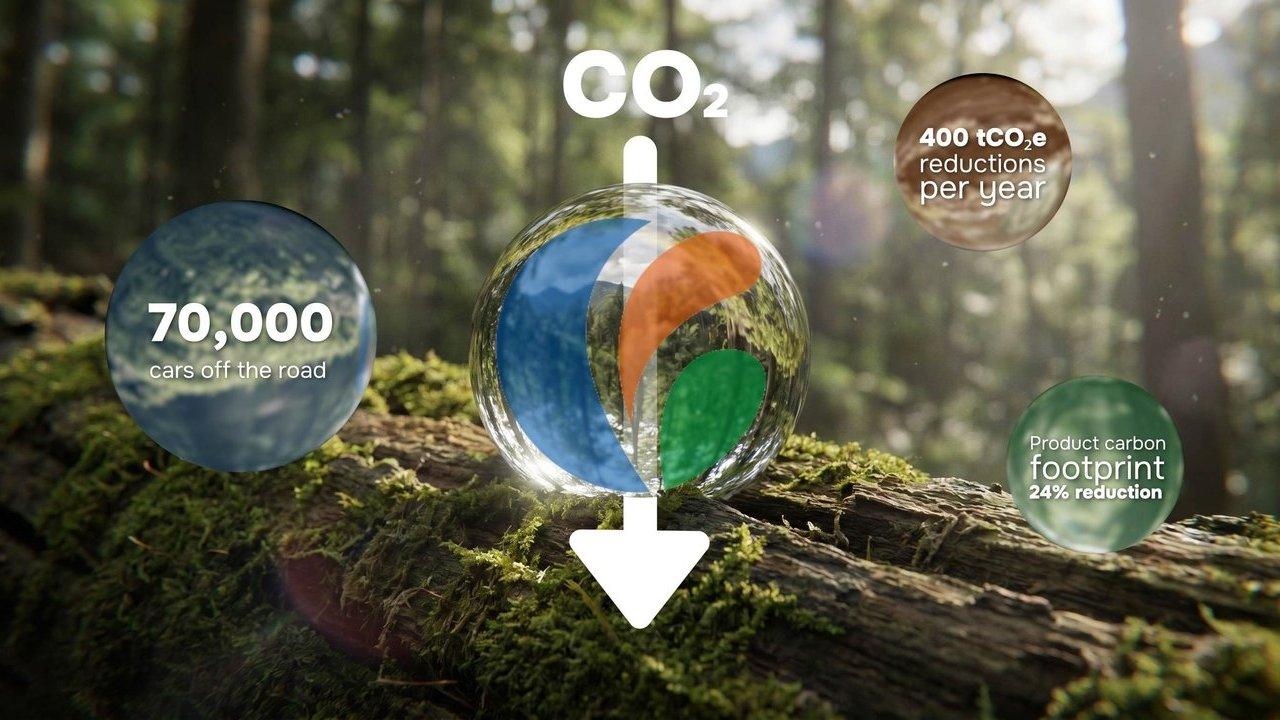
Futamura has reduced the average carbon footprint of its NatureFlex™ cellulose films by 24% between 2019 and 2025, based on an independent life cycle assessment undertaken by ERM. The UK manufacturer calculates that avoided emissions from lacquered and plain film production totalled around 100,000 tonnes of CO₂e, an illustrative equivalent of removing approximately 70,000 cars from UK roads for a year. The result reflects investments in site energy efficiency and operational controls, alongside product-focused emissions measurement. A Wet Sulphuric Acid project, scheduled for implementation by 2027/28, is intended to extend those reductions by supplying 15% of the site’s energy requirement.
Measured Product Carbon Reductions
The reported 24% reduction concerns Futamura’s NatureFlex™ films and compares carbon footprints from 2019 with those recorded in 2025. The assessment covers lacquered films based on NatureFlex™ NVS and plain film production, using Global Warming Potential values from the Intergovernmental Panel on Climate Change Sixth Assessment Report over a 100-year timeframe.
ERM’s independent life cycle assessment provides the basis for the calculation, which places the actual avoided emissions at approximately 100,000 tonnes of CO₂e across the period. The company’s car comparison is based on average annual emissions per UK vehicle using data from the UK Department for Transport, and is presented as an illustrative way to show the scale of savings rather than a count of vehicles removed from the road.
The figure offers a useful product-level indication of progress for cellulose-based packaging films, where manufacturing energy can be a material element of a product’s footprint. It also puts attention on the operational changes behind the reported reduction, from major plant upgrades to smaller interventions in day-to-day energy use.
Waste Gas Energy Project
Futamura’s next major project is a Wet Sulphuric Acid, or WSA, installation. The planned asset will divert waste gases from the production process and use oxidation to generate a raw material. Heat created through the chemical reaction will be recovered to generate steam, the principal form of energy used in the production process.
Once in operation, the installation is expected to generate 15% of the Futamura site’s total energy requirement. Based on 2025 production volumes, the company projects that its planned investments will reduce emissions by an amount equivalent to removing a further approximately 4,000 cars from UK roads each year.
The project demonstrates a practical industrial efficiency model: identifying energy within an existing process stream and returning it to production use. For film manufacturing, replacing a share of externally supplied steam demand with recovered process heat can support both emissions reduction and operational resource efficiency.
Compressed Air Improvements
A high-performance compressed air system has already made a tangible contribution to the site’s operational emissions reductions. An independent air survey found that the new system was outperforming expectations, while its installation was designed to improve energy efficiency, reduce carbon emissions and strengthen operational resilience.
Futamura has paired the upgrade with heat recovery from the compressors. Waste heat is used to pre-heat thermotanks, cutting the volume of steam required by the production process. Together, the compressed air and heat-recovery measures have reduced the company’s carbon emissions by more than 400 tCO₂e annually.
Such measures show the value of targeting utility systems alongside production equipment. Compressed air is integral to many industrial settings, and the ability to recover heat from that system creates a further route to reduce energy demand within the same facility.
Sitewide Energy Discipline
The company has complemented capital investment with targeted energy-management measures across its site. In 2022, air conditioning in the administration block was reprogrammed so units operate only when required and within controlled temperature limits.
Lighting upgrades are also progressing, with 80% of the site now converted from fluorescent fittings to LED technology. The programme has reduced energy consumption and the number of fixtures needed while maintaining or improving lighting quality. Futamura reports that the LED upgrades achieved full payback within their first year.
Laboratory energy monitoring has identified further opportunities. Ovens that had previously operated continuously are now used only when needed, while weekend shutdowns and improved management practices have also reduced energy use. These steps illustrate how monitoring and routine operating decisions can complement larger technical investments.
A Continuing Reduction Programme
Futamura’s latest results combine independently assessed product-footprint progress with site-level energy interventions. The company’s programme spans infrastructure, heat recovery, lighting, building controls and laboratory operations, creating a clear connection between production efficiency and lower operational emissions.
Lucy Cowton, Sustainability Manager at Futamura, commented:
“The reductions in our operational and product carbon footprints reflect the dedication of our workforce and their commitment to continuous improvement. We see this as just the beginning, with future investments, such as the WSA plant, expected to reduce our operational emissions even further. We are incredibly proud of the progress we are making.”
With the WSA project scheduled for implementation by 2027/28, the company is positioning process efficiency and energy recovery as central elements of its continued work to reduce the footprint of cellulose film production and support lower-impact outcomes across its value chain.