The cleaning industry has been quietly undergoing a significant shift over the past several years, and Chicago households are increasingly at the center of it. What goes into a cleaning product, how it affects the air inside your home after the cleaning is done, and what it contributes to the water system once it washes down the drain are questions that more residents are asking before they book a service or reach under the sink for a spray bottle. Sustainable cleaning is not about sacrificing results. It is about achieving the same standard of cleanness through methods and materials that do not leave a chemical footprint in your home or in the broader environment.
For Chicago renters and homeowners who want professional cleaning that takes this dimension seriously, Mums Cleaning Services Chicago has developed a cleaning approach that prioritizes low-impact, biodegradable formulations without compromising on the thoroughness and results that clients expect from a professional service. The products used in client homes are evaluated against specific criteria: ingredient transparency, VOC content, biodegradability, and fragrance composition. That standard applies to every visit, not just when clients specifically request it.
Sustainable cleaning matters more in Chicago’s specific housing context than many residents realize. The city’s large proportion of older construction, with tighter wall assemblies, original windows that do not ventilate as efficiently as modern installations, and heating systems that recirculate indoor air through long winter months, means that chemical compounds introduced through cleaning products have fewer pathways out of the indoor environment and a longer dwell time in the air residents are breathing. Understanding what sustainable cleaning actually involves and why it matters in this context gives Chicago households the foundation to make more informed choices about how their homes get cleaned.
What Conventional Cleaning Products Leave Behind
Most people use conventional cleaning products without much awareness of what they actually contain, which is understandable. Ingredient disclosure requirements for cleaning products have historically been less detailed than for other consumer product categories, and the marketing language on most bottles does not volunteer information about the chemical classes driving the product’s effectiveness.
The compounds that give many conventional cleaners their grease-cutting ability, their antimicrobial properties, and their characteristic fragrance include volatile organic compounds that off-gas into the indoor air during and after use, synthetic fragrance chemicals that are complex formulations not fully broken down in standard wastewater treatment, and certain preservatives and surfactants that persist in aquatic environments after entering the water system. None of this makes conventional cleaning products dangerous in casual residential use. But it does mean they introduce a chemical load into the indoor environment that persists after the cleaning visit ends, and that load accumulates differently depending on how well ventilated the space is.
In Chicago apartments, particularly vintage units with original windows and steam radiator heating systems that do not bring fresh outdoor air into the space, this persistence matters. The sharp chemical fragrance that signals a recently cleaned home is VOC off-gassing, and in a less ventilated space it lingers considerably longer than in a home with modern mechanical ventilation.
What Sustainable Cleaning Formulations Do Differently
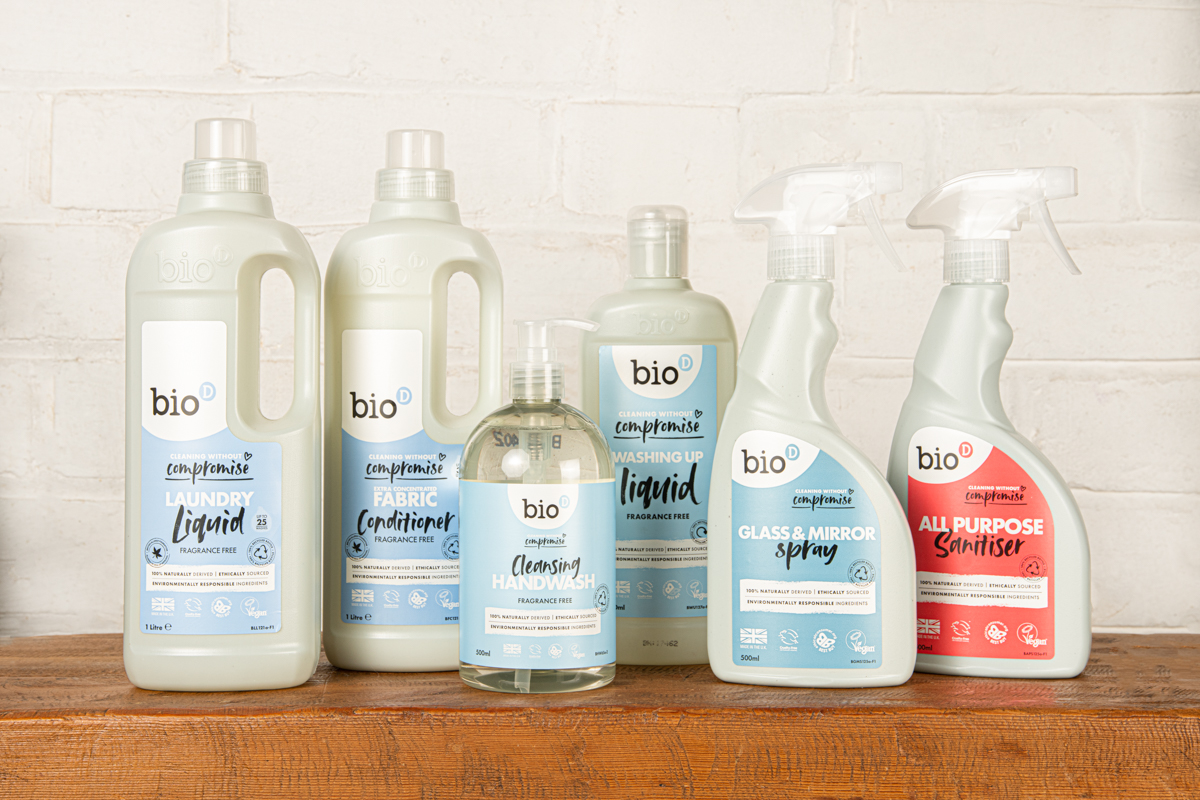
Plant-derived surfactants clean effectively by the same basic mechanism as their synthetic counterparts, breaking down the surface tension between grime and the surface beneath it, but they biodegrade in wastewater systems rather than persisting and accumulating downstream. Essential oil-based fragrance systems deliver a cleaned scent without the synthetic fragrance chemical load that conventional fragrance systems introduce. Low-VOC formulations dry without the prolonged off-gassing period that follows conventional product use, leaving the indoor air closer to its pre-cleaning baseline within a much shorter timeframe.
The practical cleaning performance of well-formulated sustainable products matches conventional alternatives for the full range of standard residential cleaning tasks. Kitchen grease, bathroom soap scum and mineral deposits, floor grime, and surface dust all respond to sustainable cleaning formulations in ways that produce the same visible results clients expect. The difference is not in the appearance of the finished surfaces. It is in what those surfaces and the surrounding air contain after the cleaning is complete.
Sustainable Cleaning and Chicago’s Unique Indoor Environment
Chicago’s climate creates specific indoor air quality dynamics that make sustainable cleaning formulations more relevant here than in many other cities. The heating season runs from October through April in most years, and during those months windows stay closed and indoor air circulates through heating systems without meaningful fresh air exchange. Whatever chemical compounds are present in the indoor environment at the start of that closed-window period stay present and recirculate continuously until spring brings the opportunity to ventilate properly.
A professional cleaning visit that introduces significant VOC off-gassing and synthetic fragrance compounds into a Chicago apartment in November is affecting the indoor air quality of that space through the entire heating season, not just for the hours following the visit. Sustainable cleaning formulations that minimize VOC content and use biodegradable fragrance systems reduce this seasonal indoor air quality impact significantly.
Chicago’s older housing stock also concentrates this effect. Vintage courtyard apartments, greystones, and older high-rise units have construction characteristics that limit natural ventilation more than modern builds. The indoor air quality benefit of sustainable cleaning formulations is genuinely more significant in these environments than it would be in a newer construction home with mechanical ventilation and tighter building envelope management.
Why Sustainable Cleaning Matters Specifically for Families With Children
The indoor air quality dimension of sustainable cleaning is most consequential for households with young children, and Chicago has a large number of families raising children in apartments where every cleaning visit affects the environment the entire household shares.
Children spend more time on floor surfaces than adults, breathe at lower levels where heavier chemical compounds tend to concentrate, and have developing respiratory and neurological systems with different sensitivities than fully developed adult physiology. The surfaces where children eat, play, and sleep are the same surfaces that cleaning products contact directly, and the residue those products leave behind is the residue children are in closest contact with throughout the day.
Professional cleaning with low-VOC, plant-based formulations produces a genuinely different household environment for families than conventional cleaning does, particularly in the concentrated indoor conditions of a Chicago winter. The difference is not simply in fragrance preference. It is in the actual chemical composition of the surfaces and air the household is living with between cleaning visits.
Sustainable Cleaning Practices Beyond the Products
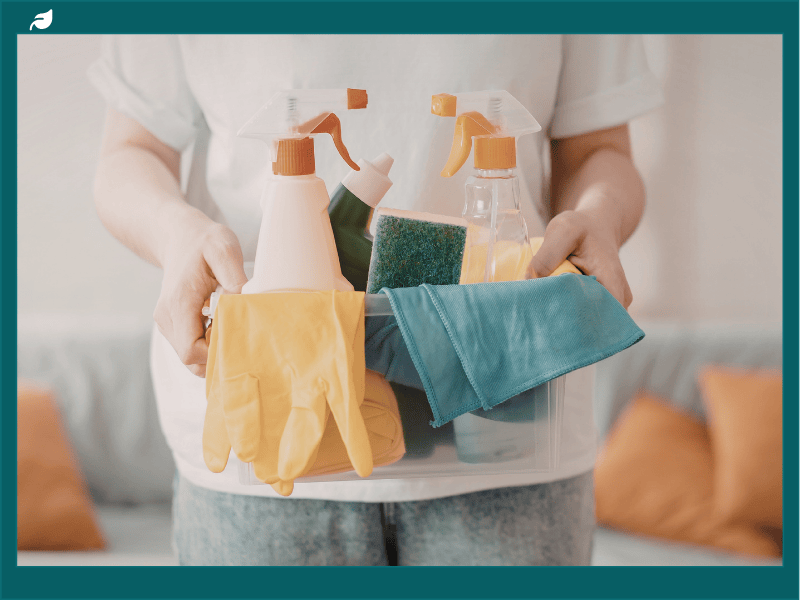
Sustainable cleaning extends beyond product formulation to practices that reduce overall resource consumption during the cleaning process. Microfiber cleaning materials capture dust and grime mechanically rather than relying entirely on chemical action, which reduces the volume of cleaning product required to achieve a given result and extends the effectiveness of each product application. Water conservation practices during cleaning reduce the resource load of each visit. Reusable cleaning materials replace single-use disposable products that contribute to waste streams with every cleaning visit.
These practice-level sustainability choices compound the product-level choices to produce a professional cleaning service whose overall environmental footprint is meaningfully lower than conventional cleaning across the full volume of homes served. For Mums Cleaning Services Chicago clients, this means that choosing professional cleaning does not require accepting a trade-off between a clean home and environmental responsibility.
How to Evaluate Whether a Cleaning Service Is Genuinely Committed to Sustainability
The growth of client interest in sustainable cleaning has produced a corresponding growth in marketing language that is not always supported by actual practice. Distinguishing genuine commitment from surface-level positioning requires asking specific rather than general questions.
Ask what specific products are used and what qualifies them as sustainable. A cleaning service that has made a genuine commitment can name the products, identify the ingredient characteristics that qualify them, and explain the criteria used in their selection. Responses that rely on general terms like natural or green without specific product or ingredient information should prompt follow-up questions.
Ask specifically about fragrance approach. The distinction between essential oil-based fragrance systems and synthetic fragrance formulations is meaningful for both indoor air quality and for clients with fragrance sensitivities, and a service committed to sustainable practices should be able to speak to it specifically.
Ask how client sensitivities and preferences are accommodated. A genuinely sustainable cleaning service has a clear process for working with clients whose household circumstances require specific product choices, rather than treating such requests as exceptions to a standard approach.
Chicago households that ask these questions and choose accordingly are making a choice that affects not just the cleanliness of their own home but the cumulative chemical load entering the city’s water system from every cleaning visit across every home a service operates in. That cumulative impact is real, and it is one reason why sustainable cleaning at the professional service level matters considerably more than individual household choices made in isolation.