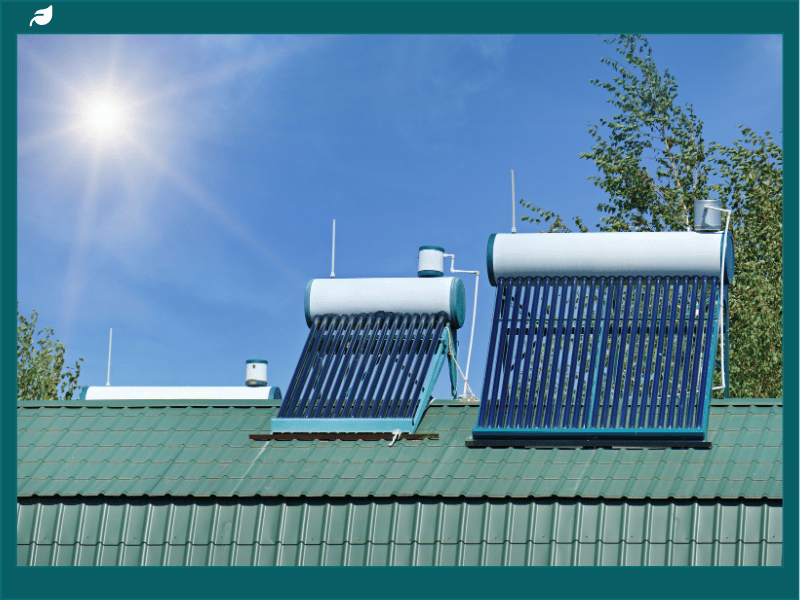
Understanding Solar Water Heater Technology
Most home water heaters run around the clock burning gas or electricity, and most homeowners never think twice about it. A solar water heater changes that equation completely, pulling heat straight from sunlight and cutting your energy bill before you’ve even touched the thermostat. According to the U.S. Department of Energy, recent innovations in selective absorber coatings enable solar water heaters to maintain optimal temperatures even on cloudy days, with modern solar glass increasing thermal efficiency by up to 20% compared to traditional models.
These systems work on solar thermal principles: collectors absorb sunlight, convert it to heat, and push that heat into your water supply. Simple in concept, surprisingly sophisticated in practice. And with the cost of conventional energy going nowhere but up, understanding how the technology actually works is more than just interesting. It’s useful.
Key Components of a Solar Water Heater
At the center of every solar water heater is the solar collector. That’s the component doing the heavy lifting, absorbing solar energy and turning it into usable heat. You’ve got two main collector designs to choose from: flat-plate and evacuated tube. Flat-plate collectors are tough, relatively affordable, and well-suited to mild, sunny climates.
Evacuated tube collectors are built for tougher conditions, using vacuum-sealed glass tubes to slash heat loss and keep performing even when it’s grey and cold outside.
From the collector, heat moves into the storage tank. A well-insulated tank is everything here. Poor insulation means your system loses heat overnight and works harder the next day to compensate. Good insulation means the hot water you captured at noon is still waiting for you at midnight.
The circulation loop connects those two components. Direct systems send water straight through the collectors and into the tank. Indirect systems use a heat-transfer fluid, often a glycol-water mixture, that won’t freeze in cold weather, making them the smarter choice anywhere winters bite. The fluid absorbs heat in the collector, transfers it to the tank through a heat exchanger, and cycles back around.
Sensors and controllers tie the whole thing together. They monitor temperatures throughout the system and trigger the pump when the collector is hotter than the tank. They also protect against overheating on peak summer days and freezing on cold nights. Without them, even a perfectly sized solar water heating system would underperform.
With them, the system essentially manages itself, quietly doing its job while you get on with your day.
How Solar Collectors Enhance Efficiency
Pull out the solar collectors and you don’t have a solar water heating system. You just have a tank. The collectors are where sunlight becomes heat, and every percentage point of efficiency you gain there ripples through the entire system.
Types of Solar Collectors and Their Benefits
Flat-plate collectors have been the workhorse of solar water heating for decades. Each unit is a dark absorber plate under a transparent glass or plastic cover, backed by insulation. The cover lets sunlight in and traps the resulting heat, much like a greenhouse. They’re durable, they’re proven, and in a climate with reliable sunshine they capture solar energy very effectively.
Homeowners on a tighter budget often start here, and for many households in temperate regions, a flat-plate system is all they’ll ever need.

Evacuated tube collectors are a different animal. Picture rows of parallel glass tubes, each one containing a smaller absorber tube inside a vacuum. That vacuum is the key: it eliminates convective heat loss almost entirely, which means the collector stays hot even when the air outside is cold, cloudy, or windy. The solar thermal performance gap between evacuated tubes and flat-plate collectors is relatively small on a perfect summer day.
But on a February morning in Scotland or Minnesota, the evacuated tube system keeps producing hot water while a flat-plate system struggles.
Both collector types do the same job: capture solar energy and transfer it as heat to whatever fluid is running through the system. The differences are in how well they hold onto that heat under difficult conditions. For solar water heaters installed in northern latitudes or high-altitude locations, evacuated tube collectors consistently deliver better annual performance numbers. For sunnier, milder climates, flat-plate collectors offer excellent value and long service life.
Beyond the flat-plate versus evacuated tube debate, the mounting angle and orientation of any collector matters enormously. A well-chosen collector type paired with a poor installation can underperform a basic flat-plate system pointed at the right part of the sky. The technology and the positioning work together. Get both right and your solar heating system rewards you for it every single day.
The Role of Evacuated Tube Systems in Heating Efficiency
Here’s the thing about evacuated tube systems: the vacuum isn’t just a clever engineering trick. It’s the reason these systems work so well in conditions that would significantly limit a flat-plate collector’s output.
Each evacuated tube creates a near-perfect insulating barrier around the absorber inside it. Heat that enters the absorber has almost nowhere to escape except where you want it to go: into the heat-transfer fluid circulating through the system. That fluid, typically a glycol-water mix, picks up the thermal energy and carries it to the storage tank. The result is a consistent supply of hot water even when outdoor temperatures are well below freezing and the sky is more grey than blue.
The environmental payoff is real. Solar water systems built around evacuated tubes run almost entirely on renewable energy, which means less gas burned, less CO2 released, and a meaningfully lower carbon footprint for the household. For a technology that pays for itself over time through energy savings, that’s a genuinely satisfying combination.
These systems also adapt well to different installation configurations. Whether you’re working with a small roof on a semi-detached house or a large south-facing commercial installation, evacuated tube arrays can be sized and arranged to match the load. They integrate with both direct and indirect circulation setups, and they’re compatible with backup heating systems for the periods when solar gain alone isn’t enough. That flexibility makes them one of the most versatile options in the solar water heating category, and advances in manufacturing have made them increasingly cost-competitive with flat-plate alternatives.
Comparing Different Heating Systems for Optimal Performance
No single solar water heating system is right for every situation. The best system for a house in coastal California looks quite different from the best system for a home in upstate New York, and the gap in annual performance between a well-matched system and a poorly matched one can be significant.
Flat-plate systems are hard to beat on cost and simplicity in climates where freezing isn’t a serious concern. They’re straightforward to install, easy to maintain, and the technology is mature enough that replacement parts are widely available. In sunny, temperate regions, a properly sized flat-plate solar water heater can meet 50 to 80 percent of a household’s annual hot water demand from solar alone.
Evacuated tube systems close that gap in colder climates and can exceed flat-plate performance in year-round energy yield wherever winters are long. The higher upfront cost is typically offset by better performance over the system’s lifespan, particularly when backup heating costs are factored in.

Beyond the collector choice, the rest of the system matters too. A large, well-insulated storage tank lets you bank heat captured during peak solar hours and draw it down through the evening. A properly configured pump and control system prevents stagnation and ensures heat moves efficiently from collector to tank. And a quality heat exchanger in an indirect system protects both the collectors and the potable water supply from contamination and corrosion.
The honest answer to which system performs best is: the one that matches your climate, your hot water demand, your roof orientation, and your budget. Solar technology has advanced far enough that there are excellent options across all those variables. The key is doing the matching deliberately rather than defaulting to whatever’s cheapest at the point of purchase.
Installation Tips for New Solar Systems
Getting a solar water heater installed correctly matters as much as choosing the right equipment. A great collector pointed at the wrong part of the sky, or a storage tank with inadequate insulation, will cost you efficiency every single day for the life of the system.
Easy Steps for Setting Up Your Water Heater
Start with a proper site assessment. Look at your roof’s orientation, pitch, and structural condition. Solar collectors for water heating perform best when they face the equator at an angle close to your site’s latitude. In the northern hemisphere that means a south-facing slope; in the southern hemisphere, north-facing.
Even a 20-degree deviation from ideal orientation starts to reduce annual solar heat capture, so this step is worth doing carefully before anyone picks up a drill.
Once the mounting location is confirmed, turn your attention to the storage tank. Size it to match your household’s hot water demand, and make sure the insulation rating is genuinely good, not just adequate. In indirect systems, the tank needs a properly sized heat exchanger to transfer energy from the glycol-water circuit to the potable water supply. Skimp on the exchanger and you create a bottleneck that limits how fast the system can recover after a period of high demand.
Plumbing connections need careful attention. All joints should be pressure-tested before the system goes live, and expansion vessels should be correctly sized to handle the thermal expansion that happens as the system heats up and cools down daily. For evacuated tube installations, check that each tube is properly seated in its manifold. A loose tube doesn’t just underperform; it can allow cold air infiltration that compromises the neighboring tubes as well.
The control system is the last piece. Set the differential temperature correctly so the pump activates only when the collector is genuinely hotter than the tank, typically by at least 5 to 10 degrees Celsius. Configure the high-temperature cutoff to prevent the system from overheating on long summer days. And test every sensor before signing off.
A sensor reading two degrees high might seem trivial, but over thousands of pump cycles it translates into measurable energy waste. Get the controls right from day one.
Maintaining and Troubleshooting Your Solar Water System
A solar water heater that’s well maintained will run reliably for 20 years or more. One that’s ignored tends to develop small problems that quietly compound into expensive ones.
The most important maintenance task is keeping the solar collectors clean. Dust, pollen, bird droppings and leaves all reduce the amount of sunlight reaching the absorber surface. In dry climates, a quarterly rinse with clean water is often enough. In areas with heavier soiling, more frequent cleaning pays dividends in recovered output.

For evacuated tube systems, inspect each tube visually at least once a year. A broken vacuum seal causes the glass to cloud or frost, and that tube needs replacing before it drags down the performance of the array.
Check the storage tank annually for signs of corrosion or sediment buildup. Sediment settles at the bottom of the tank and acts as insulation between the water and the heat exchanger, reducing efficiency. Flushing the tank periodically keeps it working at full capacity.
Insufficient hot water is the most common complaint from solar water heater owners. Before assuming a component has failed, check the obvious things: is the collector unobstructed? Is the pump running when it should? Is the thermostat set correctly on any backup heating element?
A blocked collector or a stuck pump accounts for a large proportion of underperformance calls that get logged with solar installers.
Strange noises from the system usually point to one of two causes: trapped air in the circulation loop or a pump that’s starting to wear. Bleeding the system removes air pockets. A noisy pump that’s past its service life should be replaced before it fails completely and leaves you without hot water and potentially with collector damage from stagnation.
Maximizing Energy Savings with These Practical Tips
A solar water heater is an investment, and like any investment, you get more out of it when you manage it actively rather than just installing it and walking away.
Orientation and tilt do most of the work. A collector angled correctly for your latitude and facing the equator captures significantly more solar energy annually than one that’s close but not quite right. If your roof doesn’t offer ideal positioning, adjustable mounting frames can compensate. It’s worth the extra cost during installation.
Choose your collector type deliberately. In a cold climate, evacuated tube collectors will typically deliver better year-round performance than flat-plate alternatives, and that performance gap translates directly into lower backup heating costs across the life of the system. In a warmer climate, a quality flat-plate system often hits the efficiency ceiling at a lower price point.
Insulate your storage tank and your pipework. Heat loss from uninsulated pipes between the collector and the tank can be surprisingly large, particularly in cold weather or when pipes run through unheated spaces like roof voids. Pipe insulation is cheap. The energy it saves over 20 years is not trivial.
Use thermal sensors intelligently. A well-configured control system that runs the pump only when it’s genuinely productive maximizes the solar heat captured and minimizes electricity consumed by the pump itself. And if you have a backup electric or gas heating element in the tank, use a timer to restrict its operation to periods when solar gain is unlikely, typically early morning or late evening, rather than letting it compete with the solar system during the day.
Finally, treat maintenance as part of the system’s performance, not an optional extra. Clean collectors, a clear circulation loop, and a functioning pump are the difference between a solar water heater that meets 70 percent of your hot water needs and one that meets 45 percent. The gap is real, it’s measurable, and it shows up in your energy bills every single month.
Looking for a solar installer?
Compare MCS-certified solar panel installers across the UK in our directory, with ratings, reviews and free quotes, listed by county.
Related solar guides: