The Magical World of Fireflies
On a warm July evening in the American Midwest, the fields switch on. One light, then ten, then hundreds, blinking in the dark like a living constellation that nobody planned. That is your first real encounter with fireflies, also called lightning bugs, and it rewires something in your brain permanently. In 2024 the U.S. Fish and Wildlife Service proposed listing the Bethany Beach firefly (*Photorinus bethanyensis*) as a threatened species under the Endangered Species Act, marking the first time any firefly species has received federal protection.
These beetles belong to the family Lampyridae, inside the larger order Coleoptera, and they have been pulling off this light show for millions of years. They are found on every continent except Antarctica. There are roughly 2,000 described firefly species worldwide. And yet, for all that ubiquity, most people barely know what is happening when they watch that meadow light up.
So here is what is actually going on, why it matters, and what you can do to make sure it keeps happening.
Understanding Their Glowing Light
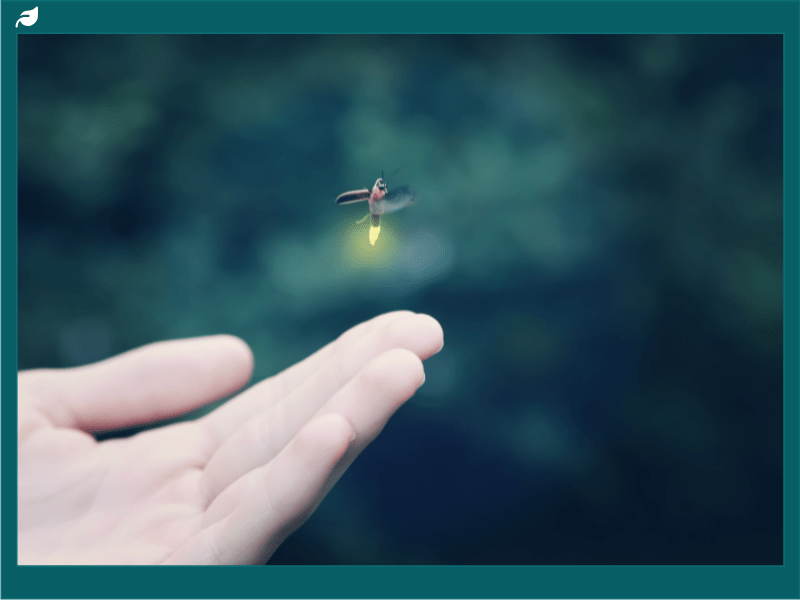
The glow starts in the abdomen. Tucked inside a dedicated light organ is a reaction that scientists still find genuinely elegant: an enzyme called firefly luciferase catalyzes a meeting between a molecule called luciferin and oxygen, and the result is cold light. No heat. Almost no wasted energy.
Human engineers building LED technology would kill for that efficiency, and they have spent decades trying to reverse-engineer it. The conversion rate of chemical energy to visible light in a firefly’s light organ is estimated at close to 100 percent. Compare that to an incandescent bulb, which loses roughly 90 percent of its energy as heat, and you start to appreciate what evolution managed to build inside an insect abdomen.
The light is not decorative. It is language.
Males fly through the dark throwing out specific flash patterns, sequences timed to the millisecond, that females of the same species recognize instantly. Each firefly species runs its own code. A female perched on a blade of grass reads the incoming pattern, waits the right number of seconds, and flashes back if she likes what she sees. Get the timing wrong and she stays dark.
The whole exchange is a biological lock and key, shaped over evolutionary time to prevent cross-species confusion. When you watch a summer meadow pulsing with fireflies glow in overlapping rhythms, you are watching thousands of simultaneous private conversations happening at different heights, different tempos, and different wavelengths of light, each one invisible to every species except the right one.
But communication is not the only job the light does. For certain species, bioluminescence doubles as a chemical warning. Fireflies carry defensive steroids called lucibufagins in their tissue. Predators that have tried one before tend to avoid the glow afterward.
The light literally says: I taste terrible. Do not bother. Laboratory experiments have confirmed that naïve birds presented with glowing fireflies will often eat the first one offered, recoil, and refuse subsequent ones. The signal works.
It is honest advertising in the most direct biological sense.
Here is something that surprises most people. Not all fireflies glow. Some species, especially those in drier or colder climates, have dropped the bioluminescence entirely and rely on pheromones instead. American fireflies are the ones that kept the light, which is why summer nights in the eastern United States and Canada feel so different from summer nights almost anywhere else.
The darkness there is genuinely alive. West of the Mississippi, where the climate runs drier, you find far fewer of the glowing species, and summer nights in those regions have a different, quieter character that people raised in the East often find slightly wrong without being able to explain why.
Beyond their personal drama, fireflies glow as a signal about the broader environment too. They are extraordinarily sensitive to habitat disruption and pollution. A field full of lightning bugs is a field that still has clean water, undisturbed soil, and real darkness. Ecologists treat their presence as a health certificate for a landscape.
Their absence is the opposite. When firefly populations collapse in an area, it rarely happens in isolation. Usually the insects, the amphibians, and the water quality are all declining together, and the fireflies just happen to be the most visible indicator because they announce themselves with light.
That is the deeper reason this matters. Preserving these luminous beetles is not sentiment. It is a practical act of ecosystem maintenance.
Habitat and Distribution
The flash you see on a summer evening is the adult stage, the brief, glamorous finale of a life cycle that mostly happens in the soil and leaf litter. To understand where fireflies live, you have to think past the adult and into the moist, dark places where larvae hunt in the dark for months or years.
Where to Find Fireflies and Lightning Bugs
Fireflies, or lightning bugs, are creatures of humidity. They cluster near ponds, streams, marshes, and the edges of forests anywhere the soil stays damp enough to support their larval stage. Their global range runs through temperate and tropical zones across Asia, Europe, the Americas, and into Australia, though the density and the specific firefly species change dramatically from region to region. A tropical rainforest margin in Southeast Asia and a creek-bottom meadow in Ohio are both firefly habitat, but they support almost entirely different species assemblages and completely different flash behaviors.
In the eastern United States and Canada, firefly populations peak through June and July, lighting up meadows, backyards, and creek bottoms with a density that tourists from drier parts of the world find almost impossible to believe. The Great Smoky Mountains in Tennessee are home to Photinus carolinus, one of only a handful of synchronous firefly species on Earth, where thousands of individuals flash in near-perfect unison across the forest understory. The National Park Service runs ticketed viewing events specifically to manage the crowds that come to watch. The lottery for those viewing shuttle tickets routinely draws tens of thousands of applicants for a few hundred spots, which tells you something about how rare and sought-after a genuine firefly spectacle has become even in a country where the insects are still relatively common.
Asia holds some of the most spectacular firefly displays anywhere. In Malaysia’s Selangor River mangroves, Pteroptyx tener fireflies line the riverbank trees and synchronize their flashes colony by colony, so that each tree pulses like a slow strobe. Tour boats run nightly on that river, and the displays draw researchers from Europe and North America. Japan’s relationship with fireflies, known there as hotaru, goes back over a thousand years.
Seasonal hotaru viewing is a cultural institution, and towns along slow-moving rural rivers hold annual festivals timed to the peak emergence. In Thailand, similar riverside displays in places like the Amphawa canal system have become a growing draw for wildlife tourism. The economics of that tourism have, in several instances, directly motivated local communities to protect the riparian vegetation and reduce pesticide use along stretches of water that would otherwise have been converted for agriculture.
Europe’s firefly picture is quieter but not absent. The common glow-worm, Lampyris noctiluca, is technically a firefly species within the family Lampyridae, even though the adult female does not fly. She climbs a grass stem, lights up her abdomen, and waits. You find her in lush meadows and open woodland edges across Britain and continental Europe, though her numbers have dropped sharply in the last few decades.
Long-term monitoring data from the UK Glow Worm Survey, which has tracked populations since the 1990s, shows a pattern of consistent decline across most monitored sites, with loss of rough grassland and increased light pollution identified as the main drivers. South America adds its own chapter, with firefly species lighting up the edges of the Amazon basin and the Atlantic Forest in ways that researchers are still documenting. Brazil alone is thought to host several hundred described firefly species, and surveys in poorly accessed areas continue to turn up new ones.
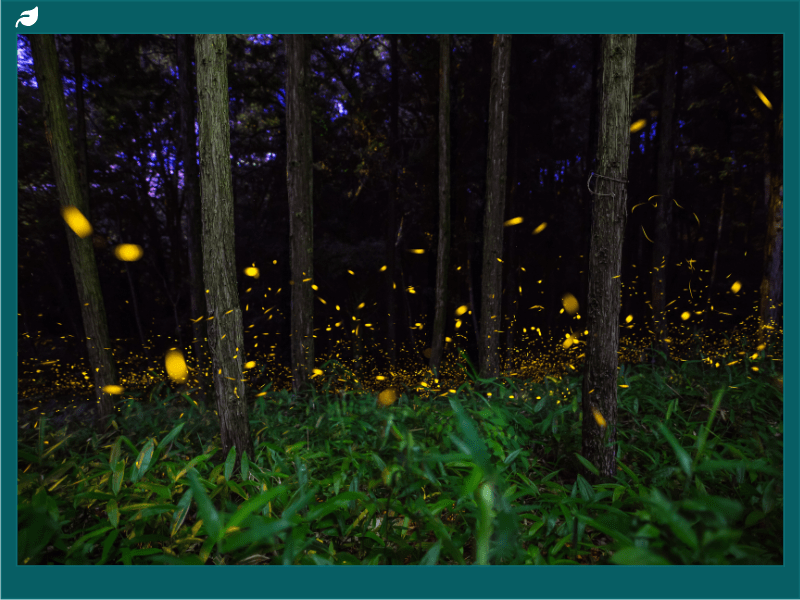
All of these populations share one requirement: they need darkness, moisture, and relatively undisturbed land. That is exactly what is becoming harder to find.
Threats to Their Habitat
The three biggest threats to firefly populations globally are light pollution, habitat loss, and chemical contamination. They often operate together, and their combined effect has pushed populations into measurable decline across Europe, North America, and parts of Asia.
Light pollution is the one that catches people off guard, because it seems so minor. But fireflies glow to communicate, and artificial lighting drowns out their signals the way a loudspeaker drowns out a whisper. Males cannot be seen. Females cannot locate flashing males. Mating fails. A single streetlight near a wetland can suppress firefly activity in a significant radius around it. Research from firefly biologist Sara Lewis at Tufts University has documented exactly this effect in controlled observations, showing that even low-intensity artificial light measurably reduces flash rates and female response behavior. A 2024 study analyzing 24,000 citizen science surveys found that artificial lighting can reduce firefly mating success by more than 50 percent in certain species, providing a precise quantification of reproductive disruption that underscores the scale of the threat. Multiply that suppression by every parking lot, shopping center, and suburban street in the country, and you start to understand why firefly populations in developed landscapes are a fraction of what they were fifty years ago.
Urban and suburban development destroys habitat directly. Firefly larvae live in soil for one to two years before they pupate. When that soil gets paved, graded, or saturated with drainage runoff, the larvae die. Wetlands get drained.
Creek margins get mowed to the waterline. What looks like tidiness to a homeowner looks like extinction to a larva. The cumulative loss of wetland habitat in the United States since European settlement is estimated at over 50 percent of the original total, and the loss of the moist, vegetated margins that fireflies depend on has tracked closely with that broader pattern of wetland conversion.
Pesticides compound everything. Insecticides applied for mosquito control, lawn care, or agriculture do not distinguish between target species and bystanders. Fireflies absorb these chemicals through soil and water contact. Even sublethal doses can interfere with their development and reproduction.
Fertilizer runoff changes the chemistry of the wetlands they depend on, altering the invertebrate communities their larvae prey on and disrupting the food chains that sustain them. Pyrethroid insecticides, among the most widely used class of lawn and garden pesticides in North America, are highly toxic to aquatic invertebrates at very low concentrations and persist in soil for months after application.
Climate change is layering new pressure on top of all of this. Firefly emergence is timed to temperature and rainfall cues that have stayed consistent for thousands of years. Drought years reduce larval survival directly, because the soil moisture those larvae depend on for movement and hunting simply disappears. Warmer winters disrupt the cold period that many species need to complete their development correctly.
Timing mismatches between emergence and peak prey availability are already being observed in some populations, and phenological shifts of this kind tend to compound over years rather than self-correct.
None of this is inevitable. Protected areas, reduced pesticide use, and lighting ordinances designed with wildlife in mind have all shown real results. But the pressure is consistent and ongoing, and without deliberate effort, the trend runs one direction.
The Life Cycle of Fireflies
Most people only ever see the adult stage. Two weeks, maybe six, of flashing and mating, and then it is over. But that brief adult life is the last chapter of a story that starts in the soil and takes a year or more to complete. Each stage is worth knowing.
From Egg to Adult: Stages of Development
It begins with the female choosing a site. She lays her eggs in moist soil, under leaf litter, or beneath bark, places where humidity stays high and disturbance stays low. The eggs are tiny and pale, often laid in clusters of fifteen to thirty depending on the species. They incubate for roughly two to four weeks, depending on temperature and species.
Warmer conditions speed development. Dry conditions can kill the eggs before they hatch, which is one reason firefly reproduction tends to be poor in drought years even if the adults emerged in normal numbers.
The larva that emerges looks nothing like the adult it will become. It is small, segmented, and built for hunting. Firefly larvae are aggressive predators of soft-bodied invertebrates. Snails, slugs, earthworms, and small arthropods are all on the menu.
The larvae inject digestive enzymes into their prey and then consume the liquefied contents, a method that is efficient and thoroughly unromantic. What is remarkable is that many firefly species are bioluminescent even at the larval stage. The glow is dim compared to the adult flash, but it functions as a warning to vertebrate predators: these larvae carry the same defensive compounds as the adults, and they taste just as bad. Some researchers believe this larval glow may also play a role in communication between larvae, though the evidence for that is still developing.
Larvae spend anywhere from several months to nearly two years in the soil, depending on the species and the conditions. They go through multiple molts as they grow, shedding their outer layer and expanding before the new cuticle hardens. Each instar stage is slightly larger, and the larvae become progressively better hunters as they develop. This underground phase is the longest part of the firefly life cycle, and it is the part most vulnerable to habitat disruption.
Everything that damages the soil, compaction from foot traffic or machinery, pesticides, drought, flooding from altered drainage, attacks fireflies at their most defenseless stage. The vast majority of firefly mortality happens here, in the dark, invisibly, which is part of why population declines can seem sudden even when the causes have been building for years.
When the larva has stored enough energy, it pupates. It constructs a small cell in the soil or leaf litter and seals itself inside. Over one to two weeks, the body reorganizes completely. Wings form.
The adult compound eyes develop. The light organ assembles itself in the abdomen. The adult firefly that emerges is in many ways a completely different animal from the larva that went in, carrying different behaviors, different sensory priorities, and an entirely different relationship to the world above the soil surface.
Adult fireflies emerge already oriented toward one thing: reproduction. They have a short window, often only a few weeks, and many species of adult fireflies do not feed at all during this period. They live entirely off the energy reserves accumulated during the larval stage. Every flash pattern, every waiting female, every successful mating is the payoff for months or years of hunting in the dark underground.
The brevity of adult life is not waste. It is compression. Everything non-essential has been stripped away, and what remains is urgent and specific.
After mating, females lay their eggs and the cycle begins again. The shortness of the adult stage is part of what makes firefly emergence feel so electric when you witness it. Those lights in the meadow are not idle entertainment. They are urgency.
They are the entire reproductive future of those animals compressed into a few summer weeks. Knowing that changes how you watch them.
Understanding this full arc, from egg to larva to pupa to glowing adult, makes it much easier to see why habitat quality matters at every single stage, not just when the lights come on. A landscape that supports adult fireflies but degrades the soil and moisture conditions their larvae need is a landscape running on borrowed time. The adults you see this summer are last year’s larvae. The adults you will see next summer are this year’s soil conditions.
The Role of Fireflies in Ecosystems
Beautiful does not mean passive. Fireflies are active participants in their ecosystems, and their presence or absence tells you something real about the health of the land they occupy.
How Fireflies Impact Their Environment
Start underground. Firefly larvae spend months to years hunting through the soil, and in doing so they regulate populations of snails, slugs, and other invertebrates that would otherwise expand unchecked. Left without predators, slug populations can devastate plant communities, particularly in wet years when slug reproduction accelerates. The larvae’s hunting keeps those populations in check, which protects vegetation, which supports every other organism that depends on that plant life.
The larvae also contribute to nutrient cycling as their activity aerates soil and their prey’s decomposition feeds microbial communities. This is unglamorous but genuinely important work, the kind that only becomes visible when it stops.
Above ground, adult fireflies enter the food web as prey. Their chemical defenses make them unpalatable to many predators, but not all. Certain birds, spiders, and amphibians have developed tolerance for their defensive compounds and consume them regularly. More interestingly, some predatory female fireflies of the genus Photuris have evolved the ability to mimic the flash responses of other firefly species, luring males in close and then eating them.
This allows Photuris females to sequester the defensive compounds of their prey into their own tissues, boosting their own chemical defense. It is predation as pharmaceutical strategy, and it illustrates how deeply fireflies are woven into the behavioral ecology of their communities. The Photuris females are sometimes called femmes fatales in the scientific literature, which is one of the more vivid coinages in entomology.
Fireflies also function as ecological indicators in a way few other organisms match. Because they require clean water, undisturbed soil, low light pollution, and minimal pesticide contamination simultaneously, their presence marks places where multiple environmental conditions are holding at once. Researchers monitoring firefly populations in a given landscape can get meaningful data on pollution trends, habitat fragmentation, and the effectiveness of conservation interventions. A recovering wetland that starts producing fireflies again is a wetland where several things are going right at once, and that convergence of positive signals is exactly what conservation managers need to identify which interventions are actually working.
There is an indirect contribution to biodiversity too. By helping regulate invertebrate populations and signaling habitat health, fireflies support conditions in which a wider range of species can persist. Featured prominently in ecological monitoring programs across the United States, Japan, and the United Kingdom, firefly population data now feeds into broader wildlife assessments that inform land management decisions at regional and national scale. In Japan, the presence of Luciola cruciata, the Genji firefly, in a river system is used as a formal indicator of water quality in some prefectural environmental assessments.
The cultural role fireflies play among human communities is itself a form of ecological value. Communities that cherish fireflies create pressure to protect the landscapes those fireflies need. Conservation motivated by beauty is still conservation. The glow of lightning bugs has probably saved more wetlands than most people realize, because it made those places feel worth defending to people who would not have framed the argument in ecological terms but knew, instinctively, that losing the lights would mean losing something irreplaceable.
Human Interaction with Fireflies
People have been watching fireflies and building meaning around them for as long as there have been warm summer nights and humans capable of wondering. The relationship runs deep, and it has practical consequences for conservation.
Cultural Significance and Folklore
In Japan, hotaru have carried symbolic weight for over a thousand years. Classical poetry from the Heian period uses them as images of longing, transformation, and the souls of the dead. The warrior association is specific: fireflies were understood as the spirits of fallen soldiers, restless and briefly luminous. Annual hotaru festivals still run in rural prefectures, timed to peak emergence, drawing people who come not just to look but to remember.
These festivals generate real local income, which gives municipal governments a financial incentive to protect the river habitats and reduce pesticide use in surrounding farmland. The cultural tradition and the conservation outcome reinforce each other in a way that is genuinely useful and worth replicating elsewhere.
Native American traditions across several nations treat firefly light as a form of guidance. The light cutting through darkness carries spiritual resonance, a beacon during difficulty, a sign of persistence. Different nations encoded this differently, but the core metaphor recurs: something small making its own light against a dark background is worth paying attention to. In some traditions, the appearance of fireflies at the start of summer was a signal to begin specific agricultural or ceremonial activities, linking the insects to calendars of human life in a way that made their presence practically meaningful rather than merely decorative.
In parts of Central America and the Caribbean, fireflies appear in folk medicine traditions and in stories about the boundary between the living and the dead. The light is liminal. It belongs to the edge hours, dusk and dawn, and to the edge places, the margins of forests and wetlands. In some Maya traditions, the firefly was associated with the stars and with tobacco, and images of firefly-like figures appear in pre-Columbian art in ways that scholars are still interpreting.
European folklore about glow-worms, the female of the species Lampyris noctiluca, treated them as guides for travelers and as signs of good fortune in a garden. The old English name for them was “shine-worm,” which is plain and accurate and somehow more charming than either of the modern alternatives. William Shakespeare referenced the glow-worm in Hamlet, where the ghost describes the dawn making the glow-worm’s “ineffectual fire” pale, using the insect’s light as a shorthand for something beautiful that fades when a greater light arrives. The image works because the audience knew exactly what he meant.
Everyone had seen one.
In contemporary culture, fireflies and lightning bugs have featured in literature, film, and music as shorthand for the irretrievable: childhood summers, rural landscapes before suburbanization, the feeling of a world that moved more slowly. The Studio Ghibli film “Grave of the Fireflies” uses them as a framing device for loss that has no consolation. Counting Crows, Owl City, and multiple poets have reached for fireflies when they needed an image for beauty that does not last. That recurring reach across such different cultural contexts tells you something: the glow of lightning bugs activates something in human perception that goes beyond aesthetic pleasure.
All of this cultural freight matters for conservation because it creates constituencies. People who grew up catching lightning bugs in a jar and letting them go are people who, decades later, notice when the fields go dark. They vote on local planning decisions. They push back against pesticide use.
They support the events and the protected areas and the public awareness campaigns that conservation organizations depend on to build the political will for meaningful change. Sentiment, in this context, is not soft. It is load-bearing.
Conservation Efforts and How You Can Help
Global firefly conservation is not a single coordinated movement. It is a patchwork of local efforts, citizen science programs, research initiatives, and policy campaigns operating in parallel and occasionally in conversation with each other. The Xerces Society in North America runs firefly monitoring programs and publishes guidance on habitat protection. Firefly Watch, a citizen science project that ran through the Museum of Science in Boston, collected population data from thousands of amateur observers across North America over multiple years, generating a dataset on firefly populations that would have been impossible to produce with professional researchers alone.
The International Union for Conservation of Nature has assessed multiple firefly species for their Red List, with several now listed as vulnerable or endangered, including the Okinawan endemic Luciola owadai and several North American species facing severe range contraction.
Protected areas help, but they are not sufficient on their own. Fireflies do not recognize park boundaries. The wetland inside the nature reserve is meaningless if the agricultural land surrounding it is saturated with pesticide runoff and lit up with security lighting all night. Effective firefly conservation requires working across the broader landscape, engaging farmers, municipalities, utilities, and private landowners, not just managing designated zones.
Buffer zones around known firefly habitat, managed with reduced chemical inputs and dark-sky principles, have shown measurable benefits in several documented cases in Japan and Taiwan.

Light pollution reduction is one of the highest-impact interventions available. Shielded fixtures that direct light downward rather than outward, timer systems that cut nonessential lighting after midnight, and warm-spectrum bulbs that are less disruptive to insect behavior are all practical changes that towns and property owners can make without major expense. Some municipalities in Japan and Taiwan have implemented lighting ordinances around known firefly habitats, and the results in terms of population recovery have been measurable and relatively quick, sometimes showing increases in flash activity within a single season of reduced lighting. That speed of response, compared to the years it takes to restore habitat or reduce soil pesticide loads, makes light pollution a particularly high-value target for early intervention.
On an individual level, your options are more concrete than most people assume. If you have a garden or yard, stop using broad-spectrum insecticides. Full stop. Switch to organic practices.
Let a section of your lawn grow longer and wilder, particularly near any water feature, because that unmowed margin is potential larval habitat. Plant native vegetation, because native plants support the invertebrate communities that firefly larvae prey on, and because they tend to support higher overall insect diversity than ornamental exotics. If you use outdoor lighting, put it on a timer and point it down. These changes cost very little and their cumulative effect across a neighborhood can be substantial.
Participate in a citizen science monitoring program if one operates in your region. The data that everyday observers collect, logged consistently over multiple years, is some of the most valuable information researchers have on how firefly populations are shifting across the landscape. You do not need any special equipment. You need to go outside on summer evenings, look carefully, and record what you see.
That act, repeated by enough people over enough years, builds the evidence base that conservation policy depends on.
When you encounter firefly events in your area, go. Attend them and bring people who have never seen a good display. The economic argument for protecting firefly habitats gets significantly stronger when local tourism revenue is attached to it. Your presence at a firefly viewing night is a vote, in the most direct economic sense, for preserving the landscape that makes it possible.
And the experience of standing in a dark field watching hundreds of lights blink on and off in the summer air is one of those things that is genuinely difficult to forget.
The fight for firefly habitats is part of the broader argument for maintaining functioning ecosystems in a landscape dominated by human activity. These are not rare or exotic animals in a distant jungle. Lightning bugs live at the edge of your town, if the conditions are right. Keeping those conditions right is a choice, made repeatedly, at every level from individual gardening practice to municipal land use policy.
The lights in the field are not guaranteed. But they are not gone yet.
Tips for Observing Fireflies
Going out to watch fireflies properly is one of the more rewarding things you can do on a summer evening, and most people who try it for the first time are surprised by how much more they see when they know what to look for.
Best Practices for a Successful Viewing Experience
Pick your location before you pick your date. You want somewhere with minimal artificial light, ideally a meadow, a woodland edge, or a creek margin away from roads and buildings. Rural parks, nature reserves, and agricultural areas with intact hedgerows or wetland edges are your best options. Check whether any organized firefly viewing events run in your region, because the organizers will already know the best sites and peak timing for local firefly species, which saves you considerable guesswork and often puts you in a location with higher density and diversity than you would find on your own.
State and national park websites in the eastern United States typically post firefly emergence forecasts during peak season, and those forecasts are worth checking before you make the trip.
Timing within the season matters. In the eastern United States, peak activity for most species runs from late May through mid-July, with the exact window depending on latitude and that year’s temperature patterns. A wet spring followed by warm evenings tends to produce strong showings. Nights that drop below about 50 degrees Fahrenheit go quiet, because fireflies are cold-blooded and their activity scales directly with temperature.
The sweet spot is a humid, still evening where the temperature at dusk is somewhere between 70 and 85 degrees Fahrenheit. Wind suppresses activity too, partly because it makes it harder for flashing males to follow consistent flight paths and partly because it may interfere with the pheromone cues that some species use alongside their light signals.
Arrive before dark. Give your eyes at least twenty minutes to adapt to low light conditions. Human night vision is genuinely much better after adaptation than most people realize, and seeing the full depth of a firefly display, the near ones close to the ground, the distant ones high in the trees, requires that your vision has settled properly into the available light. Bring as little artificial light as possible.
If you need a flashlight for safety, cover the lens with red cellophane or use a dedicated red-light mode. Red wavelengths are far less disruptive to firefly signaling than white or blue light, because firefly eyes are most sensitive in the yellow-green range where their own bioluminescence is concentrated.
Stay still and stay quiet. Fireflies respond to vibration and disturbance. If you crash through the vegetation or talk loudly, the insects in your immediate area will reduce their activity noticeably. Sit down at the edge of the meadow or along the creek bank.
Let the environment settle around you. Give it ten minutes of genuine stillness and the density of what you see will increase as the insects that retreated when you arrived begin to reappear and resume their flashing. This patience is rewarded. The difference between a careless observation and a careful one, in terms of what you actually witness, is significant.
Watch for patterns, not just individual flashes. Different firefly species have signatures. The common eastern firefly, Photinus pyralis, makes a lazy J-shaped arc of light as it flies, dipping down and rising while it flashes: a roughly half-second pulse every five to six seconds. Photinus consimilis flashes faster and lower to the ground.
Photuris species tend to flash longer, sometimes in sequences of two or three pulses rather than single blinks. If you can start distinguishing the different patterns, you begin to see the field not as a uniform glow but as dozens of separate species-specific conversations happening simultaneously at different heights and intervals. That is when firefly watching stops being merely pretty and starts being genuinely interesting in the way that understanding a process always makes it more interesting than just observing the surface of it.
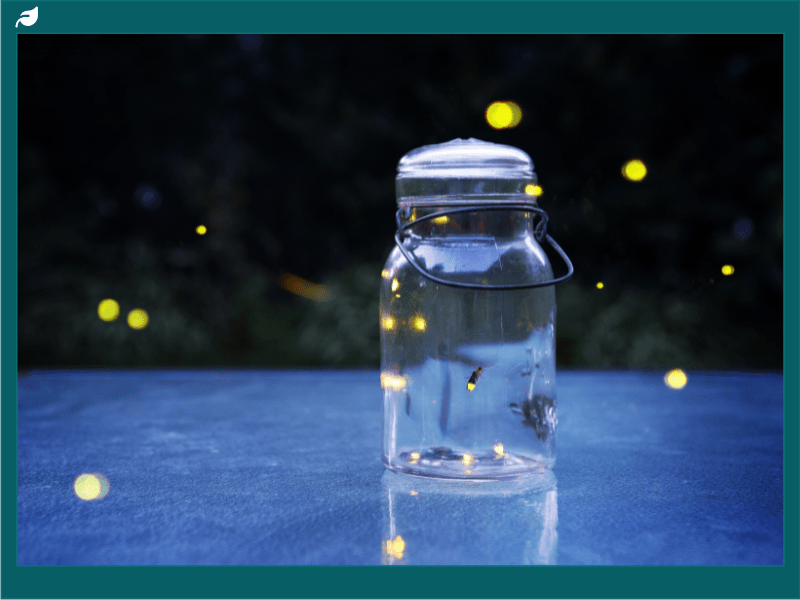
Do not collect them. The impulse is understandable, especially if you are with children, but handling fireflies stresses them and interrupts the mating activity that their brief adult lives are entirely organized around. If children want a closer look, let one land on an outstretched arm and observe it there before it flies off naturally. The jar-and-release approach, familiar from childhood nostalgia, is worth retiring.
A wildlife interaction that costs the animal nothing is always better than one that costs it something, even a small something. And the experience of watching a firefly crawl across a child’s palm and then lift off into the dark is, if anything, more memorable than watching it trapped behind glass.
Leave the site exactly as you found it. Do not cut vegetation, move logs, or disturb the ground cover. The moist, dark microhabitats at the edge of the field or creek are where the larvae are living right now, and they are not visible from above, but they are there, hunting through the soil in the dark, storing energy for an adulthood that is still months away. Trampling that margin damages the next generation of adult fireflies before they have had a chance to emerge, which means the display you watched tonight is partly erased by the way you walked out.
Think about what you can do afterward. If the site is on private land, talk to the landowner about what makes it good habitat, the moisture, the darkness, the untouched margins, and why keeping it that way benefits local wildlife. If it is in a park, find out whether the managing authority monitors firefly populations and whether they need volunteers for counts or habitat surveys. The species you watched tonight are part of a larger picture of firefly populations across a landscape, and that picture is more fragile than it looks when the field is full of light.
Fireflies are not guaranteed. They require specific conditions that are becoming less common as light pollution spreads, wetlands disappear, and pesticide use continues across agricultural and suburban landscapes. Every wetland that stays intact, every field margin that does not get sprayed, every streetlight that goes off at midnight is a small but real investment in the continued existence of those lights in the dark. The glow of lightning bugs on a summer night is one of the most direct and visible proofs that the natural world still functions in a particular place.
Watching that glow, understanding what produces it, and working to preserve the conditions it requires is one of the better ways you can spend a summer evening, and one of the more meaningful things you can carry back from it.