Historical Perspectives on Theraphosidae Taxonomy
Taxonomy sounds like a dry subject until you realize it’s really an argument about reality. Who gets to say what counts as a species? Which features matter, and which are accidents of where a spider happened to crawl? For the family Theraphosidae, that argument has been raging for more than two centuries, and it’s nowhere near settled. ScienceDaily research report, a newly described genus, Satyrex, encompasses four previously unknown tarantula species (*S. arabicus*, *S. somalicus*, *S. speciosus*, and a fourth unnamed species) found in the Arabian Peninsula and the Horn of Africa, all of which are fossorial (underground-dwelling) rather than displaying the typical terrestrial or burrow-sitting behavior of most Theraphosidae, illustrating just how much of the family’s diversity remains to be formally recognized.
The history of how we’ve classified tarantulas is, in a very real sense, a history of science learning to ask better questions. And if you want to understand where theraphosidae tarantula research is heading next, you have to start at the beginning.
The Origins of Theraphosidae Classification
Picture an 18th-century naturalist in a candlelit study, confronted with a large, hairy spider in a glass jar and absolutely no framework for making sense of it. The early classification of the family theraphosidae was exactly that chaotic. Tarantulas were lumped together with any other big, bristly spiders, grouped by the single criterion that they were conspicuous and alarming. Nobody was interrogating evolutionary relationships or tracing phylogenetic lineages.
They were just trying to name things so they could stop arguing about them.
That changed, slowly, through the 18th and 19th centuries. Taxonomists began organizing species around observable characteristics: body size, leg span, coloration, the density and texture of hair. Crude? Yes.
But it was also the only honest method available when the tools were a hand lens and a steady eye. These early descriptive efforts drew the first meaningful boundary between this group of spiders and the rest of the arachnid world, and they gave later researchers something to argue with, which is exactly what good science needs.
By the late 19th century the emphasis shifted. Morphological studies came into fashion, meaning scientists started paying close attention to structural features: the fangs, the spinnerets, the way chelicerae were built. This was a genuine conceptual leap. Instead of asking “what does it look like from a distance?” researchers began asking “how is it built, and what does that tell us?” The family theraphosidae started to develop real internal structure, with recognizable features that could separate one species from another rather than just separating tarantulas from everything else.
The 20th century pushed further. Microscopic analysis revealed leg segmentation patterns, eye arrangements, subtle differences in hair morphology that the naked eye would never catch. These findings were transformative. They gave taxonomists the granularity to recognize theraphosidae theraphosinae as a meaningful subfamily, a classification that went beyond superficial appearance and started to reflect something real about evolutionary history.
Mating behaviors and ecological roles entered the discussion too, because researchers understood by then that how a spider lives is as informative as how it looks.
Geographic distribution also entered the classification conversation during this period. Where a tarantula lives shapes what it becomes over generations, and recognizing that meant the map became a taxonomic tool. A spider from a Brazilian rainforest faces entirely different selection pressures than one surviving in an African savanna, and those pressures leave marks that taxonomy has to account for. All of this built the framework that modern arachnology stands on.
It was never a clean, linear progression. It was a series of arguments, revisions, and occasional reversals, which is exactly why the history matters.
Key Milestones in Tarantula Research
The early 20th century produced the first real milestone: the systematic application of comparative anatomy to tarantula research. Instead of cataloguing species in isolation, scientists started comparing them directly, laying specimens side by side and asking what the structural differences actually meant. Detailed anatomical drawings, and later photographs, transformed this from an art into something reproducible. Other researchers could look at the same evidence and either agree or push back.
That’s when theraphosidae spiders started to have a genuine scientific literature rather than just a collection of descriptions.
The mid-20th century brought molecular biology, and with it, a revolution. Analyzing genetic material gave researchers something they’d never had before: direct access to evolutionary history. DNA doesn’t lie about relationships the way body color can. Suddenly, hypotheses built on morphology could be tested against genetic evidence, and the results were sometimes startling.
Species that looked almost identical turned out to be genetically distant. Others that appeared quite different shared surprisingly recent common ancestors. This pushed a thorough reevaluation of earlier classifications, aligning them more honestly with what evolution had actually produced rather than what a researcher’s eye had grouped together.
Ecological studies added another layer. Understanding where tarantulas live, what they eat, how they interact with other species, and how their habitats shape their behavior gave taxonomists context they couldn’t get from a preserved specimen in a jar. An animal’s ecological role is part of what it is, and ignoring that produced classifications that were technically precise but biologically thin. Integrating ecology with morphology and genetics created a richer picture of tarantula biodiversity, one that acknowledged the web of relationships each species sits within.
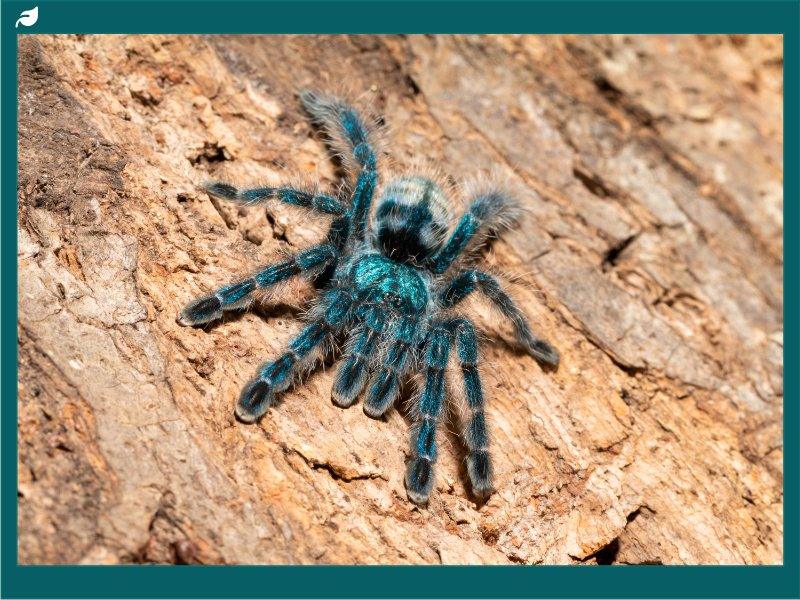
More recently, advanced imaging technologies and computational tools have pushed tarantula research into territory that would have seemed like science fiction to those 18th-century naturalists. High-resolution scanning and 3D modeling allow researchers to examine structural details at scales previously impossible, and to share that data globally in seconds. The pace of discovery has accelerated sharply. New species are formally described with greater frequency, and existing classifications are revisited regularly as new data arrives.
These milestones aren’t just triumphs of technique. They’re evidence that the questions scientists ask about tarantulas keep getting sharper, and the answers keep getting more interesting.
Evolutionary Traits of Theraphosidae
There’s a reason tarantulas have been around for a very long time. They’re not just surviving on reputation. The family Theraphosidae has developed a set of evolutionary adaptations that are genuinely impressive in scope, ranging from the immediately visible (that imposing body size) to the biochemically subtle (the specific properties of their hemolymph). Understanding what makes these spiders distinctive isn’t just satisfying curiosity.
It’s the foundation for understanding why their taxonomy is so complex, and why getting that taxonomy right actually matters.
Unique Characteristics of the Family
Size is the first thing anyone notices. Some tarantula species reach a leg span of up to 30 centimeters, making them the largest spiders on Earth by several measures. That’s not a trivial evolutionary achievement. Maintaining a large body requires significant metabolic investment and exposes an animal to different predation pressures than a small spider faces.
The fact that so many theraphosidae species have sustained that size across diverse habitats, from dense tropical rainforests to open arid deserts, says something important about how effective their overall adaptive toolkit is.
The urticating hairs are a perfect example of elegant evolutionary engineering. These aren’t just passive bristles. A threatened tarantula can flick them into the air with its hind legs, sending a cloud of irritating fibers toward a predator’s eyes and mucous membranes. The hairs are barbed at the microscopic level, designed to lodge and cause prolonged irritation.
It’s a defense mechanism that costs the spider almost nothing while inflicting real discomfort on a much larger animal. And, as more recent research has established, these hairs may do double duty as territorial markers, transmitting chemical signals to other spiders in the area. A structure that evolved for defense may have been co-opted for communication. That kind of repurposing is exactly what evolutionary biology keeps finding in theraphosidae.
The chelicerae deserve attention too. These large, powerful mouthparts carry fangs capable of delivering venom, and they’re built for subduing prey considerably larger than insects. The mechanics are impressive: the fangs strike downward in most theraphosidae species, driving venom into prey through sheer leverage. This carnivorous efficiency has allowed tarantulas to occupy apex predator roles in ecosystems where that niche was otherwise poorly filled.
Reproductive biology adds another dimension. Female tarantulas in many species invest heavily in their offspring, guarding egg sacs and monitoring hatchlings in ways that are genuinely unusual among spiders. This maternal investment increases juvenile survival rates and represents a meaningful evolutionary commitment to quality over quantity. It also means female theraphosidae often live dramatically longer than males, with some species reaching 20 to 30 years.
Males in many species die within a year of reaching sexual maturity. That differential lifespan creates distinct selection pressures on each sex, which in turn shapes the species-level variation that taxonomists have to untangle. Every tarantula genus within theraphosidae has calibrated these traits differently, producing a family that is remarkably diverse despite sharing a recognizable basic blueprint.
Recent Discoveries in Behavior and Biology
The behavioral complexity of tarantulas has consistently surprised researchers who expected simple, stimulus-response predators. Courtship rituals in several theraphosidae species involve vibrational signaling, where males drum or strum silk threads to produce substrate-borne vibrations that females detect through sensory hairs on their legs. Some species layer these vibrational signals with visual displays, raising the front legs, tilting the body, and timing movements with apparent precision. This isn’t instinct playing out mechanically.
It looks, behaviorally, like communication with real information content, and it’s been documented clearly enough that researchers take it seriously as a field of study rather than an anecdotal curiosity.
Diet has turned out to be more flexible than anyone assumed. The image of a tarantula waiting passively for insects to wander past is accurate for some species and misleading for others. Several theraphosidae have been documented taking small vertebrates including lizards, frogs, and even small rodents when the opportunity presents itself. This broader opportunistic feeding strategy has genuine ecological implications.
A spider that can shift dietary targets based on availability is more resilient to prey population fluctuations, which partly explains why tarantulas persist in ecosystems where specialist predators struggle during lean seasons.
Hemolymph research has opened up a different kind of frontier. The fluid that circulates through a tarantula’s body, performing the functions that blood performs in vertebrates, has properties that appear to support survival across a wide range of environmental extremes. Studies on its composition have revealed biochemical adaptations that are only now being catalogued, and the potential applications in biomimetics are real enough that researchers outside arachnology are paying attention. A material that performs well under thermal stress and low-oxygen conditions is worth understanding on its own terms, separate from any taxonomic question.
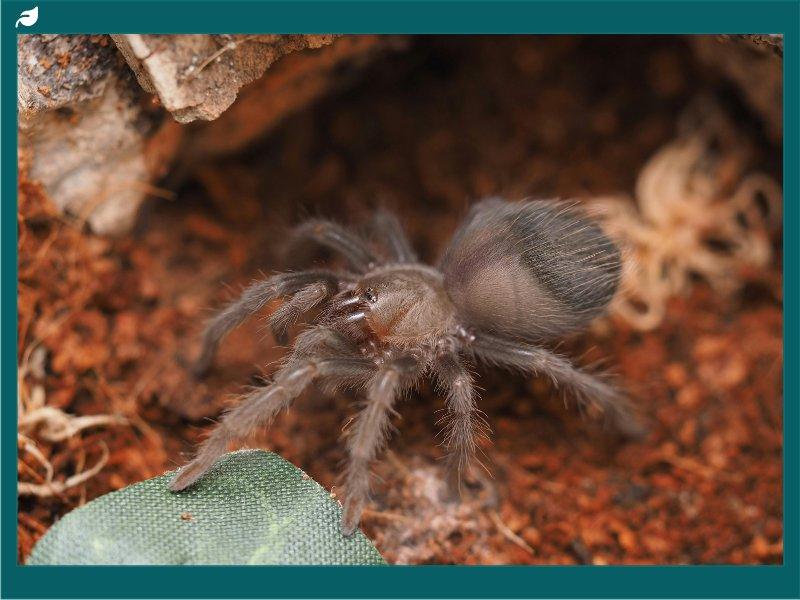
The urticating hair research mentioned earlier connects to broader questions about chemical ecology in theraphosidae. If these hairs carry territory-marking chemical signals, then tarantulas may be engaging in a form of spatial communication that operates below the threshold of what earlier researchers were looking for. It implies a social awareness that the “solitary predator” label doesn’t fully capture. These discoveries don’t overturn the basic picture of tarantula biology, but they keep adding depth to it, and each new layer creates fresh taxonomic questions about which species share which behaviors, and what that sharing reveals about their evolutionary relationships.
Challenges in Current Tarantula Taxonomy
Here’s the thing about tarantula taxonomy right now: it’s in productive chaos. New tools are generating new data faster than consensus can form around it. Genetic analysis keeps revealing that morphological classifications were sometimes right for the wrong reasons, sometimes wrong despite looking right, and occasionally just wildly off. The family Theraphosidae, with its enormous species richness and global distribution, is one of the most contested classification territories in arachnology.
That’s frustrating for anyone who wants clean answers. But it’s also where the interesting science lives.
Conflicts and Controversies Among Researchers
The central fault line in theraphosidae taxonomy runs between morphological and genetic approaches, and it’s been generating friction for decades. Traditional classifications, built on the arrangement of urticating hairs, the specific architecture of fangs, and the structural details of reproductive organs, are not wrong exactly. They captured real biological information. But they also introduced inconsistencies, particularly when convergent evolution produced similar-looking structures in unrelated lineages, or when individual variation within a species was mistaken for species-level difference.
Genetic analysis exposes these inconsistencies bluntly, and not everyone in the field is comfortable with the implications.
The regional diversity of tarantula spiders adds another layer of conflict. Brazil alone hosts a staggering array of theraphosidae species, many collected from habitats that were barely explored until recently. Classification efforts for this group face practical obstacles: incomplete historical records, specimens collected without consistent methodology, and geographic isolation that produced adaptive variations making species boundaries genuinely ambiguous. Arachnologists working in the Brazilian context often find themselves arguing not just about which classification is correct, but about which criteria should be used to decide the question at all. [According to the Organization for the Conservation of the Andes OTCA Bolivian researchers, recent fieldwork in Bolivia has confirmed that 17 out of 32 known Theraphosidae species in the country are endemic, and researchers estimate that at least 50 species likely exist there, indicating a significant gap in current taxonomic knowledge compared to the 30 previously listed species. That kind of finding, where a single country’s real species count may be nearly double what the literature records, illustrates exactly how far the gap between observed and actual diversity can stretch in underexplored regions.
The legacy of foundational researchers like Simon, who produced work in the late 19th and early 20th centuries that defined theraphosidae theraphosinae as a taxonomic unit, sits uneasily in this context. Simon’s classifications were built with the tools and concepts of his time, and they were rigorous by those standards. Some remain solid. Others have required revision as genetic data has accumulated.
The debate isn’t really about Simon’s competence. It’s about whether historical morphological frameworks can be patched incrementally to accommodate molecular evidence, or whether some portions need to be rebuilt from scratch. That’s a substantive scientific disagreement, and it drives real conflicts in how papers get written, reviewed, and cited.
What makes this particularly complicated is that the controversies aren’t just academic. Species identifications affect conservation assessments, trade regulations for tarantulas kept as pets, and biosecurity decisions about imports and exports. Getting the taxonomy wrong has practical consequences outside the laboratory, which raises the stakes considerably for a field that might otherwise feel comfortably esoteric.
The Impact of New Technologies
Genetic sequencing has changed tarantula taxonomy more than any other single development in the past fifty years. The ability to extract DNA from a preserved specimen and generate a detailed genetic profile allows researchers to ask questions about evolutionary relationships with a precision that morphological analysis can’t match. Cryptic species, those tarantulas that look identical under a hand lens but turn out to be genetically distinct lineages with separate evolutionary histories, have been revealed in numbers that surprised even researchers who suspected they existed. Each cryptic species discovery requires a revision of whatever classification placed them together, and those revisions ripple through the literature.
Geographically isolated populations present particularly rich data sets for genetic analysis. The tarantula spiders of Brazil’s Atlantic Forest, for instance, show patterns of genetic variation that reflect the forest’s fragmented history, with populations diverging in pockets of suitable habitat separated by drier, less hospitable terrain. Mapping those genetic signatures helps reconstruct not just where species are, but how they got there and how long they’ve been separate. That’s information no physical specimen can provide on its own.
High-resolution scanning electron microscopy has transformed morphological work at the same time. The fine structure of urticating hairs, the microscopic texture of the chelicerae, the exact geometry of reproductive organs at the micrometer scale: all of this is now accessible in ways that older microscopy couldn’t deliver. The result is that morphological analysis hasn’t been made obsolete by genetics. It’s been sharpened.
3D modeling and predictive analytical tools have added a forward-looking dimension. Instead of only describing what exists, researchers can now model how populations might respond to habitat change or climate shifts, generating hypotheses about future adaptive trajectories for different theraphosidae genera. These models feed back into taxonomy by clarifying which populations are likely to diverge further and which might merge under changing conditions. The integration of all these tools demands that researchers update their methods continuously, which creates its own tensions, but the direction is clearly toward greater precision and better-grounded classifications.
Future Directions in Theraphosidae Studies
The next chapter of theraphosidae research is already being written, and it looks fundamentally different from what came before. Genetic tools that were expensive and slow a decade ago are now fast and accessible enough that a single research group can sequence dozens of specimens in the time it once took to process a handful. The taxonomic implications are significant, and they point toward a classification system for tarantula spiders that will be more accurate, more finely resolved, and more frequently revised than anything we’ve had historically. That’s both exciting and, for anyone who has memorized current classifications, slightly unsettling.
Predicting Changes in Classification
The clearest prediction you can make about theraphosidae classification over the next two decades is that the number of recognized species will increase, probably substantially. Cryptic species are being identified at an accelerating rate as genetic analysis becomes standard practice in new species descriptions. The morphological features that grouped these spiders together simply weren’t sensitive enough to detect the genetic divergence that had occurred over thousands of generations of geographic isolation. When that divergence gets mapped, each lineage earns its own species designation, and the total species count for the family rises accordingly.
Geographic isolation is the engine driving much of this. Brazil’s ecosystems, to take the most intensively studied case, have fragmented and reconnected repeatedly over geological time, repeatedly creating conditions under which tarantula populations could diverge genetically without looking dramatically different physically. Genetic research is expected to identify multiple new species within groups that were previously classified as single wide-ranging species, and each new identification will require a corresponding revision of the genus-level classification that contained it. That’s not a failure of earlier taxonomy.
It’s earlier taxonomy being resolved to higher precision.
Resolving long-standing controversies about genus-level relationships is another area where genetic data is expected to drive change. Some tarantula genera have been defined by physical traits that turn out, under genetic analysis, to represent convergent evolution in unrelated lineages rather than shared ancestry. When the genetic evidence is strong enough and replicated across enough studies, the scientific community will revise those genera, splitting some and merging others, and the reclassification will be more durable because it will be grounded in actual evolutionary history rather than superficial physical similarity.
The process won’t be friction-free. Any reclassification affects the entire literature built on the old classification, and researchers who have published extensively under a framework that is being revised have understandable reasons to scrutinize new proposals carefully. But the direction of travel is clear. Genetic evidence, when rigorous and reproducible, eventually shapes consensus, even when that process takes years and generates real disagreement along the way.
Incorporating Genetic Research in Taxonomy
Integrating genetic research into theraphosidae taxonomy isn’t just a matter of running more DNA sequences and updating the spreadsheet. It requires building shared infrastructure: reference databases that link genetic profiles to physical specimens with well-documented collection data, standardized sequencing protocols that make results comparable across different laboratories, and agreed criteria for what genetic divergence threshold constitutes a species boundary rather than mere population-level variation. None of these infrastructural elements exist yet in the comprehensive, universally adopted form that the field needs. Building them is some of the most important work currently underway in arachnology.
The identification of cryptic species is the most immediate practical benefit. A species that looks identical to a closely related spider but is genetically distinct may occupy a slightly different ecological niche, respond differently to environmental pressures, and require different conservation interventions. Treating two genetically distinct lineages as a single species because they look alike means that conservation assessments are based on incomplete information. It potentially means that one lineage gets protected because the other is more common, while the rarer genetic lineage quietly declines.
Population genetics adds another tool beyond simple species identification. By analyzing how genetic variation is distributed within and between populations of a given tarantula species, researchers can map dispersal patterns, identify connectivity corridors between isolated habitats, and flag populations showing signs of genetic bottleneck from habitat fragmentation. For theraphosidae spiders in regions where deforestation is ongoing, this kind of analysis is essential for prioritizing which areas need protection most urgently and which reforestation or habitat corridor projects would do the most to maintain genetic diversity.
The collaboration required to make this work is genuinely international. Tarantulas don’t respect national borders, and the specialists needed to combine molecular genetics, field ecology, morphological expertise, and biogeographic analysis are rarely concentrated in one institution. Major research efforts in theraphosidae systematics increasingly involve teams spread across multiple countries, sharing specimens, sequence data, and analytical tools across institutional and disciplinary boundaries. That collaborative model is itself a relatively recent development, and it’s producing research that no single researcher or institution could have managed alone.
Regional Insights: Tarantula Diversity in [Region]
Tarantulas look different depending on where you’re standing when you study them. A researcher working in Brazilian rainforest is dealing with a density of theraphosidae diversity that feels almost overwhelming: dozens of species in close proximity, each adapted to slightly different microclimates, prey communities, and vegetation structures. A researcher working in African savanna is dealing with a different set of challenges entirely, including spiders adapted to extreme heat and seasonal drought that would kill a rainforest species within days. Regional context doesn’t just add color to tarantula taxonomy.
It’s inseparable from it.
Conservation Efforts and Ecological Impact
Brazil’s position as a center of theraphosidae diversity makes it the most consequential single region for tarantula conservation, and the scale of the challenge there is not reassuring. The Atlantic Forest, once covering roughly 15 percent of Brazil’s territory, now exists as fragments covering less than 12 percent of its original extent according to estimates regularly cited in conservation literature. Within those fragments, tarantula populations are isolated from one another, unable to move through the intervening agricultural and urban land. The genetic consequences of that isolation compound over generations: reduced diversity, increased inbreeding, declining resilience to disease and environmental change.
The ecological role of tarantulas in these systems is substantial enough that their loss would matter beyond just the species count. As predators, theraphosidae spiders regulate insects and other invertebrate populations. Remove a top invertebrate predator from a system and the prey community restructures, often in ways that benefit pest species or reduce the overall diversity of smaller invertebrates. The burrowing activities of terrestrial tarantulas also contribute to soil structure, aerating substrate and creating microhabitats that other invertebrates use.
These ecosystem services are rarely quantified in conservation assessments because they’re difficult to measure, but the underlying ecological logic is sound.
Conservation strategies for theraphosidae have to account for the specific behavioral requirements of tarantulas in ways that generic habitat protection sometimes misses. Tarantulas are territorial, with individual home ranges that vary by species and sex. Protecting habitat patches that are too small to support viable populations, or that are too isolated to allow any gene flow between groups, doesn’t accomplish what it’s designed to accomplish. The science of minimum viable population size and habitat corridor design has to be applied specifically to theraphosidae rather than borrowed wholesale from vertebrate conservation biology, because the relevant parameters are different for long-lived, low-mobility, territorial spiders.
Public perception is also a genuine conservation variable. Tarantulas face a significant image problem in many of the regions where they’re most diverse. Myths about their danger to humans circulate widely, and fear-based responses to spiders remain common even in communities that live alongside them. Conservation programs that work directly with local communities, drawing on indigenous ecological knowledge and creating tangible incentives for habitat protection, have shown better results than top-down approaches that treat the local population as a problem to be managed.
In Brazil and elsewhere, community-based conservation models for large invertebrates including tarantulas are still relatively early in their development, but the evidence from parallel programs for other invertebrate groups is encouraging.
The long-term outlook for theraphosidae conservation is genuinely uncertain, but it’s not hopeless. The growing investment in genetic research creates better information about which populations are most genetically distinct and therefore most urgent to protect. International trade regulations for spider species have strengthened in recent years, reducing collection pressure on wild populations of the most commercially sought theraphosidae species. And the broader scientific community’s interest in tarantulas has grown alongside the pet trade, creating a larger base of researchers, amateur naturalists, and enthusiastic observers who generate observational data that professional researchers couldn’t collect on their own.
Citizen science contributions to tarantula distribution mapping have expanded meaningfully over the past decade, and that data feeds directly into both conservation planning and taxonomic research.
What the history of family Theraphosidae ultimately tells us about the future is this: the questions get harder as the tools get better, and that’s exactly the right direction. Every new species identified, every cryptic lineage resolved, every behavioral discovery that complicates the simple picture of tarantulas as unsophisticated sit-and-wait predators, adds detail to a story that was always more complex than the early taxonomists suspected. The family Theraphosidae has been evolving for far longer than humans have been studying it. Getting the taxonomy right is a way of acknowledging that complexity honestly, and doing justice to what these remarkable spiders actually are.