Introduction to Flying Squirrels
Most people have never seen a flying squirrel. They’re out there right now, somewhere above your head in the dark, launching silently between trees while you sleep. And that’s exactly what makes them worth knowing about.
Flying squirrels aren’t just charming oddities. They’re precision-engineered nocturnal gliders that shape the health of entire forests, and Minnesota has them in numbers most residents don’t realize. According to [research published in PMC by the National Center for Biotechnology Information, northern flying squirrels actively generate more lift than needed to balance their body weight by demonstrating continuously changing velocities and force coefficients, proving they do not glide at equilibrium. If you’ve spent time in the state’s north woods and never spotted one, that’s not a coincidence. These animals have evolved to be nearly invisible to us.
What Are Flying Squirrels?
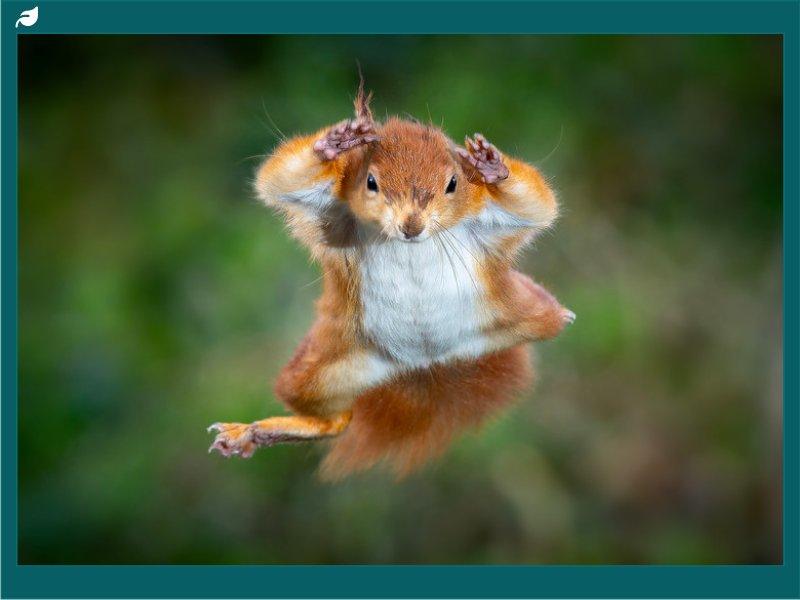
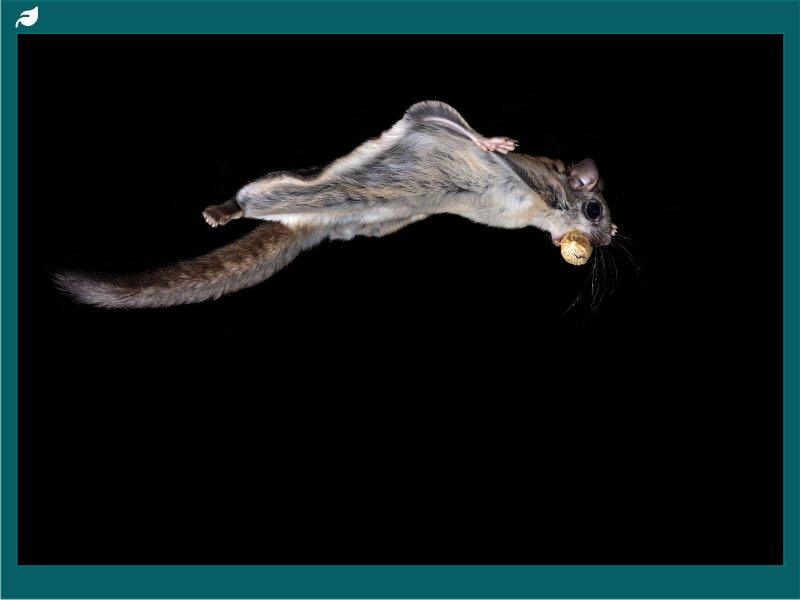
Here’s the thing: flying squirrels don’t fly. Not even close. What they do is arguably more interesting. A loose fold of skin called the patagium runs from wrist to ankle on each side of their body.
When a squirrel leaps from a branch and spreads its limbs, that membrane goes taut and turns the animal into a living airfoil. No flapping. No engine. Just physics and millions of years of refinement.
A single glide can cover up to 150 feet. The tail works as a rudder, letting them carve sharp mid-air turns through dense canopy without slowing down. It’s parachuting with steering, and it works brilliantly.
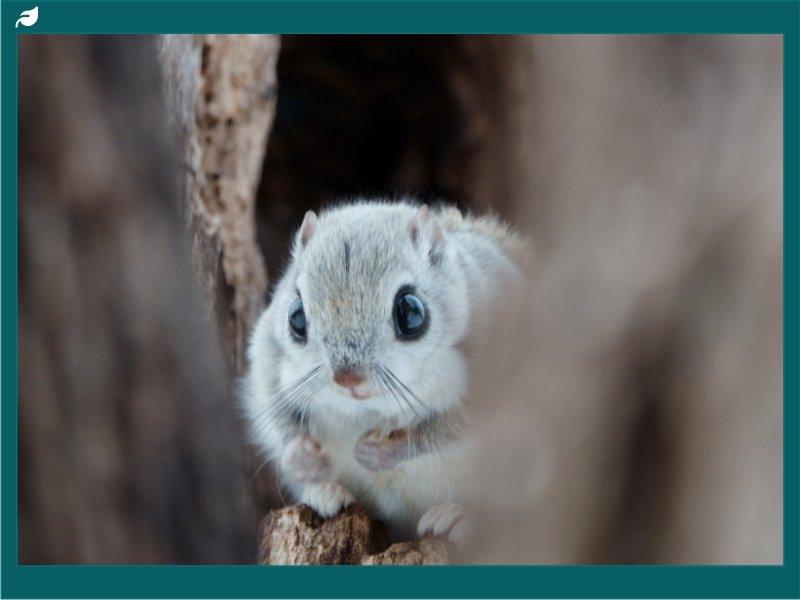
Their eyes are another giveaway that these aren’t ordinary squirrels. Large, forward-facing, built for low light: flying squirrels are tuned for the night shift in a way their daytime cousins simply aren’t. They navigate, forage, and socialize entirely after dark, which is most of the reason so few people ever see them.
And social they are. Flying squirrels nest communally, piling together in tree cavities during cold snaps to share warmth. A single nest box can hold a dozen animals on a bitter Minnesota January night. That kind of cooperative behavior points to a social complexity most people don’t associate with rodents.
The Geographic Distribution of Flying Squirrels in Minnesota
Minnesota is excellent habitat for flying squirrels, and the geographic spread of the species across the state reflects just how well the landscape suits them. The mix of mature hardwood and conifer forest, particularly across the northern tier, gives these animals everything they need: tall trees for launching, dense canopy for cover, and abundant fungi in the soil below. According to a study published in Biological Conservation via ScienceDirect, 69% of northern flying squirrels chose to detour through forested paths rather than cross open canopy gaps, even when the direct route was 6.8 times shorter, and their return time significantly increased when gaps exceeded 335 meters. This finding underscores just how dependent these animals are on continuous, intact forest cover.
Natural Habitats and Regions
The northern flying squirrel dominates the upper reaches of the state, where boreal and mixed forest runs thick from the Iron Range to the Boundary Waters. These northern forests, humid and cathedral-dark under their canopy, are ideal. The national forests in that region offer large, relatively undisturbed tracts where squirrels can range freely without bumping into roads or cleared land at every turn.
The southern flying squirrel occupies a different geographic band. It favors the deciduous hardwood forests of central and southern Minnesota, and its range edges up from states further south. Where the two species’ territories overlap, you get a genuinely interesting ecological situation: two gliding squirrel species, similar in shape but different in diet, size, and nesting preference, sharing the same general state but partitioning the forest between them.
Both species disperse fungal spores as they forage. They dig up truffles and other underground fungi, eat them, and deposit the spores in their droppings across wide areas. Those fungi form symbiotic relationships with tree roots. No fungi, no healthy trees.
Behavior and Gliding Abilities
Watch a flying squirrel launch from a branch even once and you’ll stop calling it “just a rodent.” The control is remarkable, the silence total. But gliding is only one part of a behavioral profile that’s worth understanding in full.
How Flying Squirrels Achieve Gliding
The patagium does the structural work, but the squirrel does the flying. As soon as it leaves the branch, the animal manages its angle, speed, and direction with constant small adjustments: tail angling, limbs shifting, body rotating. A northern flying squirrel navigating a dense stand of mature maple at speed, in the dark, making sharp turns between trunks, is doing something genuinely difficult at high skill. The 150-foot glide distance is impressive on an open run, but what really matters is the precision in tight quarters.
Gliding also solves a security problem. Ground travel is dangerous. Foxes, raccoons, domestic cats, and other predators work the forest floor. A squirrel that never has to land is a squirrel that’s much harder to catch.
The southern flying squirrel in particular, ranging across forests where ground predator pressure can be high, benefits enormously from this. Its foraging safety depends on staying airborne as much as possible between food sources.
The nocturnal piece ties everything together. Flying squirrels move silently, in darkness, through the upper canopy. They find nuts, seeds, fungi, and insects while most predators that would bother them are either asleep or hunting by smell rather than sight. The large eyes catch whatever ambient light exists.
The gliding gets them from tree to tree without touching the ground. It’s a system that works.
Adaptations and Physical Characteristics
The patagium gets most of the attention, but flying squirrels have a suite of physical features that all work together. Pull on one thread and you see how tightly everything connects.
Unique Features of Flying Squirrels
Size matters enormously across the different species. A giant flying squirrel from Asia carries a substantially larger patagium than a pygmy flying squirrel, which is roughly the size of a large mouse. More membrane means more lift, more control, and the ability to cover greater distances. The woolly flying squirrel, native to the high-altitude forests of Pakistan, has dense fur adapted to cold that the Minnesota species lack entirely.
The black flying squirrel of Southeast Asia uses the same basic patagium structure to navigate tropical forest canopy at speed. Same fundamental engineering, wildly different environments. That’s the mark of a design that genuinely works.
In Minnesota, both resident species belong to the genus Glaucomys. The northern flying squirrel runs larger, typically 10 to 12 inches including tail, with rich brownish fur above and gray-white below. The southern flying squirrel is noticeably smaller and has a sharply defined white belly. Put them side by side and the difference is obvious.
In the field at night, it takes practice.
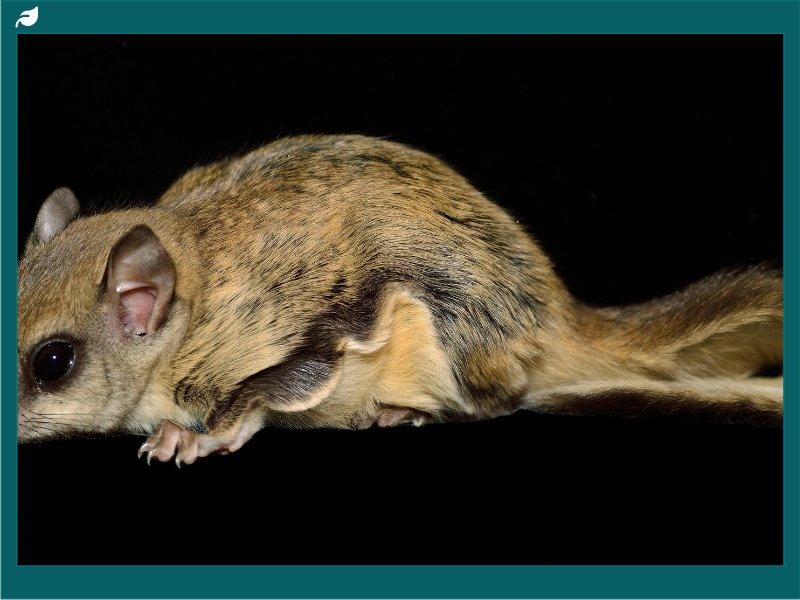
The tail deserves more credit than it usually gets. It’s not just a rudder for gliding. It provides balance during landings, which are abrupt: flying squirrels hit a tree trunk feet-first, claws out, and use their tail to absorb the rotational forces from the impact. Do that dozens of times a night and you understand why the tail needs to be strong and responsive.
The glaucomys species in Minnesota have tails well-adapted to exactly this kind of repeated hard use.
Sensory adaptation rounds out the picture. The large eyes of flying squirrels are set wide and angled to maximize their visual field at night. They also use scent heavily, both for finding food and for communicating with other squirrels. A communal nest isn’t just warm.
Diet and Ecosystem Role
Flying squirrels eat more broadly than most people expect, and that dietary range is what makes them so ecologically useful.
Feeding Habits and Impact on Local Ecology
Nuts and seeds form the base of the diet, and both squirrel species cache food for winter in the way their non-gliding relatives do. But the fungi component is where things get interesting. Flying squirrels actively seek out truffles and other hypogeous fungi, meaning fungi that fruit underground. They find them by smell, dig them up, eat them, and carry spores in their gut across their entire nightly foraging range.
When they defecate, those spores land in new locations, potentially establishing new fungal colonies that will eventually connect with tree roots in the mycorrhizal networks that keep forest soils productive. That’s not incidental. That’s a forest maintenance function that very few other animals perform as efficiently.
The northern flying squirrel is particularly associated with this role in the boreal and mixed forests of northern Minnesota, where mycorrhizal fungi are essential to the health of conifers. Remove the squirrels and you don’t just lose a charming nocturnal animal. You weaken the underground network that the trees depend on.
Insects round out the diet, especially in warmer months when protein availability matters for breeding and raising young. Flying squirrels are opportunistic enough to take insects, eggs, and even carrion when the opportunity arises. That flexibility keeps them fed through seasonal lean periods and contributes to insect population regulation in the forest.
As prey, they matter too. Owls, particularly the great horned owl and the barred owl, hunt flying squirrels regularly. A healthy squirrel population supports healthy owl populations. That predator-prey relationship anchors a section of Minnesota’s nocturnal food web that would fray without it.
Conservation Efforts in Minnesota
Flying squirrels in Minnesota aren’t currently listed as endangered, but that doesn’t mean the pressure on their populations is trivial. Habitat loss, fragmentation, and the long-term effects of forest management all affect squirrels flying through a landscape that’s gradually changing around them.
Protective Measures and Public Involvement
The most direct protective measure is habitat preservation, specifically the retention of mature forest with large trees and natural cavities. Flying squirrels don’t excavate their own dens. They use existing hollows, abandoned woodpecker cavities, and nest boxes. A forest managed for timber yield, cleared of snags and old growth, loses that structural complexity quickly.

Conservation guidelines that account for wildlife habitat, not just board-feet of lumber, make a real difference to squirrel populations and dozens of other species that depend on similar conditions.
Hunting regulations include flying squirrels in Minnesota’s small game framework. A valid hunting license is required, and state rules govern season and take. The existence of that license requirement and those regulations reflects a formal state recognition of flying squirrels as a managed wildlife species, not just background fauna. It also means that hunting pressure can be monitored and adjusted as population data comes in.
Citizen science has become a meaningful tool for tracking flying squirrel distribution. Because these animals are nocturnal and secretive, professional survey efforts only capture part of the picture. Programs that train volunteers to deploy and monitor nest boxes, or to report sightings and camera trap events, extend the reach of formal monitoring at relatively low cost. Those recorded events build databases that researchers use to track range shifts, population trends, and habitat associations over time.
Public education campaigns run through nature centers, state parks, and wildlife organizations work to close the basic awareness gap. Most Minnesotans don’t know they live alongside two species of flying squirrel. Once they do, the interest tends to be genuine and lasting. People who put up nest boxes and get flying squirrel tenants become conservation advocates in a way that no brochure fully creates.
National forest areas in northern Minnesota support some of the densest squirrel populations in the state and represent a natural anchor for conservation planning. Keeping those lands intact and actively managed for biodiversity, rather than purely for extraction, protects not just flying squirrels but the entire ecological community they’re part of.
Squirrels vs. Flying Squirrels: A Comparative Insight
They share a family and a general body plan, but comparing ordinary squirrels to flying squirrels reveals how dramatically a single evolutionary innovation can reshape a species’ entire way of life.
Key Differences and Similarities
The patagium is the obvious dividing line. Other squirrels are fast and agile in the trees, but they travel branch to branch by climbing, not gliding. The flying squirrel’s membrane changes its relationship with the forest completely. Distance that would require minutes of climbing takes seconds in the air.
Predators that could intercept a climbing squirrel have almost no answer for one that’s already 80 feet away and dropping toward a new trunk.
The nocturnal shift amplifies the difference. Most squirrel species in Minnesota are diurnal, active in daylight, navigating by color vision and the sounds of a busy daytime forest. Flying squirrels have traded all of that for the night: bigger eyes, different social rhythms, a foraging window that overlaps minimally with their daytime relatives. Two species can occupy the same woodland without competing directly for time, food, or nesting sites in any serious way.
But the similarities are real. Both groups cache food. Both contribute to seed dispersal in ways that matter for forest composition. Both provide prey for raptors and other predators.
Both are social to degrees that surprise people who think of rodents as solitary. And both depend on mature, structurally complex forest in ways that tie their conservation directly to how Minnesota manages its woodlands.
Understanding what flying squirrels share with their ground-running cousins, and where they’ve diverged so dramatically, gives you a much sharper picture of how evolution works in practice, how one adaptation ripples through behavior, diet, habitat use, and ecological role until you end up with an animal that’s genuinely unlike anything else in the Minnesota woods.