More and more businesses are beginning to accept the myriad benefits of sustainability. In addition to increasing efficiency and profitability, sustainability aligns with the values of today’s consumers. According to a recent study by NielsenIQ, 78 percent of U.S. consumers say that a sustainable lifestyle is important to them. Sustainability is also poised to become more of a necessity than a choice for businesses in the coming years due to new regulations aimed to minimize the use of certain resources and preserve the health of our planet.
With this in mind, a highly effective strategy for increasing sustainability is the adoption of a circular economy model, in which companies continuously recycle and reuse resources throughout the manufacturing process. Since circularity has only recently become a household word, the specific actions required to introduce a circular economy model may be a mystery for many businesses.
Companies can hardly be expected to prioritize circularity when they don’t know where to start. As organizations break circularity down into a series of practical steps, ultimately they’ll find that circularity is a realistic goal that they can certainly reach with the right strategic mindset and a little planning.
The first and arguably the most important step towards achieving a circular model is investing in recyclable materials. Circularity is only attainable for businesses that make their products with materials that are durable, which makes them easy to recycle and repurpose. In the fashion industry, for example, cotton and hemp are among the most recyclable fabrics, whereas polyester and acrylic are significantly harder to recycle and re-use for new pieces of clothing.
The challenge with introducing recyclable materials is that it goes against the traditional approach to the sourcing process. When shopping for materials for production, businesses are accustomed to prioritizing cost, accessibility, and speed. Circularity, on the other hand, requires businesses to consider alternative factors such as the materials’ durability and lifecycle. In other words, businesses must determine how many times a material can be repurposed.
New systems and processes
Since circularity revolves around repurposing used products, businesses must invest in the various logistics involved in this process. This could include a new system for taking used products back from consumers as well as new facilities for disassembling these products and separating materials for further use.
Clearly, for circularity to work, consumers need an easy way to send back used products. For this reason, it’s wise to devote additional resources to educating consumers about your new processes as well as how to get their products back to the company. Inform consumers about what happens to their products when they return them and why circularity is so vital for the natural environment.
Advanced technology
Technology plays a major role in multiple aspects of a circular economy model. Since circularity requires continuous disassembly of used products, businesses must invest in software tools to guide the initial design of these products and make them easier to repurpose upon their return. These tools can also educate designers about how the usage of certain materials or designs affects disassembly and the overall sustainability of a product.
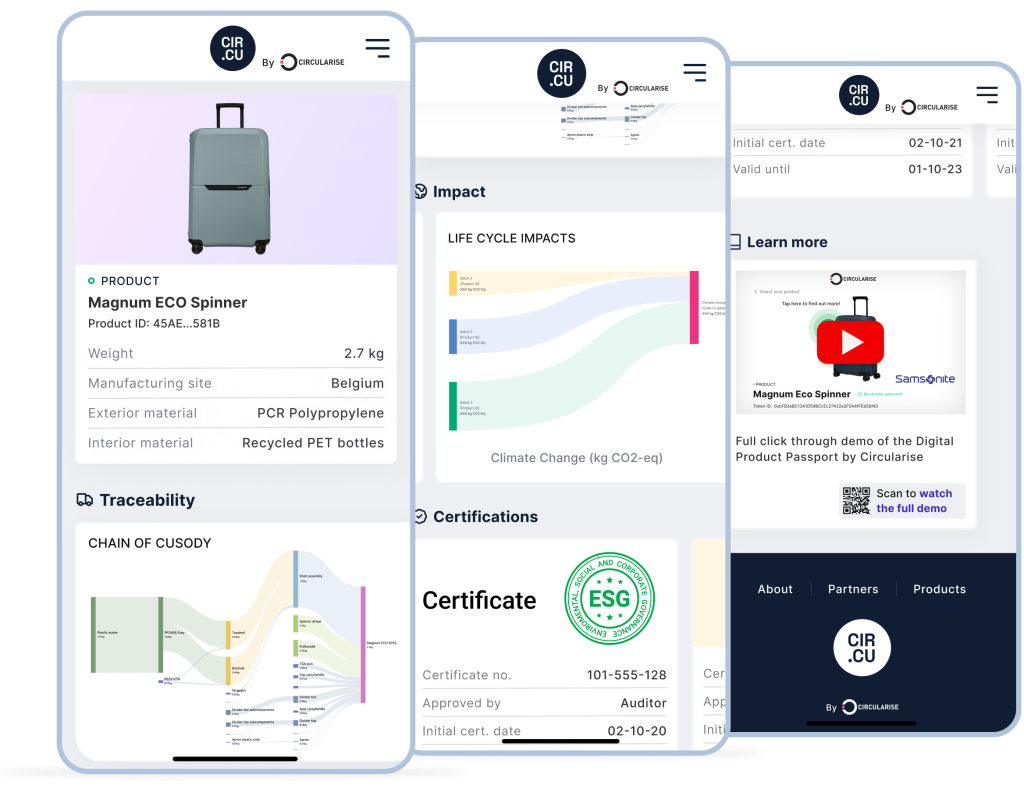
Secondly, businesses must pursue technology that provides full traceability of a product’s lifecycle, possibly in the form of blockchain-driven data storage systems. Blockchain allows businesses to see which materials were used for production, even if the materials were purchased by another party in a supply chain.
For example, when a supplier purchases a certain raw material, the blockchain would reveal to all the other supply chain parties exactly where the material was purchased to verify its sustainability. Likewise, when a recycled product is repurposed to make a new product, all supply chain parties would be able to see which specific materials were re-used and when the new product was created.
Traceability is an essential component of a circular economy model because it shows businesses which parts of their supply chain are holding them back from becoming more sustainable. It also gives businesses the hard data to demonstrate – to consumers and supply chain partners alike – that their circular economy model is continuously in motion and maintaining their sustainability-related objectives.
Once a piece of data is entered into the blockchain, the information cannot be altered or removed. This can be very helpful when it comes to exhibiting compliance with strict environmental regulations, which can require environmental or energy-related data from all parties involved in a supply chain.
Partnerships with like-minded businesses
Realistically speaking, not every business has the financial means to acquire the resources for disassembling and repurposing used products. But that doesn’t mean circularity is not an option for these organizations. It just means that they should instead turn their attention towards creating partnerships with existing businesses that specialize in different aspects of circularity.
For example, some businesses focus on separating recyclable materials from used products and preparing them for other use. Others repurpose waste from the manufacturing process into products for a variety of industries. Due to the increasing popularity of circularity, there is a growing number of businesses that are happy to help other businesses extend the life cycle of their materials and make their manufacturing processes more sustainable.
Similarly, businesses can also explore partnerships with companies from completely different industries that could make valuable use of their waste. In 2014, Heinz established a partnership with Ford in which the latter organization re-purposed tomato waste to create a sustainable bioplastic material for motor vehicles. A company called TerraCycle teams up with major brands to turn packaging waste into new products, such as outdoor furniture, park benches, and office supplies. Partnerships of this nature are born from companies tapping into their creativity to determine what kind of businesses would find value in their used materials or waste.
Final thoughts
Though circularity requires a considerable investment of time and resources, the rewards extend far beyond increased efficiency and environmental stewardship. You are also investing in the creation of a more ethical and conscientious future that prioritizes long-term goals and collective prosperity over the quickest and easiest routes to success. By investing in a circular economy model, businesses can ensure their own survival in a world that demands more innovation, collaboration, and corporate responsibility.

By Mesbah Sabur founder of Circularise