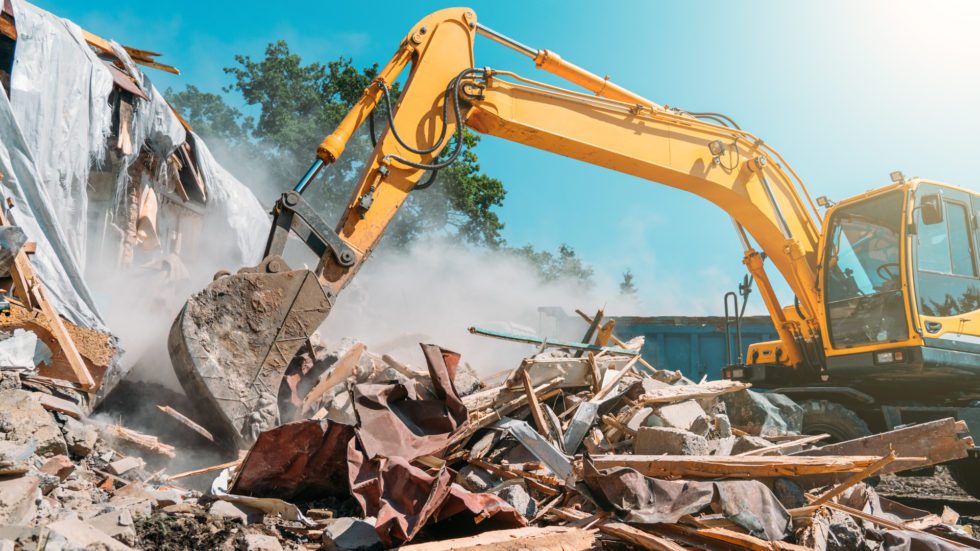
The construction industry has been caught between two demands that seem impossible to reconcile: build more, build faster — and somehow do it without exhausting the natural resources that future generations will depend on. According to the UN Environment Programme, buildings and construction together account for roughly 38% of global CO₂ emissions, and a substantial share of that burden comes from over-ordering materials and poor planning rather than the construction itself. In the UK alone, building sites generate around 120 million tonnes of waste annually — much of it produced before a single wall goes up.
The problem has long since moved beyond environmental reports. It now sits firmly on the agenda of regulators, developers, and institutional investors. That’s where green estimating enters the picture — a discipline that treats calculation accuracy as a core sustainability tool, not just an operational detail. This piece examines how digital estimating tools are reshaping construction practice and why that shift carries more weight than it might first appear.
From Paper Specs to Precise Digital Takeoffs
Traditional estimating has for decades relied on what the industry quietly calls a “safety margin” — ordering more than needed so nothing runs short. The logic is intuitive. The consequences, however, are expensive: billions of dollars in unnecessary material costs every year, and volumes of waste that accumulate before any project reaches completion.
The move toward specialized software marks one of the clearest changes in recent years. Tiling contractors, for instance, increasingly rely on tile estimating software to calculate exact material quantities for a given site — accounting for room geometry, cutting waste, and tile format. The result is fewer surplus orders and fewer unnecessary supplier deliveries, each of which carries its own carbon footprint.
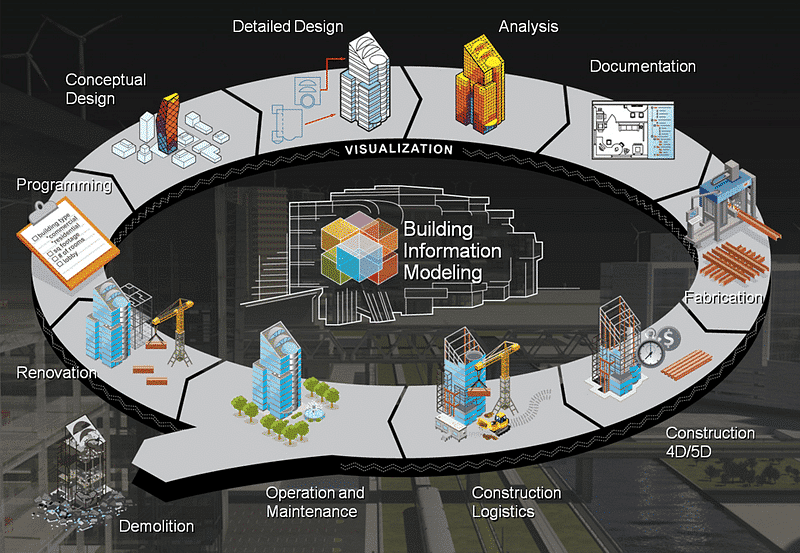
Similar shifts are happening across adjacent segments. Next-generation project management tools now integrate with BIM models, giving builders a real picture of material consumption at the design stage — before waste appears on the ground at all.
Asphalt, Concrete, and Precision in Road Construction
Road construction presents a particularly instructive case. Asphalt mixes are petroleum-derived, which means over-production carries a double environmental cost: excess raw material consumption and the disposal of unused product that can’t simply be set aside for a later job.
That reality has driven growing demand among road contractors for specialized asphalt paving software, which calculates exact laying volumes based on road profile, layer thickness, and surface area. Advanced tools factor in gradient and base material type — variables that matter when the goal is eliminating waste rather than just estimating around it.
Several US states have already incorporated material efficiency metrics into public procurement evaluation criteria — California and Washington among them. Contractors who can document reduced waste now have a measurable advantage when bidding on government projects, which has made digital estimating less of an optional upgrade and more of a competitive requirement.
Cutting Waste in Practice: What the Numbers Show

The gap between theory and job-site reality tends to be wide in construction. But a few documented cases are worth looking at closely — not because they’re exceptional, but because they’ve become templates others are copying.
Willmott Dixon, one of the UK’s largest private contractors, set a target in 2019 to halve site waste by 2030. The core mechanism wasn’t a recycling programme — it was tighter estimating upstream. By the end of 2022, waste had dropped by nearly a third across their projects. Lendlease in Australia took a parallel route, connecting BIM models directly to procurement, so quantities ordered matched quantities designed — not quantities guessed. Skanska, which operates across Europe and North America, embedded waste KPIs into subcontractor contracts, making over-ordering a shared financial problem rather than a back-office footnote.
What these companies share isn’t a single platform or vendor. It’s a shift in when waste is addressed — before delivery, not after.
The approaches that have shown consistent, measurable results across project types:
- Digital takeoff from design files — quantities extracted directly from architectural drawings rather than estimated by hand. Removes the informal “buffer” that estimators quietly add, which typically runs between 8 and 15 percent above actual need.
- Phase-matched deliveries — materials arrive to match specific construction stages rather than front-loaded at project start. Reduces spoilage from weather exposure and eliminates the improvised redistribution of excess stock between sites.
- Preconstruction material audits — reviewing past project waste data before a new job begins, identifying which material categories habitually over-run and adjusting takeoff assumptions accordingly.
When Saving Money and Cutting Emissions Point the Same Direction
There’s a version of this conversation that stays firmly in the realm of corporate sustainability pledges, and a version grounded in procurement economics. The more interesting observation is that, increasingly, they lead to the same place.
LEED and BREEAM — the two certification systems that most commercial developers benchmark against — both award credits directly tied to construction waste reduction. A project chasing Platinum or Outstanding ratings can’t treat material efficiency as an afterthought. That means the developer’s incentive, the contractor’s margin pressure, and the certification target are now pulling in the same direction, which wasn’t reliably true even ten years ago.
In Germany, stricter implementation of the EU Construction Products Regulation has pushed larger contractors to document material usage more rigorously. Poland and the Czech Republic, anticipating the next wave of EU Green Deal-aligned waste directives, are seeing procurement workflows revised ahead of formal requirements. The pattern is consistent: regulatory pressure arrives, early movers have already absorbed the operational cost of adapting, late movers scramble.
The financial case holds up across project scales:
| Project type | Typical material waste reduction | Estimated cost saving per €1M contract |
| Residential (tiling, interiors) | 12–18% | €8,000–€14,000 |
| Commercial fitout | 10–15% | €9,000–€16,000 |
| Road / paving works | 8–14% | €11,000–€20,000 |
| Large civil / infrastructure | 6–12% | €15,000–€30,000 |
* Figures based on McKinsey Global Institute construction efficiency benchmarks and contractor case studies.
The numbers aren’t transformative in isolation. Across a portfolio of projects, they tend to be. A mid-sized contractor running fifteen projects annually at an average contract value of €2M doesn’t save on one site — it compounds savings systematically, which is a different kind of argument than the one usually made about sustainability in construction.
Beyond Software: A Cultural Shift
Any software is only as effective as the habits built around it. The real transformation happens when accurate estimating becomes part of a contractor’s operational culture — when the site manager understands that surplus material isn’t a precaution, it’s a planning failure.
That shift in thinking is already visible among younger professionals entering the industry. Those who came into construction after 2010 are considerably more likely to treat sustainability as a competitive asset rather than a regulatory burden. They’re driving the adoption of digital estimating, closed-loop material systems, and waste tracking tools — not because they’ve been told to, but because the economics and the expectations of their clients make it logical.
Construction remains one of the most material-intensive industries on earth. For the first time in decades, though, it has tools that make building more and wasting less a genuinely achievable combination.