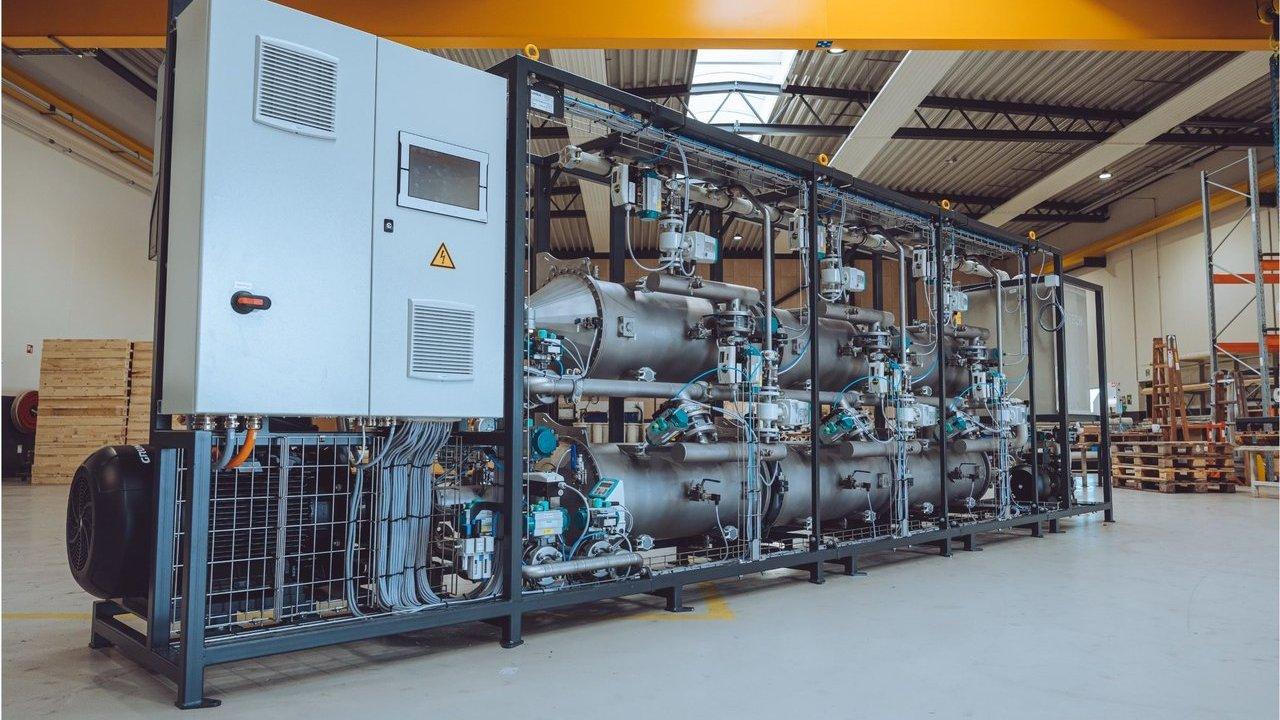
phs Teacrate has unveiled a major technology investment that could reshape how reusable crates and pallets are washed across the UK logistics and food supply chain. The company, widely regarded as the market leader in crate hire and washing services, has installed next-generation tray and pallet washers at its Curdworth facility, significantly reducing water use while increasing capacity and hygiene performance.
The new bespoke machines, designed and manufactured in the UK by Unitech, use just six litres of water per hour during crate washing. Older systems typically consume around 15 litres per hour, meaning the new technology more than halves water consumption at a time when water efficiency is becoming a critical concern for manufacturers, retailers and logistics operators alike.
Water efficiency meets industrial hygiene
Crate washing is an often overlooked but essential part of modern supply chains, particularly in food manufacturing, retail distribution and pharmaceutical logistics. Reusable transit packaging plays a central role in reducing single-use plastics and cardboard, but the environmental benefits can be undermined if washing processes are resource intensive.
phs Teacrate’s new system addresses this challenge directly. By integrating advanced water recycling systems and energy-efficient components, the machines are designed to deliver what the company describes as one of the cleanest and most sustainable wash-and-dry processes currently available in the UK market.
Manufactured from high-grade stainless steel, the washers use the latest hygiene technology to remove heavy soiling from totes and pallets while maintaining strict contamination controls. A fully enclosed wash and dry cycle prevents recontamination after cleaning, extends the lifespan of crates and pallets, and supports compliance with demanding hygiene standards required by food and retail customers.
Capacity and speed as competitive advantages
Beyond sustainability gains, the new technology also increases throughput at the Curdworth site, giving phs Teacrate greater speed and capacity than many competitors. As supply chains continue to prioritise resilience and rapid turnaround, washing capacity has become a strategic asset rather than a back-office function.
The investment reflects broader changes in the logistics sector, where reusable packaging pools are expanding to meet sustainability targets set by retailers and brand owners. Higher volumes of reusable crates place increased pressure on wash facilities to deliver fast, reliable and compliant cleaning without escalating environmental impact.
Leadership view
Victoria Rhodes, Managing Director at phs Teacrate, said: “This is a bold investment in next-generation wash technology that is setting a new standard for hygiene, efficiency and sustainability. Our goal as a business is to always raise the bar and lead the way in sustainable, innovative practices.
“The machine features water recycling systems and the latest energy efficient technology to minimise water and energy consumption, creating the most sustainable wash process available.
“Businesses today demand compliance, speed, efficiency and eco-friendly solutions and our new crate & pallet washing machines are designed to deliver just that. It is taking phs Teacrate and our customers to the next level of best practice.”
Sustainability pressure across supply chains
The move comes as water stewardship and resource efficiency climb the corporate agenda. Food manufacturers and retailers face growing scrutiny over Scope 3 emissions, water use and waste, particularly in high-volume distribution operations. Reusable transit packaging is widely recognised as a lower-impact alternative to single-use packaging, but only when supported by efficient pooling and cleaning systems.
Industry analysts note that innovations in crate washing are increasingly important to the credibility of circular packaging models. Washing operations that minimise water, energy and chemical use can significantly improve the lifecycle performance of reusable crates, strengthening the business case for adoption across supply chains.
phs Teacrate’s investment also aligns with wider regulatory and voluntary initiatives encouraging water efficiency in industrial processes, particularly in regions already experiencing water stress.
UK manufacturing and supply chain resilience
The decision to source the new washers from UK manufacturer Unitech adds another dimension to the investment. Domestic production supports shorter supply chains, local skills and engineering expertise, while allowing systems to be tailored to the specific operational and hygiene requirements of UK customers.
Unitech’s bespoke design enables the machines to handle a wide range of reusable transit packaging formats, from heavily soiled pallets to crates used in food distribution. This flexibility is increasingly important as pooled packaging systems diversify to serve multiple sectors.
A broader service model
phs Teacrate, part of the wider phs Group, rents, pools and moves millions of crates each year. Alongside washing services, the company offers an extensive range of reusable transit packaging solutions for hire and purchase, including attached lid containers, returnable plastic crates, bale arm and stack-nest containers, pallets, dollies, pallet collars, foldable large containers and roll cages.
With its own extensive fleet and next-day delivery capability, the company positions itself as an integrated partner for customers seeking to reduce waste, improve logistics efficiency and meet sustainability targets.
Raising expectations in a quiet sector
Crate washing rarely attracts attention outside specialist circles, yet it underpins some of the most complex and high-volume supply chains in the UK economy. By investing in technology that sharply reduces water use while increasing performance, phs Teacrate is signalling that environmental efficiency and operational excellence are no longer trade-offs.
As sustainability expectations continue to rise, investments like this may become a baseline requirement rather than a differentiator. For now, phs Teacrate’s Curdworth installation sets a new reference point for how hygiene-critical logistics infrastructure can evolve to meet environmental and commercial demands at the same time.
For the reusable packaging sector, the message is clear: sustainability gains are increasingly being delivered not just through product design, but through the systems that keep circular models running every day.