Websites and digital products run on electricity at every step, from user devices to networks and data centers, so as more organizations set climate targets and report on emissions, the environmental footprint of digital services is starting to matter to customers, investors, and regulators.
We spoke with experts at eDesign Interactive and used that conversation to frame a clear set of strategies teams can apply during planning, design, development, and ongoing operations. The goal here is to make measurable improvements that reduce energy use and emissions without sacrificing usability.
Sustainability is a set of choices that shape how pages are structured, how assets are produced, how code is shipped, and how often systems do unnecessary work. The strategies below focus on decisions that have a direct impact on energy use and a clear path to implementation.
Practical Ways to Approach Sustainable Web Design
Sustainable web design is about reducing wasted resources while keeping experiences fast and accessible. In practice, it means sending fewer bytes, doing less computation, and avoiding unnecessary rework across the product lifecycle. It also means aligning your strategy and design decisions so that “green” outcomes are built into how you plan and build, not added afterward.
The most useful mindset is to treat environmental impact like performance. You would not ship a page that takes 30 seconds to load and hope to fix it later. Sustainability deserves the same discipline. With that in mind, here are our favorite strategies for environmentally friendly development:
1) Set carbon and performance budgets early
A budget makes sustainability concrete and helps teams avoid gradual “weight gain” where features accumulate until the site becomes heavy and inefficient.
So, define budgets for page weight (KB/MB), JavaScript shipped, image sizes, and number of requests for key templates like your homepage, product page, and article page. Then, add automated checks in CI so builds fail when budgets are exceeded.
Finally, assign budget ownership. For example, the design system team owns shared components, while feature teams own page-level additions.
2) Align hosting and infrastructure with lower-carbon electricity
The same web page can have a different footprint depending on hosting choices, server efficiency, and regional energy mixes. While “green hosting” is not the only answer, infrastructure decisions matter.
The trick is to choose hosting providers and regions with stronger renewable energy sourcing and transparent reporting, and use autoscaling and right-sizing to avoid overprovisioned servers running at low utilization.
Also, you need to schedule your compute-heavy work, like large builds, asset processing, and batch jobs, to off-peak times when your infrastructure is most efficient.
The International Energy Agency provides a visual breakdown of projected global data center electricity consumption. It is useful when explaining to decision-makers why efficiency and infrastructure choices matter.

[Source: IEA]
3) Build a content and asset lifecycle so the site stays lean over time
Sustainability is not just about what you ship today, but about whether you keep shipping and storing things you no longer need.
To avoid clutter, you should create an archive policy for old campaign pages, outdated PDFs, and heavy media. That way, you can retire or consolidate content that is no longer useful. As for keeping lean from the start, define image standards (maximum dimensions, preferred formats, compression rules) and enforce them in the CMS upload flow.
Finally, make sure to remove duplicate content and duplicated assets. Even if users do not see duplicates, servers still store and deliver them.
4) Design for low-end devices and constrained networks
A sustainable web experience should work well on older phones and weak connections. That not only reduces frustration for the user, but can extend device (and battery) life, which is itself a sustainability benefit.
Use responsive images and avoid sending desktop-sized images to mobile users, while keeping page layouts stable to prevent reflows and wasted rendering work. If possible, offer an “eco mode” that disables 3D animations and uses simpler layouts, while preserving core accessibility and usability.
This is also where sustainability can support branding. When your site is fast, reliable, and respectful of user constraints, it reinforces trust and quality without needing extra messaging.
5) Measure what matters and connect it to business reporting
If you do not measure, sustainability work becomes opinion-driven. Tracking a small set of metrics makes progress visible and helps teams prioritize.
You’ll need to check page weight, requests, JavaScript size, image bytes, and real-user performance indicators every month to see if anything has changed. It’s fine to use a website carbon calculator as a guide, but focus on measures that you can change directly, such as bytes, CPU time, and cache hit rates.
And perhaps most importantly, make sure to report sustainability alongside performance and accessibility, not as a separate appendix.
[Source: Berkeley Lab]
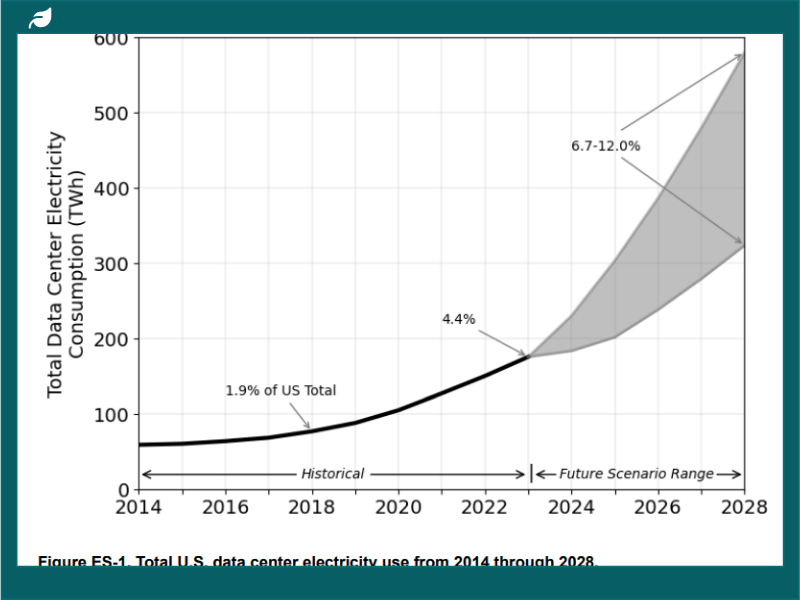
The 2024 United States Data Center Energy Usage Report from the Lawrence Berkeley National Laboratory includes charts and estimates that help contextualize why reducing digital demand and improving efficiency can have real system-level benefits.
6) Treat sustainability as a creativity-boosting constraint
Some of the best sustainable outcomes come from better problem framing. Where there are limits, it typically makes for cleaner interfaces, more purposeful information, and better routes that let users accomplish their goals with fewer clicks and less loading.
This mindset connects well with the idea of sustainability through creativity, where teams solve constraints with smarter choices rather than simply removing features.
What the Future Holds for Eco-Friendly Web Design
In the next few years, sustainable web design will become more standardized and easier to measure. We will probably see more usage of carbon-conscious infrastructure and stricter rules about unnecessary computing and data transfer.
Practically, teams can prepare by building sustainability into normal workflows. That means sustainability evaluations need to be part of the sign-off process.
As expectations for sustainability grow, companies will also need clearer methods to show that they are making real progress. Your team can formalize this through dedicated disclosures and case studies, or use editorial programs to feature your company initiatives in a structured way.
Regardless of format, the strongest approach is simple: measure the footprint you can influence, reduce it steadily, and make sustainable choices the default in day-to-day development.