The king cobra is famous for its impressive size and strong venom, making it both fascinating and feared. As a top predator, it mostly eats other snakes, showing off its special hunting skills.
Learning about how king cobras find mates is just as interesting as their eating habits. Males and females perform a unique courtship dance to help their species survive.
By looking at these behaviors, we can better understand how king cobras live and why they are important in their environment.
Understanding the King Cobra
The king cobra stands out among cobras and is an interesting reptile to study. It can grow as long as five meters and plays an important part in its ecosystem.
Its behavior, conservation status, and ways of surviving show how adaptable it is. By learning about its traits and role in nature, we not only understand how the king cobra survives but also see why protecting it matters for all wildlife.
Unique Characteristics of the King Cobra
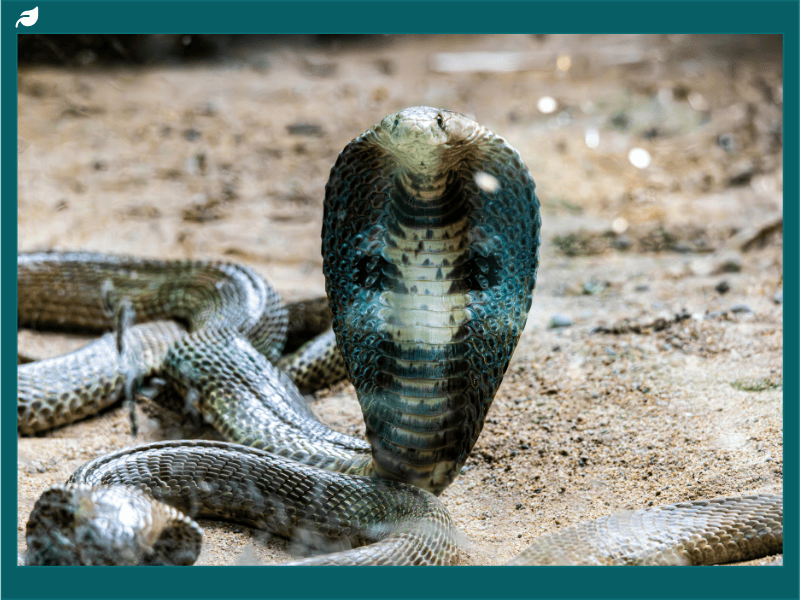
The king cobra is the longest venomous snake in the world, reaching up to five meters. Its hood, which it spreads when threatened, adds to its impressive look.
King cobras are also known for their intelligence, as they can learn to recognize their handlers, which is rare for reptiles. Unlike most snakes, female king cobras build nests out of leaves and debris to protect their eggs, showing unusual parental care.
Their venom is strong enough to stop prey and scare off predators, but king cobras usually avoid conflict and only attack if threatened. These features show both their strength and their unique behaviors.
The Importance of the King in its Ecosystem
The king cobra plays a crucial role in managing its ecosystem, acting as both predator and prey within its habitat, a vital dynamic for ecosystem balance.
As apex predators, king cobras help regulate populations of their prey, which predominantly consists of other snakes and small animals. This behavior ensures a stable food web, preventing overpopulation of any single species and maintaining biodiversity.
On another level, king cobras are an integral part of their ecosystem because they are an indicator species; changes in their population can reflect the overall health of the environment.
These serpents also face threats from humans due to habitat destruction and illegal wildlife trade, critical conservation issues. The king cobra’s importance in its natural environment obliges us to consider effective conservation strategies that protect both the snakes and the rich biodiversity of their habitat.
Understanding their behavior and role within their ecosystem can drive better policies, ensuring these majestic creatures thrive alongside human development.
Dietary Habits of the King Cobra
King cobras have unique eating habits that show why they are top predators. They mostly eat other snakes, and sometimes even their own kind, which shows they can be cannibalistic.
They use a strong sense of smell to find prey, which helps them survive in different environments. Knowing what king cobras eat helps us understand their important role in keeping their ecosystems balanced.
Prey Preferences and Hunting Techniques
King cobras mostly eat other snakes, which is unusual for cobras and shows their place as top predators. They hunt using stealth, speed, and strong venom to quickly stop their prey.
Their Jacobson’s organ helps them sense chemicals in the air, making it easier to find food. While they mainly eat snakes, they will also eat lizards, small animals, and sometimes birds or rodents.
King cobras are patient hunters, often waiting still for a long time before striking. They usually choose non-venomous snakes, which are safer to catch. These hunting habits show their intelligence and special adaptations.
By controlling prey numbers, king cobras help keep their ecosystems healthy, which is why protecting them is so important.
Mating Rituals of the King Cobra
The mating rituals of the king cobra offer a glimpse into the captivating world of these venomous snakes, marked by unique reproductive behaviors and intricate interactions.
During mating season, the behavioral patterns of king cobras become a dance of survival and perpetuation for the species. Understanding these rituals provides insight into how these reptiles ensure their lineage and adapt within their environments.
The entire process, from courtship to the development of the next generation, underscores the remarkable life cycle of this distinguished snake species.
Behavioral Patterns During Mating Season
The mating season of the king cobra is a period marked by significant changes in behavior, intricately linked to the perpetuation of the species. During this time, cobras exhibit heightened territoriality, with males becoming particularly aggressive in defending their area from rivals.
These venomous snakes engage in ritualistic combat, a spectacle of strength and endurance known as the “king cobra wrestling match,” where contestants entwine their bodies in a display of dominance without the use of venom. This behavior ensures that only the most robust males breed, maintaining the genetic vitality of the cobras.
The males emit pheromones to attract potential mates, initiating a courtship dance characterized by intricate body movements. Such displays not only serve to attract females but also deter competing males by establishing the prowess of the performing cobra.
As the mating rituals progress, the interaction becomes more intimate, culminating in copulation. These rituals are not just vital for reproduction; they also reinforce social hierarchies within the king cobra communities.
During this period, king cobras are more visible and active, spending considerable time patrolling their territories. The behavioral patterns observed during mating season highlight the importance of these rituals for the continuation of their species and provide fascinating insights into the complex social dynamics of these remarkable reptiles.
Here are some interesting facts that show more about king cobras’ social behaviors during mating season:
- Female cobras display selective responses, assessing the strength and vigor of male courtship.
- Territorial disputes can last several hours, demanding stamina and strategy from competing males.
- Pheromone potency increases, enhancing male attractiveness and signaling readiness to mate.
- Observation during this period reveals peak physical conditioning in both genders.
- Secondary rituals may occur if the initial courtship attempt fails, exhibiting adaptability.
- Post-mating, males resume solitary behaviors, marking a clear behavioral phase shift.
- Documentation of these activities aids in conservation and understanding of king cobra ecology.
These behavioral nuances deepen our appreciation for king cobras’ sophisticated social structure.
Reproduction and Development in King Cobras
King cobras exhibit unique reproductive strategies that distinguish them from many other snakes. After successful mating, the female cobra undertakes a crucial role in the development of her offspring.
Notably, king cobras are one of the few snake species that build nests. The female meticulously constructs a nest from leaves and other debris, demonstrating a level of parental investment unusual among snakes. This behavior ensures a stable environment for egg incubation.
The eggs incubate for about two months, during which time the mother remains close by, guarding the nest from potential threats. This care continues until the hatchlings emerge, at which point the young cobras are left to fend for themselves.
The development of the king cobra from egg to juvenile is remarkable, as hatchlings are born fully venomous and capable of hunting small prey independently. The growth rate of young cobras is rapid, driven by their high metabolic needs and the requirement to establish their own territories.
The initial stages of life are perilous, as these young snakes face numerous predators and environmental challenges. Despite the high mortality rate, those that survive grow to become formidable predators, continuing the life cycle of this extraordinary species.
Consider these fascinating facts about the reproductive and developmental journey of king cobras:
- Female cobras fiercely guard nests against predators, showing unusual maternal instincts for snakes.
- Hatchlings are immediately venomous, needing no assistance to hunt and survive.
- Rapid growth characterizes juvenile cobras due to their high metabolic demands.
- Young cobras quickly establish territories, essential for their survival and growth.
- Despite high mortality, survivors grow into dominant predators in their ecosystems.
- Nest-building behavior by females is rare and ensures eggs are well-protected.
- The life cycle showcases king cobras’ adaptability and survival tactics.
These facts highlight the impressive ways king cobras survive in the wild.
Cultural Significance of Cobra and Snake Charmers
The king cobra holds a profound cultural significance, particularly within Indian and Southeast Asian traditions, where these snakes are revered for both their majesty and mystique.
In mythology and folklore, cobras are often symbols of fertility and protection, embodying powerful traits that have captivated human imagination. Among the diverse cobra species, the presence of the king cobra is notable, often depicted in various religious and cultural contexts, including Hindu and Buddhist narratives.
Snake charmers are often linked with cobras, showing the close connection between people and these snakes. They use music and movement to influence the cobras’ behavior, showing their deep understanding of these animals.
This tradition highlights both the skill of the charmers and the king cobra’s reputation as a creature that is both feared and respected.
However, the tradition of snake charming faces challenges today. As people become more aware of wildlife conservation, it is important to respect cultural practices while also protecting king cobras in the wild.
The long history between snake charmers and cobras shows how much these snakes have influenced human culture.
Diverse Cobra Habitat Compared with the Indian Cobra
Cobra habitats are as varied as the ecosystems they inhabit, yet there’s a striking distinction between the king cobra and the Indian cobra’s environments.
The king cobra thrives in the dense rainforests of Southeast Asia, dining predominantly on other snakes, including non-venomous species, as observed in their unique food preferences. These rich habitats support the king cobra’s role as an apex predator, maintaining ecological balance by regulating reptile populations.
In contrast, the Indian cobra, another key member of the cobra species, occupies a range of environments from forests to agricultural lands across the Indian subcontinent. This adaptability enables Indian cobras to coexist closely with human developments, illustrating a distinct survival strategy compared to their king counterparts.
Conservation efforts are essential for both species, addressing habitat loss and human-wildlife conflicts. Protecting these cobras’ habitats ensures the preservation of their ecological roles and the natural heritage they embody.
Understanding these habitat preferences highlights the necessity of diverse conservation strategies tailored to each species.
King cobras are fascinating and respected for their unique traits and important roles in nature.
By eating mostly other snakes, they help keep the environment balanced. Their mating rituals also show how complex their behaviors are.
Scientists and nature lovers are still learning about them and working to protect them. Saving their habitats is key to making sure king cobras survive and that future generations can learn about and admire these amazing snakes.