Steel’s sustainability edge isn’t only about recycling stats—it’s about asset longevity, predictable maintenance, and credible end-of-life options that preserve value. When you specify pre-engineered steel systems, document materials properly, and plan for future adaptation, you create buildings that work harder for longer—and that can be repurposed or reclaimed when needs change.
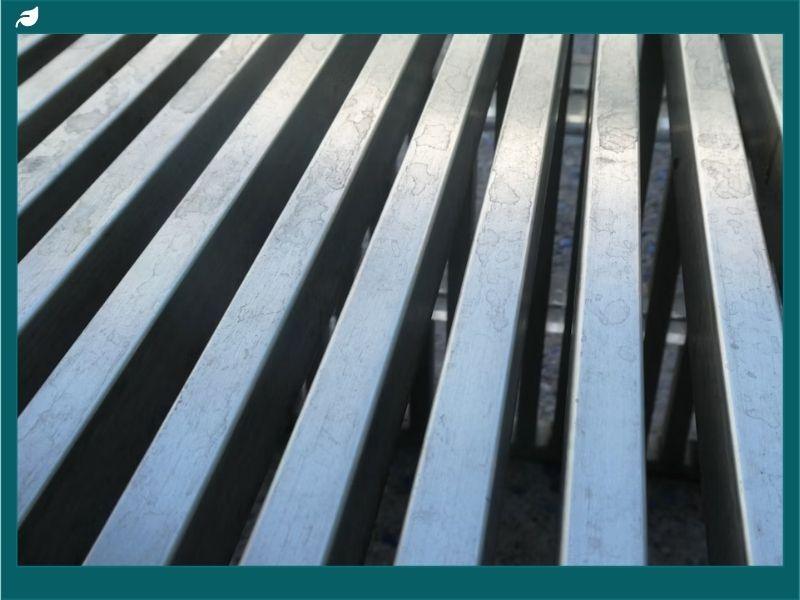
Photo by David Trinks on Unsplash
Below, we outline how to anchor projects with reputable suppliers, design for deconstruction, balance embodied and operational carbon, and set procurement rules that reward circular performance.
Partnering With Proven Suppliers: Sheds N Homes And Peers
Lifecycle outcomes start with who you buy from. In Australia, Sheds N Homes (Perth) supplies pre-engineered steel sheds and kit buildings made from local steel, backed by an up-to-20-year BlueScope® warranty—concrete signals that the products are engineered for durability and corrosion resistance in real-world exposures. Their Perth page highlights Australian-made steel, engineered kits, and the warranty backing, which together reduce lifecycle risk for owners.
BlueScope publishes warranty information and routes for claims—useful not just as reassurance but as a specification aid to match coatings and products to environment categories.
The broader lesson holds worldwide: where suppliers offer standardized members, documented loads, traceable grades, and clear finish systems, it becomes easier to maintain, upgrade, or even relocate a building. Those attributes preserve asset value and open the door to resale or component reuse at end-of-life.
Circular Value: Durability, Recyclability, And Verified Reuse Pathways
By tonnage, steel is the most recycled material in the world, with hundreds of millions of tonnes flowing back into furnaces each year—evidence that circular pathways already exist at scale.
Yet the bigger lifecycle win is reuse: when structural members are salvaged and reused with proper testing and documentation, you avoid not just landfill but also a large slice of new production emissions. European design guides and test protocols now detail how to reclaim, verify, and re-specify steel sections safely, giving designers and insurers confidence that reused steel can be treated as a reliable product stream.
For asset managers, this translates into exit options: a steel-framed warehouse can be dismantled and sold into another project; components can be graded and re-marketed; and residual value can be modeled, rather than written down to scrap.
Design For Deconstruction From Day One
“Design for deconstruction” (DfD) is practical, not theoretical. Toolkits lay out decision trees and sequencing to maximize recovery and minimize damage during unbuilding, so more components can be reused rather than down-cycled.
What does this look like in drawings and specs?
- Demountable connections: prioritize bolted over welded joints where feasible to speed future disassembly.
- Regularized grids & member families: repetition makes secondary markets more liquid because components fit more future layouts.
- Dry, reversible envelopes: screw-fixed cladding and separated layers allow selective replacement or reuse.
- Clear separation of systems: keep MEP runs accessible and independent so the frame can be extracted without destroying services.
These are low-regret moves that rarely increase upfront cost, but they make years-later adaptations and end-of-life recovery dramatically cheaper.
Photo by Abdul Zreika on Unsplash
Embodied And Operational Carbon: Getting The Balance Right
The sustainability profile of a steel building spans embodied carbon (materials and construction) and operational carbon (heating, cooling, lighting). Comparative studies continue to show that well-designed steel frames can perform competitively on embodied carbon relative to concrete—especially when the potential for reuse and high recycling rates are accounted for.
At the same time, recycled input rates fluctuate by region and year, so it’s smart procurement to request mill disclosures on recycled content and document actual feedstock in project submittals. Sector data sources show how these flows vary across markets—use them to inform specification targets rather than assuming static values.
On the operational side, steel’s precision and modularity make upgrades easy: add continuous insulation, swap cladding to higher-SRI cool roofs, integrate rooftop solar with engineered fixing points—all without compromising the primary frame. Those upgrades extend the useful life of the building while reducing energy bills.
Policy, Procurement, And Finance That Reward Lifecycle Performance
Urban growth is staggering; by mid-century we will add floor area at a pace that demands circular approaches if climate goals are to remain reachable. Analyses of the circular built environment show that circular practices can deliver significant emissions cuts alongside economic upside, especially when enabled by standards, data, and digital tools.
Translate that into contracts:
- Require DfD deliverables (deconstruction plans, connection schedules) in design briefs.
- Ask for BIM objects that carry material grades, test data, and warranty references to ease future reuse.
- Set reclaimed-content allowances in non-critical members where codes permit, using established verification protocols.
- Tie a portion of payment or finance terms to end-of-life recovery targets (e.g., percentage by weight reclaimed for reuse vs. recycling).
These mechanisms shift value toward long-lived, adaptable buildings and away from short-lived, high-waste assets.
Regional Resilience: Why Steel Buildings Thrive Across Climates
From cyclonic coasts to alpine logistics parks, steel’s predictability is a virtue. In marine or industrial atmospheres, warranty frameworks (such as BlueScope’s published terms in Australia) help specifiers match coating systems and fasteners to exposure categories; getting that right reduces corrosion risk and protects lifespan.
In heat-stressed regions, ventilated roofs, reflective finishes, and upgradeable insulation can be retrofitted over time; in cold regions, secondary steelwork makes it straightforward to add thermally broken cladding or vestibules without disturbing the main frame. All of these reinforce the same point: steel buildings are future-proof.

Photo by Kenrick Baksh on Unsplash
Endntoe
No single material solves construction’s carbon problem. But durable, well-specified steel buildings—sourced from credible suppliers, detailed for deconstruction, and managed with circular intent—stretch asset life, cut lifecycle emissions, and keep materials in productive loops.
The global recycling record shows steel’s circular backbone; the growing body of reuse guidance turns aspiration into procedure; and procurement choices tie it all together on day one. Get those three right, and your next steel building won’t just meet today’s brief—it will hold value, purpose, and performance for decades to come.