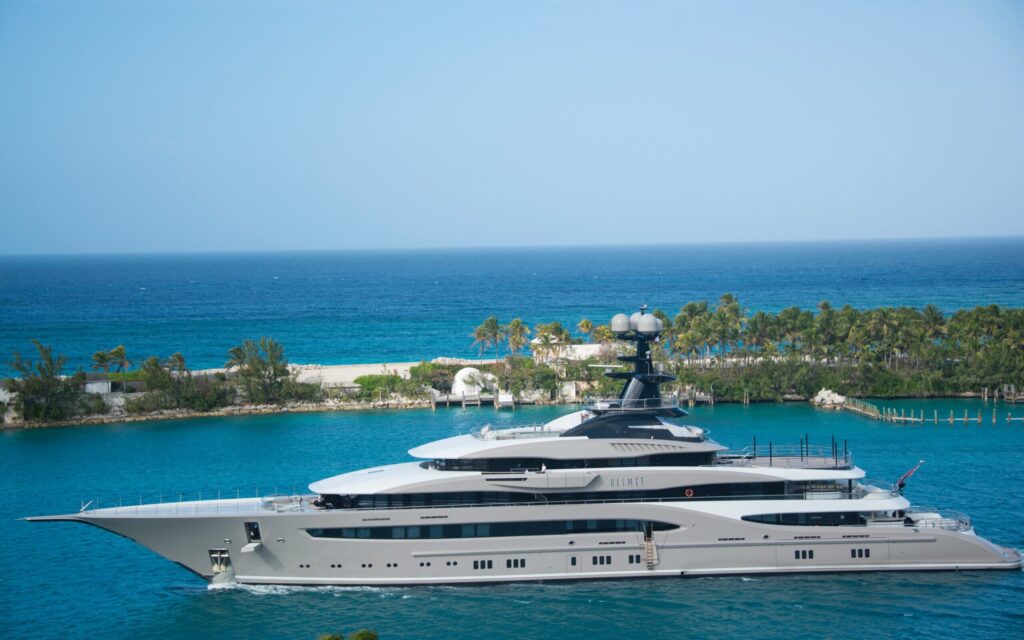
Private jets, superyachts, and space travel – excessive carbon emissions of the richest 1% must be slashed to avoid climate breakdown.
A new study shows how carbon emissions of the world’s wealthiest 1% are expected to be 30 times greater than those compatible with the 1.5C limit set by the Paris Agreement.
Scientists argue that keeping global warming under 1.5C above pre-industrial levels is essential to avoid the worst of climate change.
To stay below this limit, however, each person on Earth would need to have a carbon footprint of 2.3 tons of carbon dioxide per year by 2030. The average carbon footprint, the study points out, is roughly double this figure.
The findings, published by Oxfam, also show that the carbon footprints of billionaires can quite easily run into the thousands of tonnes: a superyacht on its own produces around 7,000 tonnes of carbon emissions per year.
This means that an individual from the richest 1% would need to cut their carbon emissions by around 97 percent by 2030 to fall below the 1.5C limit.
Though the poorest half of the world are set to remain several times below the 1.5C limit by 2030, this will make little difference in the long run.
According to the report, the world’s richest 10% will produce enough carbon emissions to exceed the 1.5C limit on their own – regardless of what the other 90% of humanity do.
“The emissions from a single billionaire spaceflight would exceed the lifetime emissions of someone in the poorest billion people on Earth,” says Nafkote Dabi, Climate Policy Lead at Oxfam. “A tiny elite appear to have a free pass to pollute.”
“Their over-sized emissions are fuelling extreme weather around the world and jeopardizing the international goal of limiting global heating. The emissions of the wealthiest 10 percent alone could send us beyond the agreed limit in the next nine years.
“This would have catastrophic results for some of the most vulnerable people on Earth who are already facing deadly storms, hunger and destitution.”
The concrete relationship between wealth and carbon inequality shows that ‘Keeping 1.5C Alive,’ as the recent UN Climate Change Conference (COP26) put it, must begin by tackling the excessive carbon emissions of the richest 10%.
This news follows criticism of the recently announced Glasgow Climate Pact. While the COP26 pledge is projected to significantly lower carbon emissions, it will still not be sufficient to limit the rise in global temperatures to 1.5C, according to the Energy Transitions Commission.
“The extreme difference between the expected carbon footprints of a small minority of the world’s population in
2030 and the global average level needed to keep the Paris Agreement’s 1.5⁰C goal alive is not tenable,” states the Oxfam report.
“It is time for governments to raise major taxes on or to outright ban highly carbon-intensive luxury consumption, from SUVs to mega yachts, private jets and space tourism, that represent a morally unjustified depletion of the world’s scarce remaining carbon budget.
“With wealth inequality likely further widening in the wake of the COVID-19 crisis, coordinated and substantial taxation of wealth is urgently required to reduce inequality and at the same time curb the emissions of the richest. It is time to use regulation and taxation to end extreme wealth altogether, to protect people and the planet.
“Such measures alongside wider progressive tax reforms are critical to reduce the wealth of the richest substantially, to shift the behaviour of the polluter elite and to generate the revenues needed to fund the wider fight against the climate and inequality crises.
“The climate crisis has been driven by extreme inequality to this point. But now governments must urgently reach for solutions which address both.”