In 2025, biodegradable food packaging has moved from “nice to have” to “license to operate.” Between accelerating regulations, retailer scorecards, and consumer expectations, brands and foodservice operators are re-platforming their packaging portfolios. Yet “biodegradable” is not a single material or a single market; it’s an ecosystem—bagasse fiber, coated paper, PLA/CPLA and emerging biopolymers—each with different performance envelopes, certification routes, and supply footprints. This executive analysis breaks down the materials that matter, where they’re made and used, what the data says, and the strategic moves leaders are making now to win the next five years.
At-a-glance: packaging is the single largest source of plastic waste globally; credible pathways to circularity hinge on cutting virgin plastics, scaling composting where it makes sense, and redesigning for recyclability or organics streams. Policy is the pace-setter (EU PPWR in force; U.S. state EPR and PFAS bans rising), and corporate commitments are narrowing room for delay.
What “biodegradable” really means (and why definitions matter)
Biodegradable ≠ compostable. In market practice and law, compostable claims are anchored to standards such as EN 13432 (EU) and ASTM D6400 (U.S.), which require disintegration and safe biodegradation in controlled composting conditions—plus heavy-metal and ecotoxicity limits. “Biodegradable” without a specified environment (industrial composting, home composting, soil, marine) is increasingly rejected by regulators and retailers because it invites greenwashing and contaminates recycling streams. The direction of travel: clearer Design-for-Compostability labelling and tighter restrictions on vague claims (e.g., California’s AB 1201 labelling rules).
Why this matters for scale:
- Certifications (BPI/TÜV/OK Compost) are becoming gating criteria in tenders.
- PFAS-free, heavy-metal compliant, and migration-safe materials are becoming non-negotiable in food contact. State-level PFAS bans in the U.S. are converging with retailer policies.
The material landscape: performance, cost curves, and best-fit use cases
1) Sugarcane bagasse molded fiber
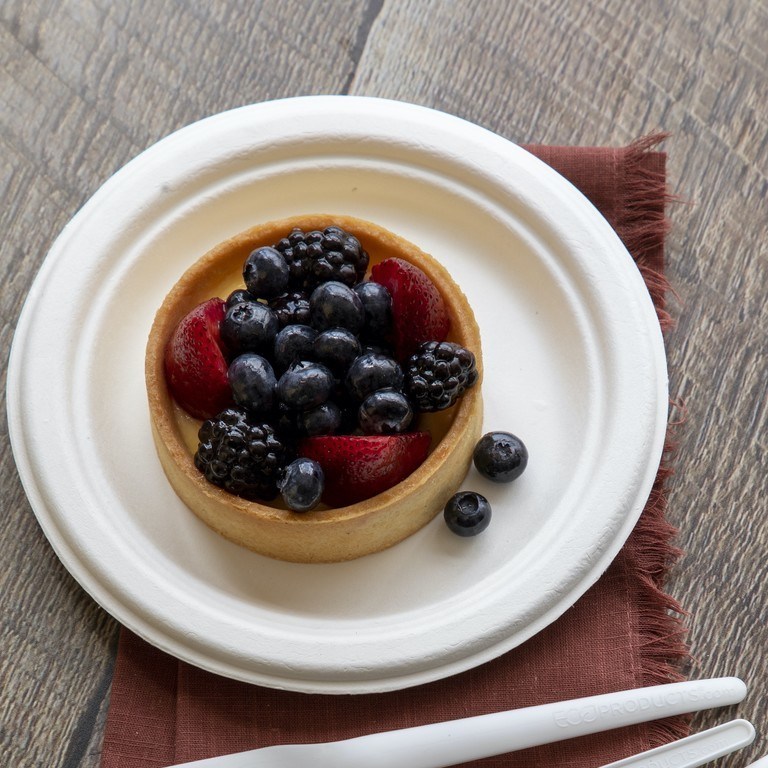
- What it is: The fibrous residue after sugarcane juice extraction, thermoformed into bowls, clamshells, plates, and trays.
- Why it’s winning: Strong stiffness, heat and oil resistance, lid compatibility, and credible compostability. Especially defensible for hot, oily, or mixed meals (soups, curries, fried items) and for “food+packaging” organics diversion programs.
- Supply logic: Bagasse abundance tracks sugarcane. Top sugarcane producers—Brazil, India, China, Thailand—anchor upstream fiber availability and mill-adjacent molding capacity.
- Bioleader® best fit: Bagasse food containers for hot & greasy foods requiring rigid walls and tight-fit lids.
2) Coated paper/kraft systems
- What it is: Paperboard bowls/boxes often with barrier coatings (e.g., water-based, dispersion, PLA).
- Use cases: Salads, grain bowls, bakery, dry or low-oil items where paper branding and tactile cues are valued.
- Scaling note: PPWR pushes recyclability and minimization; dispersion coatings and mono-material paper lines are rising.
- Bioleader best fit: Paper Salad Bowls with clear lids for merchandising and fiber bodies for brandable real estate.
3) PLA/CPLA (polylactic acid; crystallized PLA)
- What it is: A biopolymer (often corn/sugar-based). PLA is clear and suited to cold cups; CPLA is heat-treated for higher heat resistance (cutlery, hot-lid applications).
- Where it shines: Cold beverages, dessert cups, sample cups, cutlery kits; where clarity or utensil rigidity matters.
- Caveats: Industrial composting access is uneven; labelling and contamination management are critical.
- Bioleader best fits: Compostable Plastic Cup for cold drinks and Compostable Cutlery (CPLA) for full utensil programs.
4) Emerging bio-based polymers (PHA, blends)
- What they are: Next-gen materials with promising biodegradation profiles; supply still scaling.
- Trajectory: Production capacity of bioplastics overall remains <1% of global plastics but is set to more than double by 2029, with PLA and PBAT blends leading capacity growth. Translation: availability will improve; price deltas should narrow.
Where biodegradable packaging is made: the new manufacturing map
Fiber & molded pulp hubs. Because bagasse tracks sugarcane agronomy, Brazil, India, China, and Thailand are pivotal. China leads finished-goods scale—tooling depth, mold variety, QC systems, container-loading efficiencies—while India and Thailand diversify regional risk and offer tariff options for certain markets.
PLA value chain. North America, China, and parts of Europe house PLA resin capacity and downstream converters. As capacity additions land (2025–2029), expect improved resin availability and steadier pricing—especially for clear cold cups and thermoformed lids.
Paper/kraft systems. Global mills and converters are widespread; in the EU, PPWR is accelerating Design-for-Recycling criteria that favour mono-material paper lines and high-yield fiber recovery.
Where it’s consumed: demand hotspots and regulatory catalysts
- European Union. The Packaging and Packaging Waste Regulation (PPWR) entered into force in 2025, harmonizing rules across member states and mandating recyclability by 2030, reuse targets for select categories, and design-for-recycling criteria. Expect sustained demand for fiber formats and certified compostables where organics diversion is mature.
- United States. A patchwork of state-level policies is re-shaping specifications:
- EPR for packaging (e.g., California SB 54) is moving into rulemaking and producer onboarding—pushing recyclable or compostable by design and fee-modulated eco-modulation.
- PFAS restrictions in food packaging are accelerating across states, effectively eliminating fluorinated barriers and pushing fiber systems that pass no-added PFAS thresholds.
- Composting infrastructure remains uneven, but acceptance of compostable packaging has increased since 2018, and industry surveys show expanding throughput and carbon sequestration benefits from compost use.
- EPR for packaging (e.g., California SB 54) is moving into rulemaking and producer onboarding—pushing recyclable or compostable by design and fee-modulated eco-modulation.
- GCC / UAE. The UAE has announced a nationwide 2026 ban on a broad set of single-use plastic items (cutlery, cups, lids, containers, plates), building on earlier bag bans—driving rapid menu conversions in hospitality and delivery.
- APAC. Market pull comes from national and city mandates (e.g., Japan’s retail plastic reduction policies) and platforms (quick-commerce, delivery apps). As organics programs scale, certified compostables gain traction in dense urban markets.
The macro data: how big is the shift?
- Packaging ≈ 40% of global plastic waste, making it the single largest lever for reduction. Any credible sustainability plan must address food packaging.
- Bioplastics capacity: ~2.47 million t in 2024, projected to ~5.7 million t by 2029—with utilization around 58% in 2024, implying headroom for rapid demand surges.
- Compostable packaging is a multi-tens-of-billions-dollar segment with a 6–8% CAGR outlook through 2030, led by foodservice formats (bowls, clamshells, cups, cutlery). Expect faster growth in APAC and EU given policy tailwinds.
Case studies: what leaders are doing—and why it works
Global QSR “Fiber-first” pivots. Global foodservice majors are migrating to fiber lids, molded pulp bowls, and PFAS-free barriers where possible. McDonald’s reports it was >90% of the way to sourcing 100% of primary guest packaging from renewable, recycled or certified materials by the end of 2024—illustrating how large systems convert through clear targets, validated specs, and supplier partnerships.
City-level bans and behaviour change. Abu Dhabi’s phased plastic policy delivered a 95% reduction in plastic bag use after its 2022 ban, demonstrating that demand response is immediate when policy and retail execution align—useful context as the UAE’s 2026 national restrictions come into force.
Organics infrastructure momentum. U.S. composting facilities reported ~6.0 million tons of finished compost in 2023 (vs. ~5.16 million in 2021), with documented soil carbon benefits—evidence that diversion + compostable packaging can deliver measurable climate co-benefits when programs are correctly scoped and run.
The procurement playbook (2025–2030): how to scale responsibly and de-risk
1) Segment by use case, not by material ideology.
- Hot, oily, entrée-scale: bagasse clamshells/bowls with secure lids.
- Cold beverage & display: PLA clear cups; pair with fiber lids where feasible.
- Salads & dry foods: coated paper/kraft bowls with dispersion or PLA barriers; ensure recyclability or compostability claims match facility access.
2) Make compliance a design input.
- Map destination markets to PPWR, EPR obligations, and PFAS restrictions. Use harmonized specs and label sets (e.g., BPI marks where appropriate).
3) Engineer for real end-of-life.
- If you have organics diversion (campus, city), prioritize certified compostables that your local composter actually accepts; if not, bias to paper formats with proven recyclability or to minimal-material designs. (Acceptance of compostable packaging has increased since 2018 but is still variable—validate locally.)
4) De-risk supply.
- Dual-source across China/India/Thailand for bagasse formats; reserve PLA resin or cup capacity under longer-term contracts to buffer seasonal spikes. Use container-mixing strategies to align MOQs and inventory turns.
5) Deploy TCO, not just unit price.
- Factor waste fees, contamination penalties, EPR eco-modulation, and labour impacts of sortation. In organics-rich programs, compostables can lower total system cost by unlocking cheaper food-waste diversion and avoiding residuals. (EU PPWR and U.S. EPR both push fee structures that reward better design.)
Spotlight: Bioleader®—factory-level execution for compliant scale
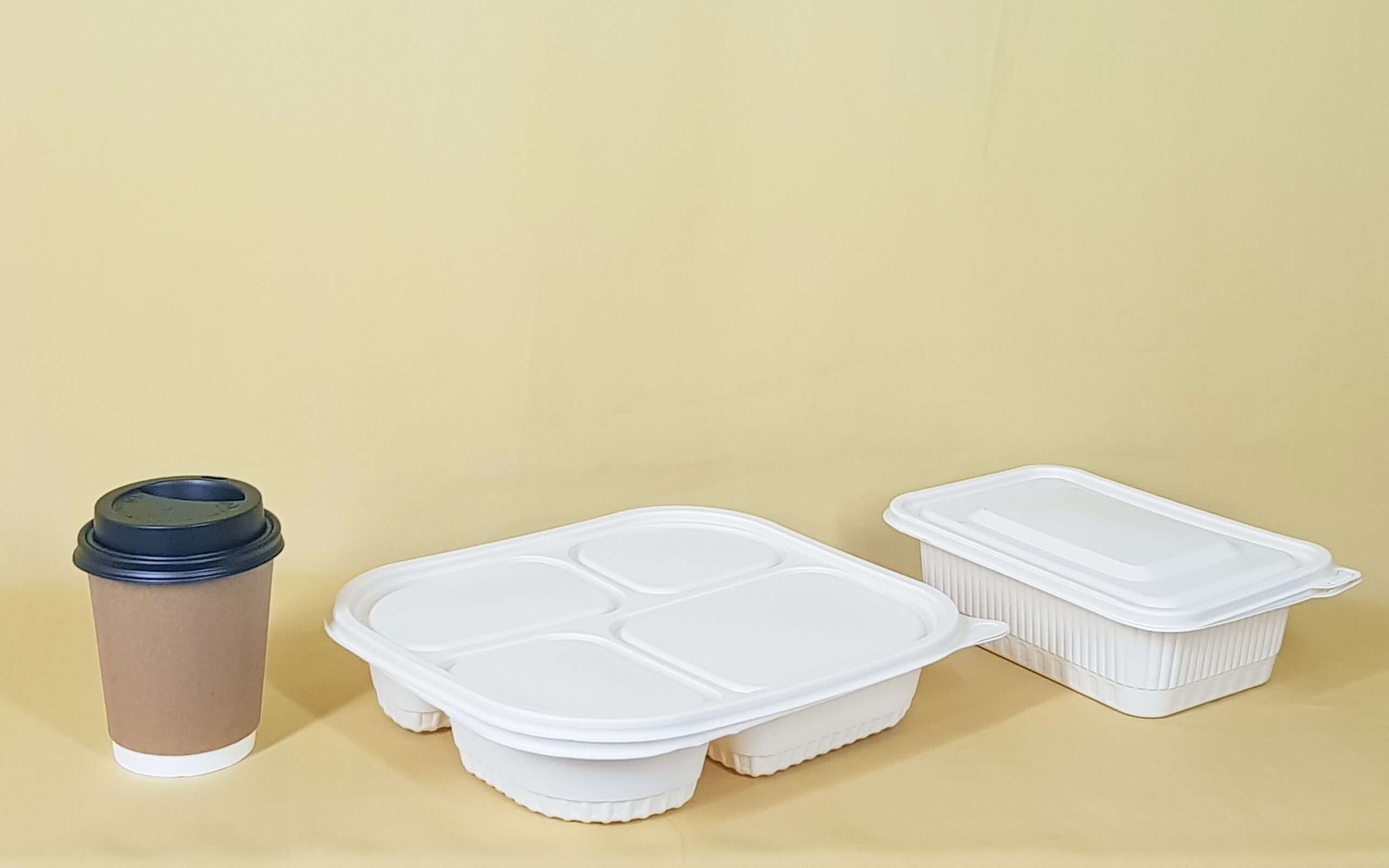
As brands pivot from pilots to portfolio-wide conversion, execution quality matters. Bioleader is a China-based manufacturer focused on bagasse containers, paper/kraft bowls, PLA cups, and CPLA cutlery, with OEM/ODM support and certification-ready specs. For teams standardizing SKUs across franchises or retail chains:
- Hot-food backbone: bagasse bowls/clamshells with grease-resistant, PFAS-free performance.
- Merchandising salads: brandable kraft bowls with clear display lids.
- Beverage systems: PLA clear cups matched to regional composting and labelling rules.
- Utensil programs: CPLA cutlery kits with heat-resistant specs.
Will biodegradable packaging become the global default?
Short answer: It will become the default where organics diversion exists or is being built (campuses, cities with food-waste bans, national composting programs). Elsewhere, recyclable fiber and lightweighted reusables will shoulder more of the load. Three forces support a continued shift toward certified compostables:
- Policy certainty: EU PPWR sets a durable north star; U.S. state EPR and PFAS policies are converging; GCC bans (e.g., UAE 2026) intensify regional momentum.
- Corporate commitments: Global signatories to the New Plastics Economy Global Commitment continue to ratchet targets on virgin plastic reduction and packaging circularity—driving real purchasing.
- Capacity growth: Bioplastics capacity is projected to more than double by 2029; utilization gaps today imply room to absorb step-changes in demand.
Constraint to watch: Infrastructure fit. Compostable packaging is not a cure-all; in markets without organics collection, fibre-first recyclability or reuse may deliver higher net system benefits.
Regional deep-dive: manufacturing vs. consumption
Manufacturing clusters
- Fiber/bagasse: Brazil/India/China/Thailand as upstream anchors; China as the dominant converter/exporter for SKU depth and logistics density.
- PLA/CPLA: Expanding capacity in North America, China, and EU; growth underpinned by projected doubling of bioplastics capacity by 2029.
Consumption hotspots
- EU: Harmonized rules fuel predictable demand across retail, HORECA, and delivery.
- U.S.: EPR + PFAS + organics mandates (municipal) create high-value pockets; acceptance of compostable packaging is rising but still heterogeneous—necessitating hyper-local specification.
- GCC (esp. UAE): 2026 bans catalyze fast category conversion in hospitality and events.
- APAC: Mixed—Japan, Korea, Australia, and parts of China advancing; Southeast Asia accelerating via platform delivery and tourism sustainability commitments.
Data corner: why this transition is material
- Packaging’s share: ~40% of plastic waste; cutting this lever hits the largest pool first.
- Plastics trajectory (BAU): Without intervention, global plastics use nearly triples by 2060; biodiversity and climate externalities compound.
- Bioplastics share: Still <1% of total plastics today—so “room to run” is vast as capacity and policy align.
Implementation checklist for procurement, sustainability & operations
- Map laws→labels→logistics. Tie each SKU to its end-of-life pathway in each market; sync artwork to local labelling rules (e.g., compostable claims in California).
- Certify and verify. EN 13432 / ASTM D6400 routes; PFAS and heavy-metal testing; migration limits (FDA/LFGB).
- Run pilots with real waste streams. Lab tests aren’t enough: validate disintegration at local composters and measure contamination impacts. (Studies show performance depends on facility conditions—tunnel vs. windrow, cycle length, feedstock mix.)
- Engineer kits, not parts. Align container + lid + cutlery to one end-of-life to simplify back-of-house sorting and signage.
- Measure TCO. Include EPR fees, contamination penalties, avoided landfill costs, and carbon benefits from compost use.
- Dual-source critical SKUs. For bagasse and PLA families, maintain at least two qualified factories across regions to buffer demand spikes and policy shocks.
FAQ: Google-popular questions—answered
1) Is biodegradable packaging always better than recyclable plastic?
Not always. It depends on local infrastructure and use case. Where organics diversion exists (campus/city programs) and contamination of recyclables is high, certified compostables can outperform. Where composting is unavailable, recyclable fibre or reuse may win on net impact.
2) Can I home-compost certified compostable packaging?
Only if it’s home-compost certified and your climate/composting practice supports it. Most SKUs are industrial-compost only, and new labels are emerging to clarify the difference.
3) What’s the heat limit for bagasse vs. PLA vs. CPLA?
As a rule of thumb: bagasse handles hot, oily meals well; PLA is for cold; CPLA improves utensil and lid heat resistance. Always confirm with supplier specs and migration tests.
4) Will EU PPWR kill compostables?
No. PPWR pushes prevention, reuse, and recyclability, but compostables remain valid where they enable organics diversion or fulfill hygienic/performance needs—provided design and labelling meet the regulation.
5) Is PFAS a blocking issue for fiber packaging?
PFAS is a compliance issue, not a blocker. The market is moving to PFAS-free barriers. State-level bans in the U.S. and retailer policies are accelerating the shift.
Conclusion: From pilots to portfolios
Biodegradable food packaging is crossing the chasm—from isolated category pilots to enterprise-wide programs—where policy certainty, credible certifications, and fit-for-infrastructure design intersect. The winning strategies are pragmatic: segment by use case, certify what you claim, and bind packaging choices to the actual end-of-life pathways in your markets. With EU PPWR in force, U.S. EPR maturing, and GCC bans arriving, the cost of inaction will eclipse the premium for compliant, brand-safe solutions.
If you’re operationalizing the pivot now, start with a core kit: bagasse for hot meals, kraft bowls for salads, PLA cups for cold beverages, and CPLA cutlery—then localize end-of-life and labelling. Partners like Bioleader can compress lead-time and risk by offering factory-direct, certification-ready SKUs across those families and by supporting OEM/ODM brand programs with scale.
Reference
- UNEP: Plastic Pollution hub – global framing, latest treaty context. UNEP – UN Environment Programme
- Our World in Data: Packaging’s share of plastic waste – why packaging is the biggest lever. Our World in Data
- EU Parliament PPWR explainer – what’s changing by 2030 and 2035. Our World in Data
- European Bioplastics Market Data 2024 – capacity and growth outlook through 2029. docs.european-bioplastics.org
- Biodegradable Food Packaging Research Report 2025. -Bioleaderpack.com