Eurostar Grows Green Travel Corridor with Fifth Daily Service
From December 2025, Eurostar passengers traveling between London and Amsterdam will have greater flexibility, as the high-speed rail operator adds a fifth direct train in each direction. Tickets for this expanded service go on sale starting Thursday, July 10, 2025.
The move comes as part of Eurostar’s broader strategy to position high-speed rail as a sustainable, competitive alternative to short-haul air travel within Europe. Gwendoline Cazenave, CEO of Eurostar, underscored this commitment, stating: “London to Amsterdam is one of the busiest routes by plane in Europe. With five daily returns, and 3000+ seats per day, we are offering a sustainable alternative to travel between the UK and the Netherlands. Since February, we’ve seen exceptional demand on our Amsterdam route, and the addition of a fifth daily service gives customers more choice and flexibility. It’s our ambition to offer a sustainable alternative and grow international high-speed rail as customers first choice across Europe.”
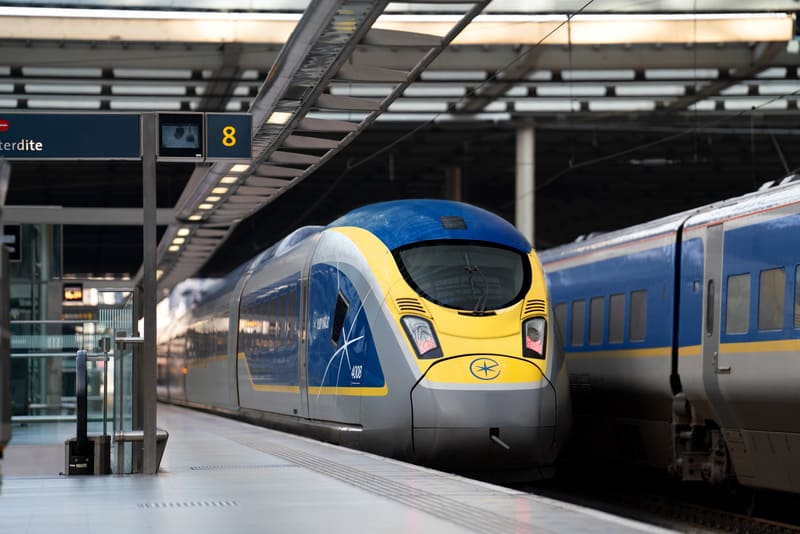
New Terminal Unlocks Capacity
This service expansion follows the opening of Eurostar’s brand-new cross-channel terminal in Amsterdam earlier this year. Operational since February 2025, the terminal has tripled Eurostar’s capacity on the London-Amsterdam route—from carrying 275 passengers per train in 2024 to over 650 passengers per train today.
Passenger volume between London and Amsterdam has risen 18% year-on-year since the terminal’s opening. The new infrastructure allows Eurostar to operate at full capacity, aiming to meet surging customer demand while providing a smoother, city-center-to-city-center travel experience.
The upgraded terminal reflects growing investment in sustainable infrastructure across European rail networks. According to the European Union’s Transport Strategy, enhancing cross-border rail services is a key pillar in reducing aviation emissions, which account for approximately 3.8% of the EU’s total CO₂ emissions.
Business Travelers on Board
While leisure travel accounts for a large portion of Eurostar’s growth, business travelers continue to represent a significant share of demand. In 2024, approximately 130,000 business customers – about 15% of total passengers – used the London-Amsterdam service.
Business travelers increasingly prioritize low-carbon alternatives, especially as corporate sustainability policies tighten. Eurostar’s high-speed rail option appeals to companies aiming to reduce business travel-related emissions without compromising on speed or convenience.
The London-Amsterdam route is one of Europe’s busiest air corridors. Historically, flights between the two capitals accounted for substantial carbon emissions. By expanding its rail service, Eurostar contributes to shifting passenger preference away from planes toward greener modes of transportation.
Strategic Growth in the Netherlands
The Netherlands is a core market for Eurostar. In 2024, Eurostar transported 4.3 million passengers to and from the country. The company has set an ambitious goal: to carry 30 million passengers annually in the coming years.
This target is supported by a multi-faceted growth strategy. Eurostar has invested in acquiring a new fleet and expanding destinations from Amsterdam. Among these is a new service linking Amsterdam to Geneva, further connecting Northern and Central Europe via sustainable rail options.
The broader context reflects a growing momentum for high-speed rail in Europe. The European Commission’s Sustainable and Smart Mobility Strategy includes targets to double high-speed rail traffic across the EU by 2030. Companies like Eurostar are key players in making that ambition a reality.
Sustainable Alternative Gaining Momentum
Eurostar’s expansion of the London-Amsterdam route is more than just a service upgrade. It represents a tangible step towards decarbonizing European transport. With over 3,000 seats available per day on this route from December 2025, travelers have more opportunity to choose rail over air.
Eurostar’s CEO emphasizes this commitment: “It’s our ambition to offer a sustainable alternative and grow international high-speed rail as customers first choice across Europe.”
The timing aligns with rising public and governmental attention to transport emissions. Initiatives such as the European Green Deal highlight the need for efficient, low-carbon transit solutions. High-speed rail, powered increasingly by renewable energy sources, provides a viable and scalable answer.
For sustainable business stakeholders and policymakers, Eurostar’s investment in cross-channel connectivity demonstrates both market readiness and consumer demand for greener travel solutions. As infrastructure upgrades unlock capacity and frequency, routes like London-Amsterdam may set the standard for Europe’s next era of rail travel.
Travelling London to Amsterdam on Eurostar starts at London St Pancras International, the operator’s only London station, and finishes at Amsterdam Centraal in the heart of the city. The route is run jointly with NS International, the Dutch railway’s cross-border arm, and most departures call at Brussels and Rotterdam on the way. The journey takes a little under four hours, with each departure carrying passengers city centre to city centre rather than airport to airport.
Before you buy a ticket it helps to know how the day works. Stations at both ends now have dedicated terminals, so check-in, security and passport control happen under one roof. Bring your passport, allow time to clear the gates, and remember that luggage is generous: two large bags plus a piece of hand luggage per person, with no weight limit and no checked-bag fee.
Seat choice is offered when you book, and Premier and Business Premier fares include access to the Eurostar lounge at St Pancras and at Amsterdam Centraal. With a fifth daily service from December 2025, there is now far more flexibility over which departure suits your plans.