As cities around the world continue to expand, the conversation around sustainability has evolved beyond energy efficiency and emissions reduction. Increasingly, it now includes how urban mobility systems and property design can improve safety while supporting broader environmental and social goals.
Traffic congestion, rising accident rates, and aging infrastructure are interconnected challenges faced by both developed and emerging economies. Addressing these issues requires a more integrated approach—one that aligns sustainable transport, urban planning, and infrastructure investment.
Sustainable mobility is no longer just an environmental initiative; it is becoming a critical component of safer, more resilient urban systems.
The Link Between Sustainability and Road Safety
Sustainable transport systems are designed to optimize the movement of people and goods through urban environments. When mobility is planned with accessibility, efficiency, and reduced reliance on high-speed traffic in mind, safety outcomes tend to improve.
Cities that prioritize public transit, pedestrian pathways, and cycling infrastructure often experience lower accident rates. Slower traffic speeds, reduced congestion, and clearer road hierarchies contribute to fewer collisions and less severe injuries.
From an ESG perspective, this alignment between environmental sustainability and public safety strengthens the “social” dimension of infrastructure planning, making it a key consideration for policymakers and investors alike.
The Role of Public Transit and Shared Mobility
Expanding public transportation networks and shared mobility solutions is a central strategy in reducing road congestion and improving safety. Fewer private vehicles on the road typically result in lower accident frequency and improved traffic flow.
However, the growth of shared mobility introduces new regulatory and operational considerations. Multi-party transportation models—where drivers, platforms, and insurers are all involved—require updated frameworks to ensure accountability and safety.
“As urban mobility evolves, so do the legal complexities surrounding accidents involving shared transport,” says Jarrett Blakeley, CEO of Blakeley Car Accident and Personal Injury Lawyers. “We’ve seen that individuals seeking legal help after an Uber accident in Fort Lauderdale often face layered liability issues involving drivers, platforms, and insurers. These challenges reflect a broader global trend—in which innovation in transport must be matched by clarity in legal and regulatory frameworks to properly protect individuals.
This evolving landscape highlights the need for integrated policy development that keeps pace with innovation while maintaining a focus on public safety outcomes.
Smart Infrastructure and Data-Driven Traffic Management
Technology is playing an increasingly important role in shaping safer urban environments. Smart traffic systems, including adaptive signals, real-time monitoring, and predictive analytics, are helping cities manage congestion more effectively.
These systems reduce stop-and-go traffic patterns, improve flow efficiency, and minimize high-risk scenarios such as sudden braking or intersection conflicts. At the same time, they contribute to sustainability by reducing emissions associated with idling and inefficient travel.
For investors and city planners, smart infrastructure represents a key area of opportunity—offering both safety improvements and measurable environmental benefits.
Designing Cities for All Users
A core principle of sustainable urban development is inclusivity. Streets are no longer designed solely for vehicles but for a diverse mix of users, including pedestrians, cyclists, and public transit riders.
Key design elements include:
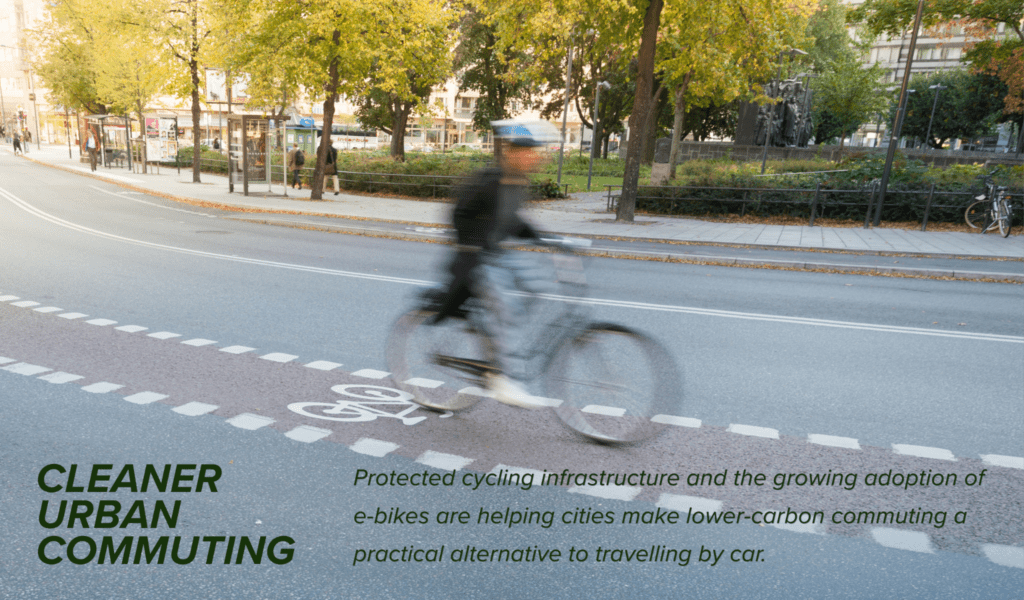
- Protected bike lanes
- Expanded pedestrian walkways
- Clearly defined crossings and traffic-calming measures
These features not only reduce accident frequency but also encourage the adoption of sustainable transportation modes. By making cities more accessible and safer for all users, urban planners can support both environmental objectives simultaneously.
The Investment Case for Safer, Sustainable Infrastructure
Safer streets are not just a public policy goal—they are also an economic imperative. Thighdents carry high direct and indirect costs, including healthcare expenses, productivity losses, and infrastructure damage.
From an investment perspective, sustainable transport and urban design offer strong long-term value. Cities that prioritize safety and sustainability tend to attract:
- Increased private investment
- Higher-quality workforce mobility
- Stronger real estate and infrastructure performance
As ESG considerations become more central to investment strategies, infrastructure projects that deliver both safety and environmental benefits are gaining increased attention.
Aligning Urban Development with ESG Goals
The integration of sustainable transport and urban design aligns closely with broader ESG frameworks. Reducing accidents improves public health and safety (social impact), while reducing systems contributes to lower emissions (environmental impact).
Governance also plays a role, as cities must implement transparent policies and regulations to ensure that infrastructure investments deliver measurable outcomes.
This holistic approach positions sustainable mobility as a cornerstone of future-ready urban development.
Moving Toward Safer, More Resilient Cities
The transition toward safer, more sustainable cities depends on how effectively transport systems, infrastructure, and urban design are integrated. By prioritizing smart technologies, inclusive planning, and long-term investment strategies, cities can address safety and sustainability challenges simultaneously.
As urbanization continues, the intersection of mobility, safety, and sustainability will remain a critical focus for governments, investors, and businesses alike. The path forward is clear: building cities where safer streets and smarter systems work together to create lasting value.