Introduction to Photovoltaic Power Stations
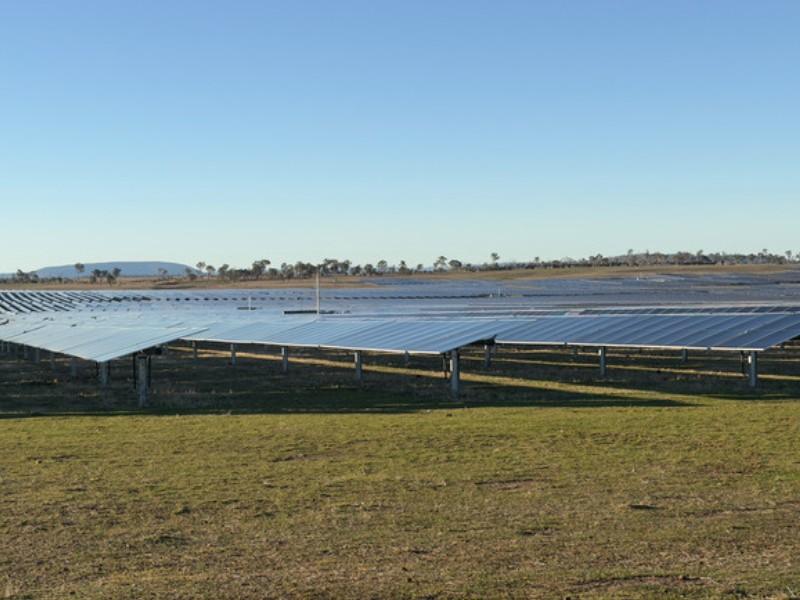
Picture a field the size of several thousand football pitches, blanketed in dark blue glass, quietly turning sunlight into enough electricity to power a small city. That’s not a science fiction backdrop. That’s a utility-scale solar farm operating right now, and there are hundreds more being planned, permitted, and built across every continent. As of June 2026, the United States alone has 3,556 solar farms in development with a combined planned capacity of nearly 595 GW, a figure that underscores just how rapidly utility-scale solar has moved from niche enthusiasm to mainstream infrastructure.
Photovoltaic power stations, which most people just call solar farms or solar parks, are the engine room of the global shift away from fossil fuels. They work by deploying vast solar arrays across open land, collecting sunlight, and feeding the resulting electricity straight into the national grid. Simple in concept, genuinely complicated in execution. Behind every successful project sits a mountain of environmental assessment work, community consultation, grid engineering, and land use negotiation that rarely makes the headlines but absolutely determines whether the panels go up or whether the whole thing stalls in a planning tribunal for five years.
What makes this moment particularly interesting is that the solar industry has stopped being a niche enthusiasm and become a mainstream infrastructure story. Governments are writing solar targets into law. Developers are raising capital at speed. And the questions that were once theoretical, about which land is appropriate, how wildlife is affected, what communities actually get out of the deal, are now urgent and practical.
This piece works through all of them. By the end, you’ll have a clear picture of what it actually takes to turn open land into a working photovoltaic power station, and why getting that process right matters enormously. Whether you’re a landowner weighing up a lease offer, a planner assessing an application, or an investor trying to understand the real risks in a solar development pipeline, the land dimension is the one you need to understand first. Everything else flows from it.
The Rise of Solar Technology
Not long ago, solar power was the thing you bolted to a roof to feel good about your carbon footprint while still paying a full electricity bill. That era is over. The cost of solar panels has dropped by more than 90% since 2010, and that single fact has changed everything. Solar is no longer a supplement to the grid.
It’s becoming a foundation of it.
Modern photovoltaic power stations are a completely different beast from the rooftop installations people picture. Large-scale solar farms today are industrial operations, using sophisticated ground-mounted solar arrays, precision tracking systems that follow the sun across the sky, and grid-connected infrastructure that can deliver reliable power at scale. The engineering involved is genuinely impressive. A utility-scale solar project doesn’t just stick panels in a field and run a cable to the nearest substation.
It involves careful orientation of thousands of individual panels, inverter systems that convert direct current to alternating current at high efficiency, monitoring software that tracks output in real time, and grid integration systems that smooth out the variability inherent in solar generation. The control rooms managing these installations look more like air traffic control than anything agricultural. And the teams operating them are drawing on data streams from thousands of sensor points across the site, adjusting output, flagging underperforming strings of panels, and coordinating with grid operators in ways that would have seemed impossibly ambitious for a solar power plant even fifteen years ago.
The adaptability of this technology has opened up locations that would have been unthinkable a decade ago. Desert environments with intense year-round irradiance are the obvious choice, but solar farms are also operating productively in northern European climates, on reclaimed industrial land, on the fringes of cities, and increasingly on agricultural land managed under dual-use schemes. The sun doesn’t discriminate much on geography, and modern solar systems are designed to extract useful energy even on overcast days, just at reduced output. That resilience across climate zones has been one of the industry’s most important practical discoveries.
It’s also one of the reasons that solar has outpaced wind as the go-to technology for many developers: the installation process is faster, the planning footprint is more predictable, and the operational complexity, while real, is considerably lower than for a wind turbine fleet with rotating machinery exposed to the elements for decades.
One of the most important shifts has been in how solar development intersects with agriculture. Agrivoltaic systems, where solar panels are installed at height above farmland, allow crops to grow in the shade beneath them while the land above generates renewable electricity. Shade-tolerant vegetables, soft fruits, and certain herbs have shown strong results under solar arrays, and some research suggests that reduced evaporation in the shaded environment can actually improve yields in hot, dry climates. Trials in France, Germany, and Japan have demonstrated meaningful yield improvements for specific crops under panel canopies, and the agrivoltaic sector is attracting serious research investment as food security and energy security concerns converge in policy discussions.
So the old argument that solar farms take productive farmland out of use is becoming harder to sustain as dual-use models become more refined and better evidenced. Farmers who once viewed solar developers with suspicion are starting to see them as potential partners rather than competitors for the same land. That shift in attitude is significant, because farmer support, or at least farmer neutrality, is a meaningful factor in how planning authorities and local communities respond to solar development proposals in rural areas.
Scalability is another key feature of solar technology that sets it apart from many other renewable options. A small community can invest in a modestly sized solar project that meets local needs. A large utility can build a photovoltaic power station covering thousands of acres that feeds directly into the high-voltage transmission grid. The same fundamental technology applies at both ends of that spectrum, and the knowledge base transfers cleanly between scales.
That makes solar power unusually accessible as an investment, both for governments trying to decarbonise national grids and for local authorities looking to cut energy costs without the complexity of other generation technologies. It also means that the supply chains supporting solar development, from panel manufacturing to racking systems to inverter production, have reached the scale needed to support genuinely cost-competitive generation. The volumes being ordered by large solar developers today give manufacturers the certainty they need to invest in production capacity, which drives costs down further and reinforces the economic case for the next round of projects.
The trajectory here is clear. Panel efficiency continues to improve. Battery storage, which solves the obvious problem of what happens when the sun isn’t shining, is getting cheaper and more capable every year. Grid-connected solar systems are becoming more sophisticated in how they interact with other generation sources, maintaining stability rather than adding complexity.
And the workforce building these projects is growing in experience and capability with every project cycle. The solar farm is no longer an experiment. It’s infrastructure, and it’s being built to last.
Why Land Use Matters
Here’s the thing about solar farms: the technology is largely solved. What trips projects up, delays them by years, or kills them entirely, is usually land. Specifically, it’s the question of which land is appropriate, who has a say in that decision, and what happens to the ecology and the community once the panels go in.
At utility scale, solar development needs a lot of space. A 100-megawatt solar farm typically requires somewhere between 500 and 1,000 acres of land, depending on panel efficiency, terrain, and layout. Scale that up to the gigawatt-scale projects now being planned in parts of the United States, Australia, and the Middle East, and you’re talking about land areas measured in tens of thousands of acres. That’s not a trivial footprint.
It has real consequences for ecosystems, for agricultural economies, and for the communities that live alongside these installations. And it makes the quality of land use decision-making one of the most consequential variables in the entire development process. Getting this right isn’t a nice-to-have. It’s the thing that separates projects that complete on time and within budget from projects that burn through development capital while stuck in planning limbo.
Poor land management in solar projects creates predictable problems. Habitat destruction when installations go onto ecologically sensitive ground. Visual impact that generates local opposition and delays planning. Loss of agricultural productivity when the wrong sites are chosen.
Water runoff changes when large areas of soil are covered or disturbed. None of these outcomes are inevitable, but they happen when developers prioritise speed and low land cost over careful site selection and impact mitigation. The shortcuts that look attractive in the early stages of a project have a reliable habit of turning into expensive problems later. And in a sector where development timelines already stretch to five or seven years from site identification to first generation, adding avoidable delays through poor land decisions is a cost that compounds painfully.
The good news is that thoughtful land use planning genuinely resolves most of these problems. Siting solar farms on degraded land, brownfield sites, previously contaminated industrial land, or low-productivity agricultural fields that have already lost most of their ecological value, avoids the worst impacts while still delivering excellent energy output. These sites often exist close to existing grid infrastructure, which cuts connection costs and speeds up the development timeline. They’re genuinely the sweet spot for large-scale solar development, and the industry is getting better at finding them, partly because the planning system increasingly steers developers in that direction and partly because experienced developers have learned from early mistakes.
The developers who’ve built the most successful large portfolios are almost universally the ones who invested early in building land expertise rather than treating site assessment as a secondary function.
Community attitudes toward solar farms are closely tied to land use decisions. A project sited on land that locals value, whether for its landscape character, its agricultural heritage, or its wildlife, will face resistance. A project sited thoughtfully, with visible effort to minimise footprint and maximise community benefit, tends to attract support. The difference isn’t just about public relations.
It affects planning timelines, legal challenges, and the long-term relationship between energy developers and the communities they operate in. And it affects the developer’s ability to bring future projects through the same region, which matters more than any individual project to a business with a long development pipeline. A developer who is known in a county or a state as a good community actor will find that subsequent projects move faster through the planning system than those of competitors who burned bridges on earlier applications.
Economically, well-planned solar projects on appropriate land deliver significant returns beyond electricity. They generate construction jobs. They provide landowners with stable, long-term lease income that often exceeds what the land would earn in agricultural use. They can anchor community benefit funds that invest in local infrastructure, from village halls to broadband connections to local conservation projects.
And by reducing dependence on imported fossil fuels, they contribute to energy security at regional and national level. The economic case for solar development is strong, but it’s strongest when land use decisions are made carefully and the benefits are structured to flow to local communities, not just to distant investors. The projects that generate the most durable social licence are the ones where locals can point to something concrete, a restored nature reserve, a community building renovation, a reduced energy bill for the local school, and say that the solar farm made that happen.
Land use isn’t a secondary consideration in solar farm development. It’s the central one. Get it right, and the rest of the project has a solid foundation. Get it wrong, and even the best solar technology and the most experienced development team will struggle to deliver a project that works for everyone.

That’s not a warning to be cautious about solar development. It’s a case for doing it properly from the beginning, with land at the centre of the thinking rather than bolted on as an afterthought.
Siting and Land Use Considerations
Finding the right piece of land for a solar farm is far more demanding than it might appear from the outside. You’re not just looking for a large, flat, sunny field. You’re looking for a site that clears environmental constraints, sits within a reasonable distance of grid connection points, doesn’t trigger insurmountable planning objections, and can be secured on commercial terms that make the project financially viable. These criteria pull in different directions constantly, and resolving the tension between them is what site selection is actually about.
Add in the need to negotiate with multiple landowners, understand local planning policy nuances, and assess grid connection prospects before spending significant money on any of the above, and you start to understand why experienced site selection teams are genuinely worth what they cost. The cost of getting this step wrong, in wasted development expenditure and lost time, dwarfs the cost of doing it properly.
Effective site selection for utility-scale solar projects runs on two parallel tracks: environmental impact assessment and community engagement. You can’t do one properly without the other, and projects that try to shortcut either one consistently run into trouble. Both processes take time. Both require genuine expertise.
And both, done well, dramatically improve the odds that a solar project actually gets built and operates successfully for the decades of its design life. The developers who treat these processes as burdens to be minimised are the ones who find themselves in planning inquiries they should never have reached, facing objections they could have anticipated and addressed two years earlier if they’d engaged properly at the start.
Environmental Impact Assessments
An environmental impact assessment for a large solar farm is a serious piece of work. It typically takes months to complete, involves multiple specialist disciplines, and produces a document that regulators, planners, and the public can scrutinise in detail. Done properly, it’s one of the most valuable things a solar developer can invest in during the early stages of a project. Done badly, it’s a liability that surfaces at the worst possible moment, usually at a public examination when it’s too late to fix without significant delay.
The assessment starts with a baseline survey of the site and its surroundings. What habitats are present? Which species use the site, seasonally and year-round? How does water move across and through the land?
What’s the soil quality? Are there archaeological features below the surface? These surveys need to be conducted across different seasons to capture the full picture, which is one reason they take time. A field that looks unremarkable in February may turn out to be a nesting site for ground-nesting birds in April, or a foraging area for protected bat species at dusk.
Missing that information at the assessment stage means discovering it later, when it’s far more expensive and disruptive to address. Experienced ecologists will tell you that some of the most significant wildlife findings on solar farm sites come from survey visits that appeared, at the time, completely routine. A single unexpected barn owl roost, a population of great crested newts in a ditch on the site boundary, a colony of rare grassland fungi in a corner of the field, can reshape a project’s design substantially and, if discovered late, can delay construction by a full season while mitigation measures are agreed and licences obtained.
Once the baseline is established, the assessment works through the likely impacts of the solar installation. Ground-mounted solar panels change the microclimate of a site, creating shade, altering drainage patterns, and modifying the vegetation structure. In some cases these changes are negative for existing species. In others, they’re neutral or even positive.
Solar farms on previously intensively farmed land, for example, often see significant gains in biodiversity once the land is taken out of arable production and managed with wildflower margins, grassland corridors, and reduced pesticide inputs. Some solar developers have worked with ecologists to design installations that function simultaneously as habitat creation projects, with real ecological benefits that can be monitored and demonstrated over time. These dual-function sites, generating energy and supporting nature recovery, represent the best of what solar land use can deliver. They also tend to be the easiest to defend at planning, because objectors have a much harder time arguing against a project that demonstrably improves wildlife habitat than against one that simply claims to avoid significant harm.
The assessment also covers cumulative impacts, meaning the combined effect of this project alongside other solar projects or developments in the same area. Regulators increasingly require this analysis, particularly in regions where solar development is concentrated. It’s an important safeguard against the scenario where individually acceptable projects collectively cause significant landscape or ecological change. Cumulative impact assessment requires detailed knowledge of what else is being planned or consented in the local area, which means developers need to maintain close awareness of the broader development pipeline in every region where they’re active.
In parts of England where multiple large solar projects are under development simultaneously, cumulative landscape impact has become one of the most contested aspects of planning applications, and developers who’ve done their homework on what neighbouring projects look like are in a much stronger position than those who’ve focused solely on their own site boundaries.
Water management deserves particular attention in solar environmental assessments. Large-scale solar arrays cover significant ground area, changing how rainwater infiltrates and flows. Poor design can increase surface runoff, causing erosion and affecting water quality in nearby watercourses. Good design incorporates permeable ground cover beneath panels, vegetation management that stabilises soil, and drainage systems that handle peak rainfall without causing downstream problems.
Getting this right matters both for environmental compliance and for the long-term performance of the installation, since erosion and waterlogging can damage panel foundations and access tracks. The cost of rectifying drainage problems on an operational solar farm is considerably higher than the cost of designing them out during the assessment phase. And in catchments where watercourse flooding is already a sensitive issue for local communities, a solar farm that makes flooding worse, even marginally, will face intense opposition that could have been avoided entirely with better drainage design from the start.
Soil compaction is another environmental consideration that’s sometimes overlooked in favour of more headline-grabbing ecological questions. Construction activity on a solar farm site, particularly the movement of heavy vehicles during panel installation, can compact soil significantly, reducing its capacity to support vegetation and affecting drainage. Managing construction traffic routes carefully, using low-ground-pressure equipment where possible, and implementing soil restoration measures after construction can all mitigate this effect. Where the land will revert to agricultural use after the solar project’s operational life, maintaining soil health during the operational period is both an environmental obligation and a practical necessity.
Developers who allow soil condition to deteriorate over a 30-year operational period will face serious problems, and potentially significant legal liability, when decommissioning requires them to return the land to the condition specified in their lease and planning consent.
The output of a thorough environmental impact assessment isn’t just a compliance document. It’s a design tool. The findings should actively shape where panels are placed, how the site is managed, what mitigation measures are built in, and what enhancement opportunities are taken. A solar farm that emerges from a rigorous environmental assessment process is almost always better designed, more defensible in planning, and more likely to operate successfully over its full lifespan, than one that treats the assessment as a box to tick.
The assessment and the design should evolve together, each informing the other, rather than the design being fixed before the assessment begins. The developers who understand this relationship and build their project teams accordingly, with ecologists and engineers talking to each other rather than working in separate silos, consistently produce better outcomes than those who treat environmental assessment as a downstream step that follows design rather than shaping it.
Cultural and Community Engagement
Community engagement on solar farm projects is not the same thing as community consultation. Consultation, in its weakest form, means showing people what you’ve already decided and asking them if they have any comments. Engagement means involving people early enough that their input can actually change the project. The distinction matters enormously in practice, and communities know the difference.
A developer who claims to have “consulted” on a project design that was signed off months before the consultation event will not build trust, and without trust, the planning process becomes adversarial in ways that are expensive and time-consuming for everyone involved.
The most successful large-scale solar projects start community engagement before any formal planning application is submitted, often before the site design is even finalised. That early-stage involvement allows local people to raise issues that the development team may have missed, flag concerns that can be addressed in the design rather than argued about at a planning inquiry, and begin to feel some genuine ownership over a project that will sit in their landscape for 30 or 40 years. It also gives developers information they can’t get from desk studies: local knowledge about flooding patterns, footpath use, wildlife observations, and the specific landscape features that matter most to the community. A farmer who’s worked the neighbouring land for 30 years will know things about drainage, prevailing winds, and local ecology that don’t appear on any map, and treating that knowledge with respect is both the right thing to do and the strategically smart approach.
Informational sessions are a standard part of the engagement process, and they work best when they’re genuinely two-way. Explaining how solar technology works, what the construction process involves, how the site will look during operation, and what happens at the end of the project’s life gives communities the information they need to engage meaningfully. But the listening side is equally important. Local people often have detailed knowledge of a site’s history, its ecological quirks, its drainage patterns, and its role in the local economy that isn’t captured in any desk study.
That knowledge, when developers genuinely seek it out and act on it, consistently improves project outcomes. Ignoring it consistently produces problems that surface at planning and that, with better early engagement, would never have arisen at all. The planning officer who has seen multiple solar applications knows within the first five minutes of a site visit whether a developer has actually engaged with a community or simply gone through the motions. That professional judgment matters in how an application is presented to committee.
Visual impact is consistently one of the top concerns raised in community engagement on solar projects. People want to know whether they’ll be able to see the panels from their homes, from public footpaths, from heritage viewpoints. Honest answers to these questions, backed by accurate visualisations from representative viewpoints, build trust. Evasive or overly optimistic responses destroy it.
Where visual impact is significant, mitigation through landscaping, bunding, or modified panel layouts can reduce the effect, and communities are generally more accepting of impact that has been acknowledged and addressed than impact that was downplayed during the engagement process. The developers who show communities a realistic worst-case view and then work collaboratively to reduce it tend to fare much better in planning than those who present an optimistic picture that the community later feels was misleading. And the visualisations themselves matter: photomontages produced from carefully chosen viewpoints that minimise apparent impact have a way of appearing in planning inquiries alongside independent photographs that tell a rather different story.
Cultural considerations extend beyond visual amenity. In some regions, proposed solar farm sites sit near or on land with historic, archaeological, or cultural significance. Indigenous land rights are a live issue in solar development in Australia, the United States, Canada, and elsewhere, and getting those relationships right is both an ethical obligation and a practical necessity. Projects that ignore cultural heritage concerns face legal challenges, reputational damage, and in some cases, forced relocation after significant investment has already been made.
Taking cultural assessment seriously from the beginning is simply the sensible approach. And for developers working across multiple jurisdictions, understanding the specific cultural and legal frameworks that govern land relationships in each territory is an essential part of the operational capability they need to build. The cost of cultural competence, in staff training, in specialist advisors, in time spent on relationship-building, is trivial compared to the cost of getting it wrong on a large solar project where construction has already started.

The economic dimension of community engagement is increasingly important. Community benefit funds, through which solar developers commit a portion of project revenue to local causes, have become standard in some markets. Land lease payments that go to local landowners provide direct economic benefit. Local employment during construction and, to a lesser extent, during operation keeps some of the economic value of the project in the area.
These tangible benefits give communities a concrete reason to support solar development rather than merely tolerate it, and they make the social licence for future projects in the same area considerably easier to obtain. In regions where multiple solar projects are being developed in close succession, the reputation a developer builds through fair community dealing on early projects is a genuine competitive advantage when securing sites for later ones. A community that feels it was treated fairly the first time is far more likely to welcome a second project than one that feels it was managed rather than engaged.
Utility-Scale Solar: A Comprehensive Overview
Utility-scale solar is the big league. We’re talking about solar farms designed to deliver power at the same scale as conventional power plants, feeding electricity directly into the high-voltage transmission grid rather than serving individual buildings or local networks. These projects are measured in megawatts and gigawatts, not kilowatts. They occupy hundreds or thousands of acres.
They require hundreds of millions of dollars in capital. And they’re being built at a pace that would have seemed implausible just ten years ago.
Understanding what actually goes into a utility-scale solar project, and what makes them difficult to develop, is essential context for anyone working in renewable energy, land management, planning, or community development. The scale of these installations means their impacts and their benefits are both significant, and the decisions made during development have consequences that play out over decades. Glossing over the complexity doesn’t serve anyone well.
Understanding Utility-Scale Solar Projects
A utility-scale solar project begins with a simple premise: put enough solar panels in enough sunlight to generate electricity at a scale that justifies connection to the transmission grid. In practice, that means developing solar farms that typically start at around 5 megawatts and scale up to hundreds of megawatts or beyond. The Bhadla Solar Park in India, to pick one well-documented example, covers over 14,000 acres and has an installed capacity of 2,245 megawatts. That’s a power plant by any reasonable definition, and it sits in one of the world’s most intense solar radiation zones, in the Thar Desert of Rajasthan, where irradiance levels make the economics of large-scale solar generation exceptionally compelling. Also in India, the Khavda Renewable Energy Park in Gujarat is already generating 13 GW and is expected to reach 30 GW of combined solar and wind capacity once complete, covering 200 square miles of the Rann of Kutch salt flat, a scale that illustrates how dramatically the ceiling for individual renewable energy projects has risen. Projects at this scale require coordination between dozens of contractors, supply chains spanning multiple continents, and grid integration planning that starts years before the first panel goes in the ground.
The core technology of utility-scale solar is the photovoltaic panel, arranged in rows across the landscape to form solar arrays that feed into a network of inverters and transformers before connecting to the grid. The panels themselves convert sunlight directly into direct current electricity through the photovoltaic effect, a process with no moving parts, no combustion, and no direct emissions. The inverters convert that direct current to the alternating current that the grid requires. The transformers step up the voltage for efficient long-distance transmission.
And the grid connection ties the whole system into the existing power infrastructure. At utility scale, the number of individual components involved in this chain runs into the hundreds of thousands, and managing that complexity during both construction and operation requires systems-level thinking that goes well beyond what smaller solar installations demand. The cabling runs alone on a large solar farm can stretch for hundreds of kilometres, buried underground across the site in carefully engineered cable routes designed to minimise resistance losses and facilitate maintenance access.
What distinguishes utility-scale solar from smaller installations isn’t just size. It’s the level of engineering sophistication required to manage the interface with the grid. A rooftop solar system with a few kilowatts of capacity can export surplus power to the local distribution network without any particular complexity. A utility-scale solar farm delivering hundreds of megawatts needs to actively manage its output in ways that support grid stability rather than undermining it.
That means sophisticated monitoring and control systems, agreements with grid operators about when and how much power can be delivered, and in many cases, battery storage systems that allow the farm to smooth out the variability in its output. This active grid management function is one of the reasons that utility-scale solar developers increasingly employ electrical engineers with backgrounds in grid operations rather than simply in renewable energy construction. The ability to store energy on-site, even temporarily, is becoming a competitive differentiator in markets where grid operators are placing increasing value on dispatchable renewable generation.
Tracking systems are another feature that distinguishes many utility-scale solar installations from smaller setups. Single-axis trackers rotate solar panels on an east-west axis throughout the day, following the sun and increasing energy yield by 15 to 25% compared to fixed-tilt installations. Dual-axis trackers add a north-south tilt adjustment on top of that. The increased energy yield has to be weighed against the additional capital cost of the tracking hardware and the additional maintenance requirements of moving parts, but for large projects in high-irradiance locations, trackers often make clear economic sense.
The maintenance cost of tracker systems has also fallen as the technology has matured and as service providers have built the specialist expertise needed to keep large tracker fleets operating efficiently. Some of the largest solar farms in operation today use trackers across their entire footprint, and the operational data those projects are generating on yield improvement and maintenance requirements is feeding directly back into the design assumptions for the next generation of projects.
Land use at this scale is, as noted earlier, a central issue. A utility-scale solar project covering 1,000 acres transforms that land for the duration of its operational life, typically 25 to 40 years. The land isn’t destroyed in that process. Vegetation can continue to grow beneath and between panel rows.
Wildlife can use the site. In many cases, the land is in better ecological condition at the end of the solar project’s life than it was at the beginning, particularly if it was previously under intensive agriculture. But the transformation is real, and managing it responsibly requires deliberate planning and ongoing land stewardship throughout the operational period, not just during the development phase. The best utility-scale solar developers treat their operational sites as land management responsibilities, not just electrical generation assets.
They employ ecologists to monitor biodiversity outcomes. They maintain hedgerows and grassland margins to agreed management plans. They track soil condition annually. And they report on environmental performance alongside financial performance, because they understand that their ability to develop future solar projects depends on demonstrating that they can be trusted with land.
The financial structure of utility-scale solar has also matured considerably. Projects are typically financed through a combination of equity from developers or infrastructure funds and debt from commercial banks or green bond markets, often secured against long-term power purchase agreements with utilities or large corporate buyers. These agreements provide revenue certainty that makes the projects bankable. As the cost of solar technology has fallen, the revenue required to make projects viable has also fallen, which is why solar power purchase agreement prices in competitive markets have reached historic lows in recent years.
The falling cost of capital for solar projects, as financial institutions have built experience and comfort with the asset class, has reinforced this dynamic and made previously marginal projects economically viable. Institutional investors who would not have considered solar farm assets ten years ago are now competing actively to acquire them, which has pushed asset valuations up and made the development business more profitable for the teams with the skills to bring projects successfully through the planning and consenting process.
Challenges in Development
Building a utility-scale solar farm is not straightforward. Anyone who suggests otherwise is either selling something or hasn’t tried it. The challenges are real, varied, and capable of derailing even well-resourced projects if they’re not managed carefully from the outset.
Grid connection is consistently cited by developers as one of the most significant bottlenecks in solar development. Connecting a large solar farm to the transmission grid requires agreement from the grid operator, often a lengthy technical assessment process, and in many cases, significant investment in new grid infrastructure to handle the additional capacity. In regions where multiple solar projects are competing for grid access, queues for connection can stretch to years. The UK’s National Grid has published data showing thousands of projects in the connection queue, many waiting five years or more for their grid connection to be confirmed.
That’s not an anomaly. It’s a structural problem affecting solar development in many markets worldwide, and solving it requires both policy intervention and investment in grid infrastructure at a scale that regulators and governments are only beginning to grapple with. Some developers have responded by focusing their pipelines on regions with better grid headroom, accepting lower solar resource in exchange for faster connection timescales. Others are exploring co-location arrangements, building battery storage alongside solar generation to make their grid connection request more attractive to operators who value the stability that storage brings.
Environmental consenting is another major challenge. The environmental impact assessment process described earlier is genuinely demanding, and regulators are right to require rigorous evidence before approving large-scale solar installations. But the process can be slow, inconsistent between different authorities, and susceptible to legal challenge at various stages. A project that completes its environmental assessment, secures planning permission, and then faces a judicial review of that permission can lose a year or more while the legal challenge works its way through the courts.
Managing these risks requires careful legal preparation and, where possible, building broad stakeholder support that reduces the appetite for challenge. Projects with wide community backing are simply harder to challenge successfully than those that have generated significant local opposition. And in some jurisdictions, pre-application engagement with statutory consultees, the environmental agencies, the heritage bodies, the highways authorities, can identify fatal constraints early enough to allow the project design to adapt before the formal application is submitted, saving both time and money.
Land use conflicts are a recurring theme in solar development, particularly in agricultural regions where land availability is genuinely constrained. Farmers may be attracted by the lease income available from solar projects but concerned about taking productive farmland out of food production. Planning authorities may be supportive of renewable energy in principle but cautious about approving solar farms on high-quality agricultural land. These tensions don’t have simple resolutions, but they’re best managed through transparent engagement, honest presentation of the agricultural productivity data, and genuine exploration of dual-use models that allow food production and solar generation to coexist on the same land.
The growth of agrivoltaic development is changing this conversation meaningfully, giving planning authorities a model they can support without feeling they’re choosing energy over food. And as more agrivoltaic sites accumulate operational data, the evidence base for their productivity claims strengthens, making them easier to defend at planning and more attractive to landowners considering their options.
Construction logistics are more complex for large solar projects than their relatively simple technology might suggest. Delivering hundreds of thousands of solar panels to a rural site, installing them on steel racking systems, running kilometres of cabling, and commissioning the full electrical infrastructure requires detailed project management, reliable supply chains, and skilled construction labour. Supply chain disruptions, which the solar industry experienced acutely during the COVID-19 pandemic and its aftermath, can cause significant delays and cost overruns. Managing these risks requires careful procurement strategy and, where possible, contractual protections that allocate supply chain risk appropriately between developers, contractors, and equipment suppliers.
The most experienced developers have built procurement teams whose sole focus is supply chain resilience, recognising that this is now a core project risk rather than a logistics detail. They’re also increasingly willing to carry panel inventory on their balance sheets, accepting the capital cost of early procurement in exchange for the certainty that the panels will be available when construction is ready to proceed.
Policy risk is perhaps the most unpredictable challenge. Solar development depends on a policy environment that supports renewable energy investment, whether through feed-in tariffs, contracts for difference, renewable portfolio standards, or other incentive mechanisms. When those policies change, as they have in markets from Spain to China, projects that looked viable under one policy regime can become uneconomic almost overnight. Developers who build projects dependent on specific policy support need to take a hard look at the political durability of that support and structure their projects accordingly.
The most resilient solar projects are those that can compete on purely commercial terms without policy subsidy, and a growing number
Looking for a solar installer?
Compare MCS-certified solar panel installers across the UK in our directory, with ratings, reviews and free quotes, listed by county.
Related solar guides: