The Basics of Solar Panel Investment
Your electricity bill arrives every month whether you like it or not. Solar panels, once you get past the upfront sticker shock, are one of the few investments that actually fight back against that reality.
But before you sign anything, you need to understand two things: what you’re paying now, and what you’ll stop paying later. Those two numbers, weighed honestly against each other, are the whole argument for going solar. According to NuWatt Energy, solar electricity costs approximately $0.06 to $0.08 per kWh over a 25-year lifespan, whereas utility rates in the Northeast currently range from $0.26 to $0.33 per kWh and rise 3 to 5% annually. So let’s work through them properly.
Understanding the Initial Panels Cost
The price of solar panels swings around more than most salespeople will admit. Panel type, brand, roof complexity, your location, the installer’s overheads, the time of year: all of it feeds into the final number. According to the PowMr Community, drawing on EnergySage marketplace data, the average all-in cost for a residential solar installation in the U.S. in 2026 is roughly $2.30 to $3.60 per watt before incentives, with systems averaging about $2.58 per watt. What you can say with confidence is that solar prices per watt fall within a range that’s been dropping steadily for years, and the trend hasn’t reversed.
Here’s something a lot of buyers miss, though. The panels themselves aren’t even the biggest line item. Installation fees can account for a substantial chunk of the total cost, sometimes nearly half. When you’re comparing quotes, you’re not just comparing hardware.
You’re comparing labor rates, permitting fees, system design complexity, and whatever post-installation services each installer bundles in. Two quotes for an identical solar panel brand can look very different once all of that lands on the page.
Residential and commercial solar installations operate in different financial worlds. Commercial systems carry higher upfront costs because the scale is simply bigger: more panels, more wiring, more engineering hours. But larger systems also generate more electricity, and the savings on that electricity compound accordingly. The math works differently, but the underlying logic is the same.
One number that matters more than most people realize is the payback period. This is the point in time at which your cumulative savings on electricity equal what you originally spent. A few years ago, payback periods stretched uncomfortably long for many households. As solar installation costs have continued to drop and solar panel efficiency has improved, that window has shortened considerably.
In many parts of the country, homeowners are now hitting their break-even point in seven to ten years on a system that’s warranted for twenty-five.
The average residential solar panel system has also grown more capable at the same time it’s grown more affordable. Average output per panel has climbed as cell technology has improved, which means fewer panels are needed to meet a given energy target. That matters for roofs with limited usable space, and it matters for the overall cost calculation because fewer panels means lower hardware and installation costs for an equivalent system size.
Panel efficiency itself shapes the initial investment in ways that aren’t always obvious. High-efficiency panels cost more per unit, but they generate more electricity from the same surface area. If your roof is limited in size, or if part of it is shaded during peak sun hours, paying more for efficiency upfront can be the smarter economic call. A cheaper solar panel that underperforms because your roof isn’t ideal will drag out your payback period and eat into your long-term savings.
Efficiency isn’t a luxury feature. It’s a financial variable.
Some setups also require additional components for grid integration, particularly if you’re adding battery storage or connecting to an older electrical panel in your home. These add to the initial price, but they also expand what the system can do. It’s worth understanding the full picture before you set a budget, because the right system for your situation might look different from the standard package most installers lead with.
What’s clear is that solar panels, for all the complexity in their pricing, have become genuinely accessible in a way they weren’t a decade ago. The initial costs are real and they’re significant. But the combination of falling prices, rising electricity rates from the grid, and the incentive programs covered in the next section means the financial case keeps getting stronger.
Estimating Future Power Cost Savings
The savings from solar don’t arrive in a lump sum. They accumulate, month by month, on your electricity bill, quietly building toward the point where the whole system has paid for itself and then some.
The most immediate impact is the reduction in how much electricity you’re buying from the grid. Every kilowatt-hour your solar panels generate is a kilowatt-hour you don’t pay your utility company for. In a home that previously ran entirely on grid power, that shift is felt quickly. For businesses with large electricity expenditures, it’s felt even faster.
The size of the monthly reduction depends on how much your system generates relative to how much your home or business consumes, but in well-matched installations the savings can be substantial from the very first billing cycle.
Solar energy systems are also genuinely low-maintenance compared to most other home infrastructure. There are no moving parts to service, no fuel to purchase, and no regular consumables to replace. Ongoing operational costs are minimal, which means the savings you calculate in year one don’t quietly erode over time the way they might with a system that demands constant upkeep. That steadiness matters when you’re projecting returns over a twenty-five-year warranty period.
The payback period, as mentioned above, is the formal way of expressing when your savings have caught up with your investment. But calculating your personal payback period isn’t a generic exercise. It depends on your local electricity rates, how efficiently your specific panels perform, what size system you installed, and which incentives you qualified for. Someone in a state with high electricity prices and strong solar rebates will reach break-even much faster than someone in a low-rate state with minimal local support.
This is exactly why the headline numbers you see in national averages need to be treated as starting points rather than conclusions.
What those averages do confirm, though, is that savings tend to become clearly visible within the first few years after installation, and they grow significantly over time. This brings us to an important structural advantage of solar power that often gets underplayed. Traditional electricity prices don’t stay flat. They rise.
They’ve been rising for decades, and nothing in the current energy environment suggests that trend is about to reverse. Every time your utility raises its rates, the value of the electricity your solar panels generate goes up. Your solar system’s output doesn’t cost you more when electricity prices spike. That gap between what you’d have paid and what you’re actually paying widens year after year.
Over a full twenty-five-year system lifespan, that compounding effect can represent a very large sum.
For commercial operations, the scale amplifies everything. Businesses that spend heavily on electricity see proportionally larger savings when solar panels offset a significant share of that consumption. The capital outlay is bigger, but so is the financial relief. And as we’ll see in the section on total ownership expenses, the ability to depreciate solar assets also creates accounting advantages that residential customers don’t have access to.
The honest answer to whether you’ll save money with solar is almost always yes, assuming a reasonably sized and well-installed system in a location with adequate sunlight. The more useful question is how much you’ll save and how quickly you’ll get there. That requires actual numbers from actual quotes, not estimates built on national averages. But the direction of travel is clear, and it points strongly toward solar.
Exploring Solar Incentives
The upfront cost of solar panels is the number that stops a lot of people in their tracks. What they don’t always realize is that several layers of financial support exist specifically to bring that number down. Federal programs, state-level schemes, and local initiatives can collectively take a meaningful bite out of the initial investment, sometimes a very large one. Understanding what’s available to you, and how to combine different incentives effectively, is one of the most valuable steps you can take before committing to a solar installation.
Government Rebates and Tax Credits
The Federal Solar Investment Tax Credit, known as the ITC, is the heavyweight in the room. It allows homeowners and businesses to deduct 30% of their solar system costs directly from their federal tax bill. Not from their taxable income. From the tax they actually owe.
That’s a meaningful distinction, and it makes the ITC one of the most powerful financial tools available to anyone considering a solar investment. If your system costs $20,000, that’s $6,000 back from the federal government. The credit applies to both residential and commercial solar installations, which broadens its reach considerably.
The ITC has been through several changes over the years, with planned reductions and extensions written into legislation at various points. It’s worth checking the current status and timeline before you install, because the size of the credit you can claim depends on when your system is placed in service. But as of the current framework, 30% is the number, and it remains a central reason why so many homeowners and businesses are moving forward with solar right now rather than waiting.
State governments add another layer. Many states operate their own tax credit programs that stack on top of the federal ITC, effectively compounding the financial relief. Beyond credits, several states exempt solar installations from property tax increases, which matters because a solar system does add value to your home but shouldn’t trigger a larger tax bill because of it. Sales tax exemptions on solar equipment are also common in solar-friendly states, reducing the purchase price before you even think about installation.
The specifics vary enormously depending on where you live, so your state’s energy office website is worth consulting early in the process.
For rural communities and underserved areas, federal and state grants sometimes cover portions of installation costs that tax credits can’t reach, particularly for households or small businesses that don’t have large tax liabilities to offset. Low-interest loan programs exist in many states to bridge the gap between what incentives cover and what you’d otherwise need to finance at commercial rates. These aren’t as widely publicized as the ITC, but they’re real and they’re worth finding.
Performance-based incentives, or PBIs, take a different approach. Rather than rewarding you for installing solar panels, they reward you for actually generating solar electricity. These schemes pay out based on how many kilowatt-hours your system produces over time, creating a secondary income stream that supplements the savings you’re already seeing on your electricity bill. The rates and structures vary by utility and by state, but for systems that generate reliably throughout the year, PBIs can contribute meaningfully to the total financial return on a solar investment.
Feed-in tariffs offer a related benefit. Where they exist, they guarantee solar producers a fixed price for any excess electricity fed back into the grid. This creates predictability. You know what each unit of exported power is worth, and you can factor that into your financial planning with confidence.
Not every state or utility offers feed-in tariffs, but where they do, they strengthen the case for solar considerably.
Taken together, these government-level incentives don’t just make solar cheaper. They change the risk profile of the investment. The payback period shortens. The break-even point moves closer.
Local Programs to Reduce System Cost
Federal and state incentives get most of the attention, but local programs are often where the most targeted financial relief lives. Cities, counties, and municipalities frequently develop their own solar support structures, designed around the specific economic and energy conditions of their communities. These local layers of support can make a real difference, particularly for households or businesses that have already exhausted the more widely publicized state and federal options.
Utility companies operating in metro areas often partner with local governments to run energy savings programs that reduce the effective cost of solar power at the point of entry. Renewable energy credits, or RECs, are one common tool. These credits represent the environmental value of generating clean electricity and can be sold or used to offset costs in ways that vary by local market. Net metering is another.
Under net metering, your utility company tracks the electricity your solar panels feed back into the grid and applies the value as credits against what you consume from the grid. In practice, this means your meter runs backward when your system is overproducing, and you draw on those credits when the sun isn’t shining. It’s one of the most straightforward ways that local energy policy translates into real household savings.
Bulk-buying programs are less well-known but worth paying attention to. Some local governments and community organizations coordinate group purchasing arrangements where residents sign up together to buy solar systems at volume pricing. The installer gets guaranteed business at scale and offers a lower per-unit cost. The participants get a solar system at below-market rates.
These programs have run successfully in communities across the country and typically include streamlined permitting as part of the package, cutting down both cost and installation timelines.
Permitting, in fact, is an area where local policy has a surprisingly large effect on total solar costs. Complex, slow permitting processes add time and administrative overhead to every installation, and those costs get passed on to the customer. Communities that have simplified their permitting workflows for solar specifically, standardizing forms, reducing approval times, and clarifying inspection requirements, make the whole process cheaper and faster. That’s not glamorous policy, but it’s effective.
Community solar programs deserve special mention because they expand access to people who can’t install panels on their own property. Renters, apartment dwellers, and homeowners with shaded or structurally unsuitable roofs have historically been locked out of the direct benefits of solar investment. Community solar changes that. Participants buy into or subscribe to a share of a larger local solar installation and receive credits on their electricity bill proportional to their share’s output.
The solar panels aren’t on your roof, but the financial benefit arrives on your bill just the same. It’s an increasingly popular model, and in states where it’s well-supported by local policy, it’s opened up solar’s financial advantages to a much wider population.
Local educational initiatives also play a role that’s easy to underestimate. When residents actually understand what programs are available, what the savings look like in concrete numbers, and how the installation process works, uptake increases. Workshops, one-on-one consultations through local energy offices, and online resources provided by municipalities help potential adopters move from vague interest to actual installation. The education doesn’t reduce the cost directly, but it reduces the friction, and friction is one of the real barriers to solar adoption.
Evaluating the True Solar System Cost
A solar investment looks very different depending on whether you’re looking at the purchase price or the total cost of ownership over twenty-five years. Most people focus on the former because it’s the number in front of them when they sign the contract. But the latter is the number that actually determines whether the investment was worthwhile. Breaking down all of the components, from installer fees to ongoing maintenance to the financial mechanics of energy storage, gives you a much clearer picture of what you’re actually committing to.
Breaking Down Installer Costs
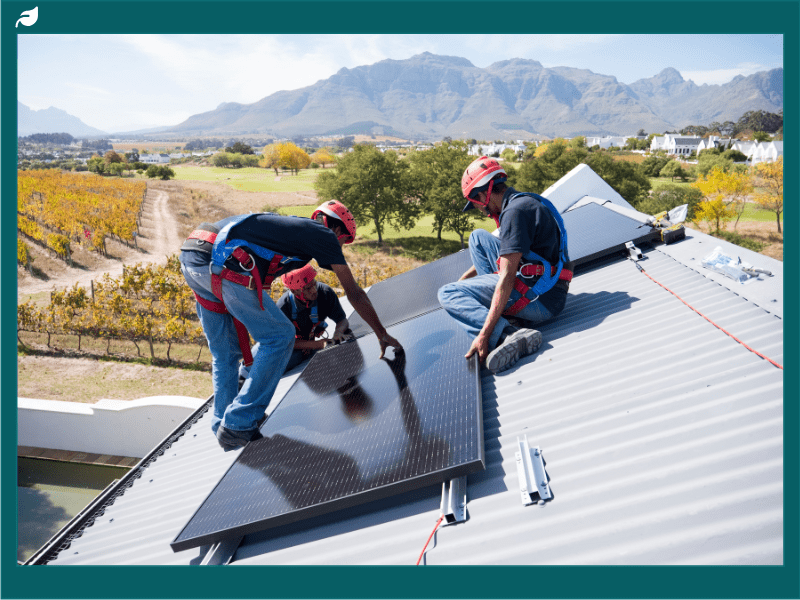
Labor is where a lot of buyers get surprised. When you receive a quote for a solar system installation, the hardware is often only part of what you’re paying for. The installer’s fees cover system design, permitting, the physical installation work, and post-installation inspection, among other things. In many residential installations, labor and associated services account for close to half of the total cost.
Understanding what’s bundled into that figure, and how it compares across different installers, is essential for making a smart purchasing decision.
Labor costs vary based on where you live, how complex your roof is, how large the system is, and how experienced the installer’s crew is. An installer in a high cost-of-living city charges more per hour than one in a rural area. A complex installation on a steep multi-pitch roof takes longer than a straightforward job on a flat commercial roof. These aren’t arbitrary differences.
They reflect real differences in time, skill, and risk. An installer who charges a premium but offers extended warranties, responsive service, and a track record of clean installations may represent better value than a cheaper quote from a company you can’t verify.
It’s also worth understanding how your solar panel choice affects what the installer actually has to do on the day. Larger, heavier panels require more mounting hardware and more lifting time. Panels with proprietary mounting systems may only be installable by certified technicians, which limits your choice of installer and can push up the labor rate. Microinverter-equipped panels take longer to wire per unit than panels connected to a single string inverter but offer monitoring and performance advantages that justify the extra installation hours for many buyers.
The average homeowner doesn’t think about these details when comparing quotes. That’s a mistake. The solar panel specification you choose shapes the labor cost almost as directly as the hardware cost.
Permitting fees are one of the most commonly overlooked line items in a solar quote. Every installation requires permits, and the cost of those permits varies by jurisdiction. Some areas charge flat fees. Others scale their charges based on system size or project valuation.
In a jurisdiction with slow, bureaucratic permitting, the time delays add indirect costs on top of the direct permitting fees, because the installer’s crew can’t move to the next job until yours is approved. Local initiatives that have streamlined this process, as discussed in the previous section, directly reduce this component of your total installation cost.
System design is another significant cost driver. A generic system dropped onto a typical roof is relatively straightforward to design and quote. But a property with unusual dimensions, shading from trees or neighboring buildings, a complex electrical setup, or high energy demands requires custom engineering. That engineering costs money.
The site assessment takes longer. The schematics are more complex. The installation itself is less routine. For properties where a standard design genuinely won’t perform well, however, a custom-designed system justifies the additional cost by generating significantly more electricity over its lifetime than a generic alternative would.
Post-installation services, including inspections, monitoring system setup, and maintenance agreements, round out the installer’s fees in most comprehensive contracts. Some buyers treat these as optional extras. That’s a mistake. An inspection confirms the system is working as designed and identifies any issues before they become expensive problems.
A maintenance agreement defines who is responsible when something goes wrong and what the response time will be. These aren’t bureaucratic formalities. They’re protections for your investment.
The solar energy sector is evolving, and installer costs are evolving with it. Automated design tools have reduced the time required to produce accurate system layouts. Improved installation equipment has reduced labor hours on straightforward jobs. Regional incentive programs in some states now subsidize permitting costs.
As the industry matures, cost efficiencies continue to emerge. But today’s quotes still contain the full range of components described above, and understanding each of them is the only way to evaluate whether a quote is fair.
Calculating Total Ownership Expenses
Once your solar panels are installed and generating electricity, the costs don’t disappear entirely. They become much smaller, but they exist, and accounting for them is part of understanding the true financial picture of solar ownership over a twenty-five year system lifespan.
Maintenance is the first ongoing cost to consider. Solar panels are genuinely low-maintenance relative to most other home systems. They have no moving parts, they don’t require seasonal tune-ups, and they don’t consume fuel. But they do need periodic cleaning.
Dust, pollen, bird droppings, and general environmental grime accumulate on panel surfaces and reduce the amount of sunlight reaching the solar cells. A panel operating at reduced efficiency because of surface buildup is generating less electricity than it should, and that difference shows up as a gap between your expected savings and your actual savings. Professional cleaning once or twice a year is a modest expense that pays for itself by keeping output where it should be.
Monitoring systems are another ongoing consideration, and an important one. Real-time monitoring lets you see exactly how much electricity your system is generating at any given moment and compare that against expected output. When something drops, you notice immediately rather than discovering it months later on your electricity bill. Monitoring systems are often included in the initial installation package, but they may carry subscription fees or require periodic software updates.
Repairs are infrequent but not impossible. Inverters, which convert the direct current from your solar panels into the alternating current your home uses, have a shorter expected lifespan than the panels themselves. Budgeting for an inverter replacement somewhere in the middle of your system’s life is sensible financial planning. Panel damage from extreme weather is rare but does happen.
Your homeowner’s insurance policy may cover this, and many manufacturer warranties include protection against defects that could cause premature failure. Understanding exactly what your warranty covers before you need it is worth the time.
Battery storage systems represent the most significant optional addition to a solar installation’s ongoing cost structure. Solar batteries store excess electricity generated during peak sun hours for use at night or on cloudy days, reducing your reliance on grid electricity even further. The upfront cost of a battery system is substantial, but in regions where electricity rates vary significantly by time of day, or where grid outages are a real concern, the financial and practical case for storage is strong. Battery technology is also improving rapidly, and costs are falling, which means storage systems that are financially marginal today may be clearly worthwhile within a few years.
Rising electricity prices from the grid work in your favor as a solar owner in ways that compound over time. The electricity your panels generate doesn’t inflate. What you’d have paid for that same electricity from the grid does inflate, year after year. Each rate increase your utility announces is effectively an increase in the value of what your solar system is producing.
Over a twenty-five-year ownership period, that accumulated divergence can represent a substantial sum, one that makes the total cost of ownership look progressively more attractive as time passes.
For business owners and commercial operators, solar system depreciation creates an additional financial benefit that residential customers don’t have. The Modified Accelerated Cost Recovery System (MACRS) allows businesses to depreciate solar assets over five years for tax purposes, recovering a portion of the system cost through reduced tax liability more quickly than standard asset depreciation would allow. Combined with the ITC, this can substantially reduce the effective cost of a commercial solar installation.
Comparing Solar Power to Traditional Electricity
Grid electricity is convenient. It’s reliable. And it’s getting more expensive. Solar power systems offer an alternative that, once installed, insulates you from a significant portion of that escalating cost.
The comparison between the two isn’t just about today’s electricity rates. It’s about where those rates are heading, and what it’s worth to you to stop being at the mercy of them.
Long-term Savings Compared to Electricity Rates
The fundamental financial logic of solar panels is straightforward. You spend money once, on the system, and in exchange you stop spending money month after month on electricity you’d otherwise buy from the grid. The system generates electricity at no additional cost to you. Every kilowatt-hour it produces is a kilowatt-hour you don’t pay for.
Over a long enough time horizon, that adds up to a very large number.
Grid electricity prices have increased consistently over decades. That trend is driven by aging infrastructure, fuel costs, regulatory changes, and the simple economics of a utility business that needs to fund ongoing capital investment. Nothing on the current energy horizon suggests the trend is about to reverse. When you install solar panels, you’re not just saving money at today’s electricity rates.
You’re also protecting yourself from tomorrow’s rates. The electricity your solar panels generate five years from now won’t cost you any more than the electricity they generate today. The electricity you’d buy from the grid five years from now almost certainly will.
Net metering amplifies this benefit in places where it’s available. When your solar panels generate more electricity than your home or business needs in a given moment, the excess flows back into the grid. Your utility company credits your account for that contribution. Those credits offset what you consume from the grid during periods when your panels aren’t generating, at night or during overcast stretches.
The net effect is that your electricity bill reflects only the difference between what you consumed and what you contributed, rather than the full amount of your grid consumption. In strong net metering environments, some solar owners get their electricity costs close to zero in high-sun months and draw down credit balances during winter.
Renewable energy credits provide another financial mechanism that works alongside net metering in many markets. These credits represent the environmental value of the clean electricity your solar panels produce and can be sold to utility companies or other buyers in states that operate REC markets. The income from RECs is a real financial benefit that adds to the total return on a solar investment, particularly for larger systems that generate significant volumes of clean electricity.
The payback period for a well-designed residential solar system, in a location with reasonable sun exposure and decent electricity rates, now typically falls in a range that makes the long-term math very clear. After break-even, every year of system operation is net positive. A system warranted for twenty-five years that reaches break-even in year eight runs in positive financial territory for the remaining seventeen years of its warranty life, and often beyond it. That’s a significant return on the initial investment, and it’s one that holds up even under conservative assumptions about electricity price inflation.
Battery storage systems, as mentioned in the ownership expenses section, extend the financial advantages further by capturing more of your system’s output for your own use rather than exporting it at whatever credit rate your utility offers. The financial case for batteries varies by location and utility policy, but the direction of travel in the industry is clearly toward integrated solar-plus-storage systems as the standard rather than the exception. The electricity those batteries store is power you generate for free, available when you need it most.
The comparison between solar power and traditional electricity isn’t a close call for most people who do the math honestly. Grid electricity costs are real, recurring, and rising. Solar panels carry a real upfront cost, but one that diminishes quickly when incentives are applied, and one that generates returns for decades after it’s been recovered. The question isn’t really whether solar saves money.
It’s how much, and how soon.
Maximizing the Efficiency of Your Solar Investment
Buying the right solar system is the beginning, not the end. How you maintain it, monitor it, and adapt your energy habits around it determines how much of the system’s potential you actually capture. The gap between a well-maintained solar installation and a neglected one, in terms of electricity generated and savings realized, can be substantial over the life of the system.
Tips for Optimal Maintenance and Performance
Cleaning is the most basic form of solar panel maintenance, and it’s more important than it might sound. Solar panels work by converting sunlight into electricity. Anything that reduces the amount of sunlight reaching the panel’s surface reduces the amount of electricity it generates. Dust, pollen, leaves, and bird droppings are the most common culprits.
In dry climates or areas with heavy tree cover, accumulation can happen quickly. A panel operating at 85% of its potential output because of surface grime is leaving real savings on the table. Professional cleaning once or twice a year addresses this directly. The cost is modest.
The return, in maintained electricity generation, more than justifies it.
Monitoring systems give you visibility that cleaning alone can’t provide. A real-time monitoring dashboard shows you exactly how much electricity each part of your system is generating, broken down by panel string or individual panel depending on the monitoring hardware you have. When output drops unexpectedly, you see it immediately. Maybe a tree has grown enough to cast new shade across part of your array.
Maybe an inverter is underperforming. Maybe a connection has loosened somewhere in the wiring. Without monitoring, these issues can persist for months before you notice them on your electricity bill. With monitoring, you catch them within days and address them before they compound into larger losses.
It’s also worth thinking about how individual solar panel performance affects the whole array. In a traditional string inverter setup, the output of the entire string is limited by the weakest-performing panel. So a single dirty or shaded solar panel doesn’t just cost you the output from that one unit. It drags down every other panel connected to the same string.
Microinverters solve this by allowing each panel to operate independently, which means a shaded or soiled panel only costs you its own output rather than pulling down the rest of the system. The average string inverter installation loses more output to this effect than most owners realize, and it’s one of the strongest technical arguments for microinverters or power optimizers in installations where partial shading is a real possibility.
Inverter performance is particularly worth watching. The inverter is the component that converts your panels’ direct current output into the alternating current your home or business uses. Modern string inverters typically carry warranties of ten to fifteen years, shorter than the panels themselves. Microinverters, which attach to individual panels rather than serving the whole array, often carry longer warranties and have the advantage of ensuring that a problem with one panel doesn’t drag down the output of the entire system.
Understanding what type of inverter your system uses and what warranty covers it helps you plan for the costs involved in replacement when the time comes.
Weather is something you can’t control, but you can respond to it intelligently. Heavy snowfall that covers your panels stops electricity generation until the snow clears. Many panel installations are angled enough that snow slides off naturally within a day or two. But in particularly heavy or persistent snowfall, clearing panels manually may be worth doing, using tools designed for the purpose that won’t scratch the panel surface.
After hailstorms or severe wind events, a visual inspection of your panels and mounting hardware is worthwhile to confirm nothing has been damaged or shifted.
Battery storage, for those who have it, rewards active management. Understanding your local utility’s time-of-use electricity rates, if they exist, allows you to optimize when you draw from the battery versus the grid. During peak rate hours, drawing from stored solar energy rather than the grid maximizes your savings. During off-peak hours, when grid electricity is cheaper, it may be more economical to let the battery recharge from the grid rather than depleting your stored solar energy reserves.
Many modern battery management systems handle this optimization automatically, but understanding the logic helps you verify that the system is behaving as expected.
High-efficiency panels are worth reconsidering here in the context of maintenance performance. Systems built with high-efficiency solar panels tolerate partial shading and surface soiling better than lower-efficiency alternatives because they’re operating with more headroom. A 400-watt panel that loses 10% of its output to a dirty surface is still delivering more electricity than a 300-watt panel at full output. That margin matters when you’re managing a system across changing seasons, growing vegetation, and variable weather.
Utility rebate programs for maintenance and upgrades exist in many service territories and are worth investigating. Some utilities offer incentives for installing monitoring systems or upgrading to higher-efficiency inverters, recognizing that a well-performing distributed solar system benefits grid stability as well as the individual owner. These programs don’t always get publicized widely, but your utility’s website or a call to their renewable energy department can surface options you might not have found otherwise.
The broader point is that a solar panel system isn’t a purely passive investment. It rewards attention. Not constant attention, not expensive attention, but regular, informed attention directed at keeping the system running at the output levels it was designed to achieve. A system that generates electricity at its designed capacity for twenty-five years delivers dramatically better financial returns than one that quietly underperforms for years before anyone notices.
The difference between the two is largely maintenance, monitoring, and a willingness to act when the data suggests something needs fixing.
Those habits, built early, are what transform a good solar installation into an excellent long-term investment. And the numbers support the effort. The average solar system that receives proper maintenance across its full warranty period outperforms a neglected equivalent by a margin that translates into real money. Keeping panels clean, inverters current, and monitoring active isn’t just good housekeeping.
The bottom line on solar panels, after working through all of these layers, is this: the costs are real, the incentives are substantial, the savings grow over time, and the financial case keeps getting stronger as electricity prices rise and panel costs fall. If you’re considering solar for your home or business, the most valuable thing you can do right now is get actual quotes, run the numbers for your specific location and energy usage, and find out exactly where your payback period falls. The general argument for solar is compelling. Your specific numbers will make it concrete.
Looking for a solar installer?
Compare MCS-certified solar panel installers across the UK in our directory, with ratings, reviews and free quotes, listed by county.
Related solar guides: