Unfair labour practices and concerns around exploitation remain one of the biggest problems facing the coffee industry. When it comes to the industry’s social sustainability it’s important to contribute to initiatives across the entire value chain.
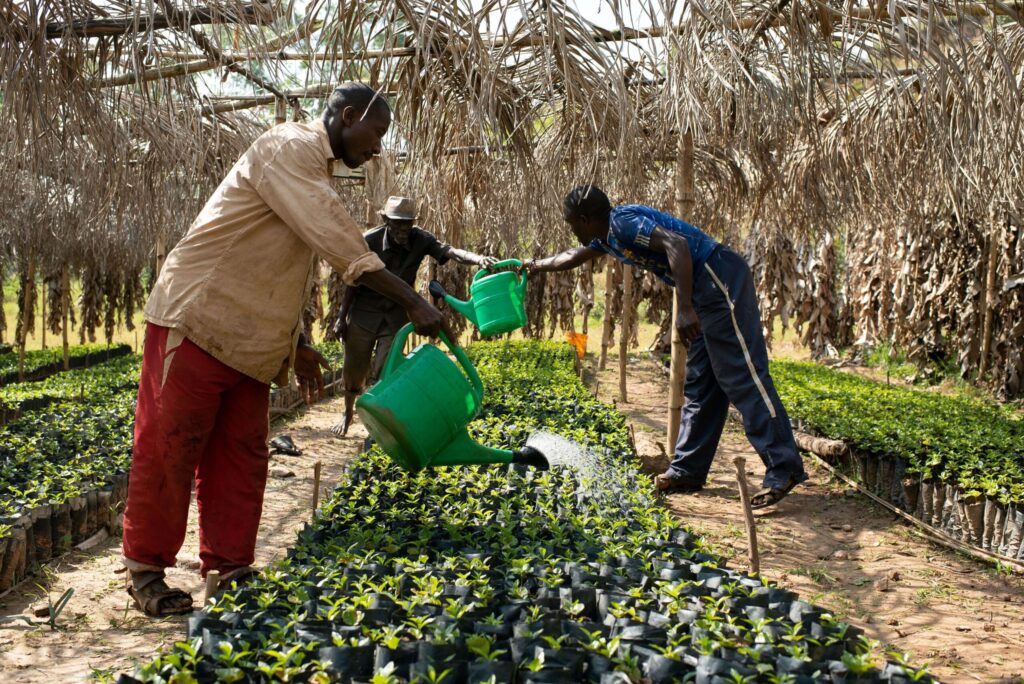
To do this, we must focus on improving the livelihoods of coffee farmers, fostering social equity in the local communities, and maintaining thriving ecosystems.
We run the Selecta Coffee Fund (SCF), where we invest in community programmes to train farmers in sustainable farming practices. We ensure coffee contributes to improved working conditions, income, yield, and profitability for coffee growers. This is done through climate resilience farming training, improved farm management practices, and farm diversification strategies.
Our SCF target is to support directly at least 2,500 and indirectly 15,000 farmer families by 2025 through investing in farm level programmes and building long-term partnerships in our coffee supply chain.
Increasing quality coffee yield.
Sharing regenerative agriculture and agroforestry practices with farmers prepares them to focus on both quality and climate-resiliency.
We approach this through a certain number of factors. We aim to restore, protect, and maintain natural resources like water, soil, and biodiversity. To us, healthy soils maintain healthy coffee trees, yield, and coffee quality for the long-term.
Farm-level programmes should focus on climate adaptation and mitigation through carbon reduction and removals. We actively align our farm-level programmes with the COP26 deforestation pledge to identify areas where coffee represents a risk or an opportunity to achieve the Sustainable Development Goals.
Driving innovation
Companies need to collaborate to tackle systemic issues and to achieve outcomes they could not achieve on their own.
For example, in a key step to reduce its environmental impact and bolster a more robust recycling industry, Starbucks announced a $10 million investment in Circular Services to reduce landfill waste and drive innovative efforts to shift towards a circular economy in the United States.
Partnerships like this are often successful because they address topics that are of importance to both the business, its sustainability performance, and its partner.
So, when considering a sustainability partnership, make sure to only put your company’s signature to an initiative if you have the corporate support to make your commitment possible. Be clear and realistic about the work and resources you and your company will be able to contribute and make sure that there is a method to track impacts.
In the evaluation phase, an overarching vision and goal for the collaboration will have been set. It is then essential to capture specific impacts that help achieve the high-level goal and to ensure that each participant is held accountable for their contribution.
Meeting consumer demand
Finally, the coffee industry’s success relies on meeting the demand of many third parties. And social sustainability is at the top of many of their lists. For example, in a McKinsey Global Survey, 83 percent of C-suite executives and investment professionals believe that ESG programmes will generate more shareholder value in five years’ time than they do today.
You are not just increasing your business’ potential shareholder value either. Companies participating in ESG efforts often gain a competitive advantage over business rivals and can attract and retain more customers by being transparent and effectively communicating their ESG efforts to customers.
In fact, studies show two-thirds of consumers are willing to pay more for sustainable products and in Accenture’s research on responsible leadership, companies with high ratings for ESG performance enjoyed average operating margins nearly four times higher than lower ESG performers.
By Alicia Fieldhouse, Selecta UKClient Solution Specialist Coffee Expert