Commercial buildings bring employees, customers, vendors, and visitors into shared spaces every day. Door handles, elevator buttons, break rooms, restrooms, and desks receive repeated contact, allowing germs to move between people and surfaces. Routine disinfection reduces that buildup before it affects daily operations, staff attendance, or customer confidence. A consistent plan also gives building managers clear standards for cleaning frequency, priority areas, and response procedures during illness outbreaks.
Why Routine Disinfection Matters
Regular cleaning removes dirt and organic material from surfaces. Disinfection then uses approved products and contact times to reduce harmful microorganisms that remain behind. This two-step process works best when trained personnel follow written procedures and give special attention to frequently touched areas.
Commercial facilities need more than occasional deep cleaning after a visible problem. Scheduled commercial cleaning and disinfection services help maintain shared spaces throughout the workweek. A reliable program covers surface disinfection, floor care, carpet sanitizing, and deeper sanitation based on the building’s traffic, layout, and use.
Routine work also improves response speed when an illness incident occurs. Staff members can identify high-priority areas, isolate affected spaces when needed, and increase cleaning frequency without creating a plan during an active disruption.
Where Germs Move Fastest
High-touch surfaces receive repeated contact from many people within a short period. These surfaces include door plates, railings, elevator controls, shared keyboards, light switches, faucet handles, and checkout counters.
Restrooms and break rooms require close attention because moisture, food residue, and frequent use create conditions that support contamination. Cleaning crews should follow a consistent sequence, moving from cleaner areas to dirtier areas and replacing cloths or solutions when they become soiled.
Shared equipment also needs a clear schedule. Fitness equipment, conference room controls, reception counters, and communal appliances should receive attention between routine cleaning cycles when traffic levels justify it.
What a Practical Program Should Include
To keep your space disinfected, make sure you focus on cleaning the following:
- High-touch surface disinfection
A building’s cleaning plan should identify surfaces by contact frequency, not appearance alone. A clean-looking elevator button still requires regular disinfection because users touch it throughout the day.
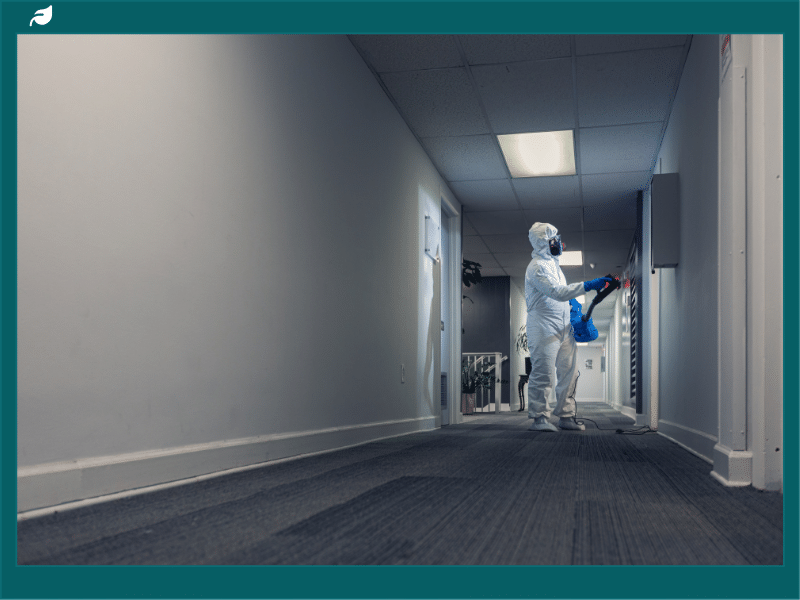
Product instructions matter. Disinfectants need the correct application method and dwell time to work as intended. Staff should also use gloves and other protective equipment when product labels or site conditions require them.
- Floor, carpet, and air care
Floors collect soil from shoes and transport it across entrances, corridors, and common areas. Floor disinfection should match the surface material, traffic level, and cleaning method. Carpet sanitizing requires products and equipment suited to the carpet fiber and drying requirements.
Air purification can support a broader sanitation plan in suitable facilities. It does not replace surface cleaning, hand hygiene, or ventilation, but it addresses another part of the indoor environment. Deep cleaning adds further attention to areas that routine service cannot fully address.
- Emergency response procedures
Illness incidents require prompt communication and a defined response. Managers should know which spaces need immediate service, who can authorize access, and how employees receive updates.
A response plan should protect privacy while giving cleaning personnel enough information to work safely. It should also record completed tasks, product use, and any areas that need follow-up service.
How Managers Improve Results
Building managers can improve consistency by matching cleaning schedules to occupancy patterns. Entrances, elevators, restrooms, and shared work areas often need more frequent service than private offices or low-traffic storage rooms.
Clear records help managers confirm that work occurred as scheduled. A checklist can track locations, service times, unusual conditions, supply needs, and requests for additional attention. These records also help adjust the program when tenant use changes.
Communication supports practical compliance. Employees and visitors should see clear hand hygiene guidance, accessible supplies, and instructions for reporting spills or sanitation concerns. Cleaning crews need current information about access restrictions, sensitive equipment, and high-use areas.
Conclusion
Routine disinfection protects commercial buildings through consistent attention to the surfaces and spaces people share. The strongest programs match service frequency to traffic, use correct product procedures, and document completed work. Building managers should begin with a site review that identifies high-touch areas, shared equipment, restrooms, and response priorities. That assessment creates a practical schedule and gives cleaning personnel a clear standard for maintaining safer conditions each day.