ZE-Gen has announced more than £2m of investment for ten clean energy projects across eight African countries, targeting hospitals, telecom networks, food systems, fishing communities and small businesses. Led by the Carbon Trust and Innovate UK, the programme will support deployment of renewable energy and storage systems as alternatives to fossil-fuel generators. The projects span Uganda, Kenya, Rwanda, Tanzania, Madagascar, Nigeria, Mozambique and Lesotho. Backed by the UK Government’s Ayrton Fund, the portfolio is focused on moving established technologies beyond pilot stage and into larger-scale use.
Scaling Proven Energy Systems
The funded projects address settings where unreliable grid electricity can restrict essential services and economic activity. Battery storage, solar power, cold-chain equipment and mini-grid technologies will be tested in operational environments, including health facilities, telecom towers, food markets and remote communities.
The programme builds on earlier ZE-Gen, Energy Catalyst and Powering Renewable Energy Opportunities initiatives. Its latest investments are intended to help companies demonstrate commercial models while providing cleaner and more reliable electricity in off-grid and weak-grid locations.
Lily Beadle, Programme Director at ZE-Gen, said:
“These ZE-Gen supported projects show how clean energy can power the services and businesses people rely on every day – from hospitals and telecommunications networks to food systems and local enterprises.
Lily Beadle, Programme Director at ZE-Gen, said:
“Through the ZE-Gen Scale-up Fund, we are helping innovative companies move from pilot projects to larger-scale deployment, creating new opportunities for investment while delivering cleaner, more reliable and affordable energy where it is needed most.”
Healthcare And Telecoms Power
In Kenya, Acele Africa will deploy locally designed and assembled modular battery systems for healthcare facilities, schools and small businesses. The systems are designed to be repairable and scalable, helping users reduce reliance on diesel generation where grid power is unreliable.
SHIELD, a spin-out from the University of Oxford, will also work in Kenya, supporting hospitals’ transition from diesel generators to solar and battery systems. The project will begin with a major Kenyan hospital and examine financing methods intended to reduce costs and attract further investment.
Uganda will host AceOn’s battery-first energy systems for telecoms infrastructure, healthcare facilities and humanitarian sites. The Telford-based company will test sodium-ion battery technology as an alternative to diesel generation and lithium-ion batteries.
Mark Thompson, Co-Founder & CEO at AceOn Group, said:
“Every unit we deploy in Africa pulls through British engineering, design and manufacturing this is UK innovation from our Telford base earning its place in a fast-growing market, and building a genuine, lasting partnership between the UK and Uganda.”
SLS Energy in Rwanda will repurpose end-of-life electric vehicle batteries for second-life storage systems serving telecom towers, healthcare facilities and businesses. The approach combines energy access with a route for reducing battery waste.
Food And Coastal Economies
Food production and trading form another major part of the portfolio. Farm Warehouse will deploy 100 solar-powered cold storage systems across major Nigerian markets, combining refrigeration, solar power and digital marketplace services for fish, meat and dairy vendors.

KAMIM Technologies will establish four solar-powered agricultural hubs in Nigeria, bringing together irrigation, cold storage, ice production and grain processing. The hubs are intended to help farmers and traders preserve produce, improve productivity and access broader markets without diesel-powered equipment.
Adekoyejo Kuye, Founder & Managing Director at KAMIM Technologies Ltd, said:
“CoolCycle is about changing that. With ZE-Gen support, we are bringing together reliable solar power, cold storage and freezing, ice and food-processing services, and digital tools that connect farmers, storage and buyers into one practical system.”
In Mozambique, Gommyr will establish renewable-powered fishing hubs using solar generation, battery storage and cold-chain technologies. The project is intended to help fishing communities preserve catches, reduce post-harvest losses and access higher-value markets.
Arnaud Henin, Gommyr Power Netweorks at Gommyr, said:
“Through ZE-Gen funding, Gommyr Power Networks is able to de-risk and deploy microgrid powered green fishing hub model into off-grid, remote coastal communities like Pomene—transforming local livelihoods through an integrated productive use and sustainable energy.”
Rural Businesses And Communities
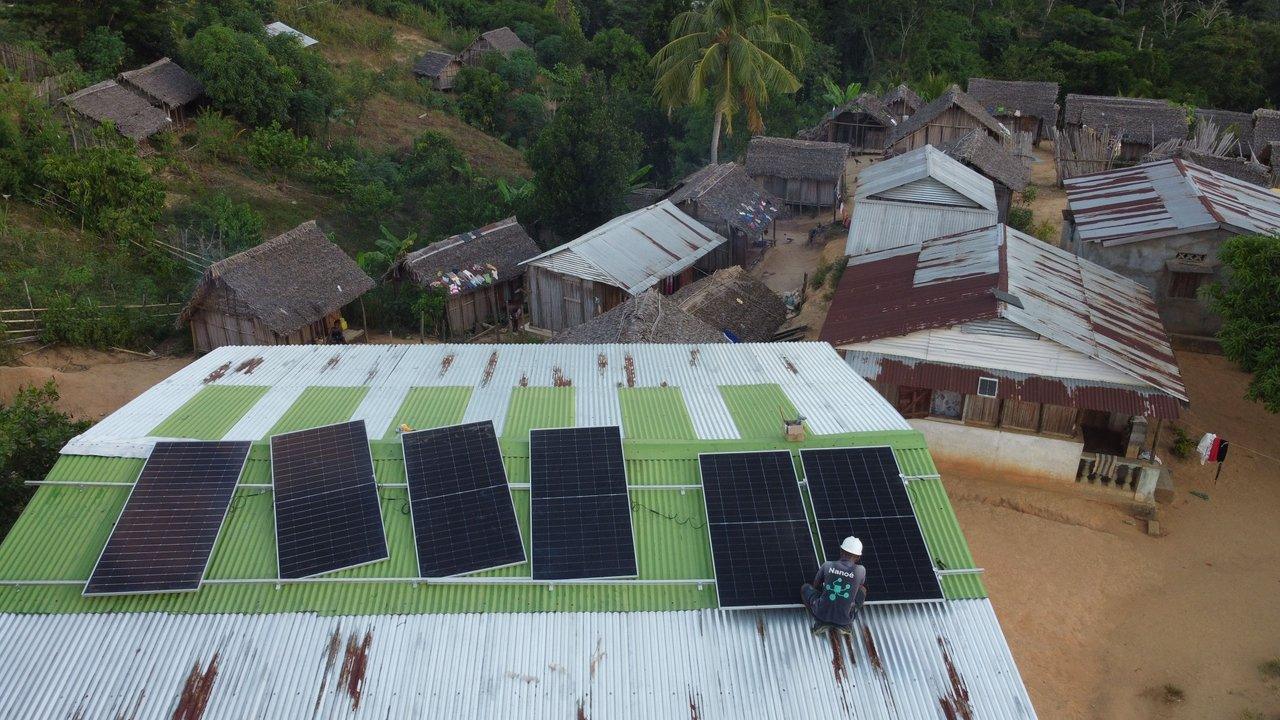
Nanoé will expand and interconnect solar nano-grids in Madagascar, providing electricity for rural households and businesses currently dependent on small diesel generators. Simusolar will deploy financed solar power systems for rural businesses in Uganda and Tanzania, including shops, restaurants and agricultural processors.
Vittoria Technology will pilot modular, repairable battery systems at operational mini-grids in Lesotho. Designed to be expanded and serviced locally, the batteries are intended to reduce dependence on backup diesel generators while improving system reliability.
Ms. Walpert, co-Founder at Simusolar, said:
“This project will provide Simusolar with the market knowledge required to fully launch 2 new productive-use product lines targeting rural MSMEs. These businesses will benefit from solar-powered equipment like agricultural processing machines and refrigeration, increasing incomes and reducing reliance on fossil fuels.”
A Portfolio For Deployment
The ten projects show how renewable power and storage can be applied across essential services and productive industries, from hospital care and telecoms to agriculture, fisheries and local retail. By supporting deployment in varied operating conditions, ZE-Gen is building evidence around technologies that could reduce diesel use while strengthening local energy resilience.
Launched at COP27, ZE-Gen aims to accelerate the replacement of fossil-fuel generators with renewable alternatives across sub-Saharan Africa, South Asia and the Indo-Pacific region. This new funding round places its focus on practical projects that connect clean energy investment with everyday services and livelihoods.