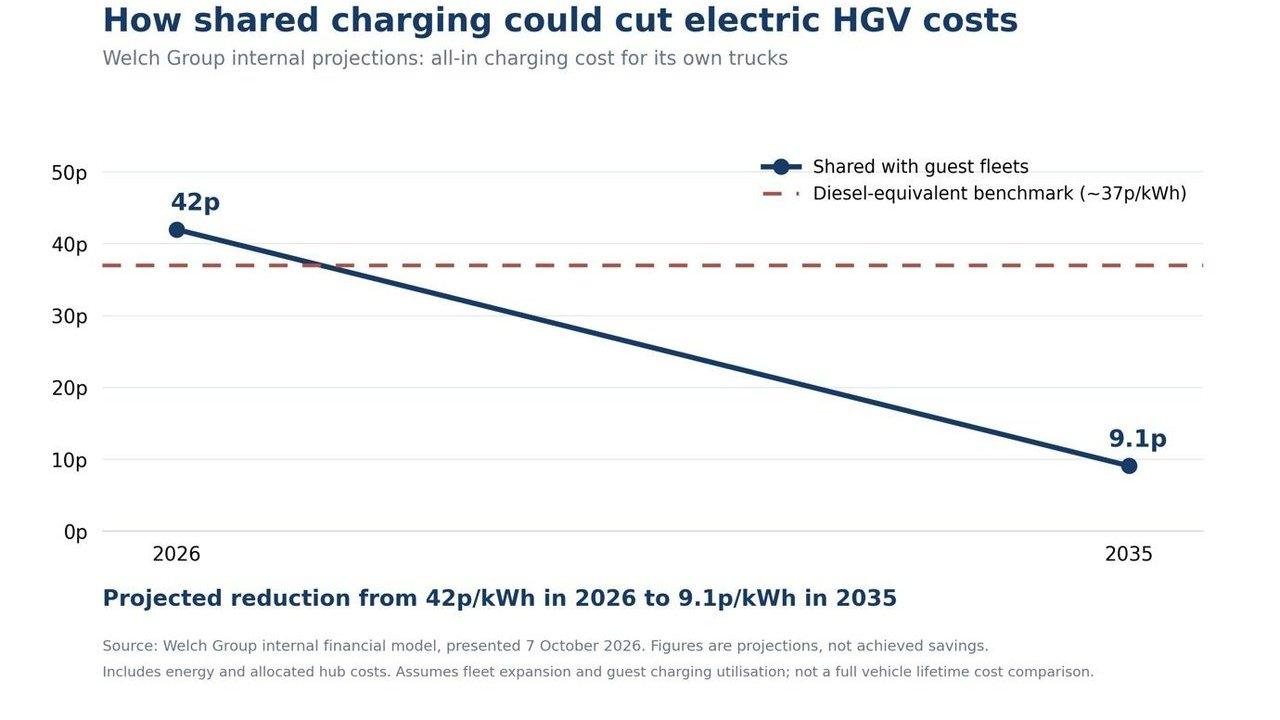
Welch Group is positioning electric trucks and shared depot charging as a practical route to lower haulage operating costs, working alongside electric HGV charging specialist Voltempo. Its internal modelling projects an annual saving of approximately £792,000 against a diesel fleet by 2035, subject to planned fleet growth and guest charging activity. The model also estimates that all-in charging costs for its own electric trucks could fall from about 42p per kWh in 2026 to 9.1p per kWh by 2035. New AutoMotive analysis estimates that diesel prices add £35 million a week to UK hauliers’ fuel bills.
A Costly Diesel Market
The average forecourt price of diesel reached 199.9p per litre on 30 September, having risen 35p since 8 July. For freight operators, this price movement sharpens the commercial case for alternatives that can provide greater control over a major operating expense.
Welch Group operates both diesel and electric HGVs, giving its modelling a direct fleet comparison. Its projected saving is an operating-cost comparison rather than an achieved result or a full lifetime cost assessment, and it depends on future energy prices, charging demand and infrastructure utilisation.
Chris Welch, CEO at Welch Group, said:
“Diesel prices are proving that our decision to go electric was the right one. We’re already seeing substantial savings on energy costs compared with diesel, and every increase at the pump makes the economics of electrification more compelling.
Shared Hubs Change The Calculation
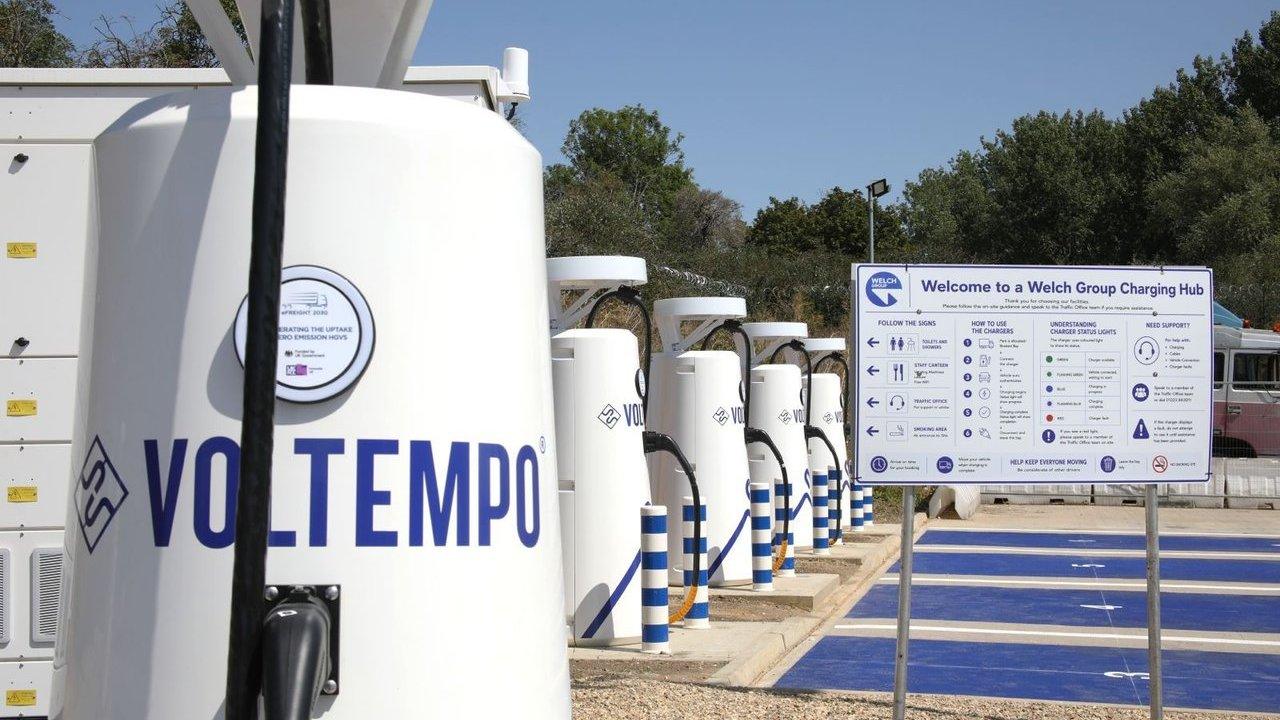
Welch Group’s model assumes two six-bay megawatt charging hubs, growth to 65 electric HGVs by 2035 and increasing charging activity from other fleets. It includes electricity costs and allocated infrastructure costs such as standing charges, maintenance and depreciation.
Making depot chargers available to other operators could improve asset utilisation while creating an additional revenue stream. For an operator building charging capacity around predictable routes, the depot becomes more than a cost centre: it can help reduce the effective cost of powering its own vehicles.
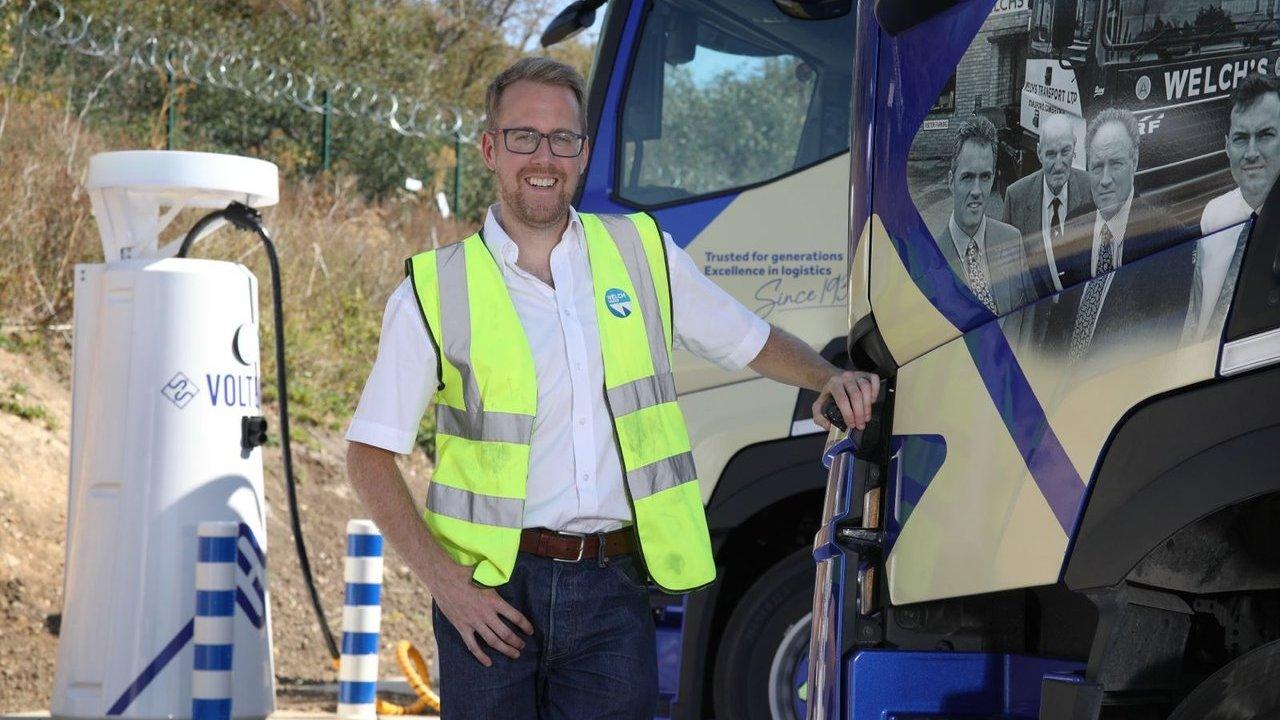
Chris Welch, CEO at Welch Group, said:
“But the opportunity goes much further. By opening our charging hubs to other operators, we can spread the cost of infrastructure and make our own electric trucks progressively cheaper to run. Our internal modelling suggests the savings could become increasingly significant as our fleet and charging network grow.
“This is about running a more efficient and competitive haulage business. Cutting emissions matters, but so does protecting our margins. The more electric trucks we put on the road, the greater the opportunity to do both.”
Charging As A Commercial Asset
The figures remain Welch Group’s own forward-looking estimates and are not independently verified forecasts for the wider haulage sector. They do, however, illustrate how shared charging can alter the economics of electric fleet operations when infrastructure is used by more than one business.
Voltempo sees competitively priced electricity, intelligent depot charging and shared access as connected parts of the commercial proposition for electric HGVs. This approach matters most where fleets have known routes, access to depot charging and opportunities to secure lower-cost electricity.
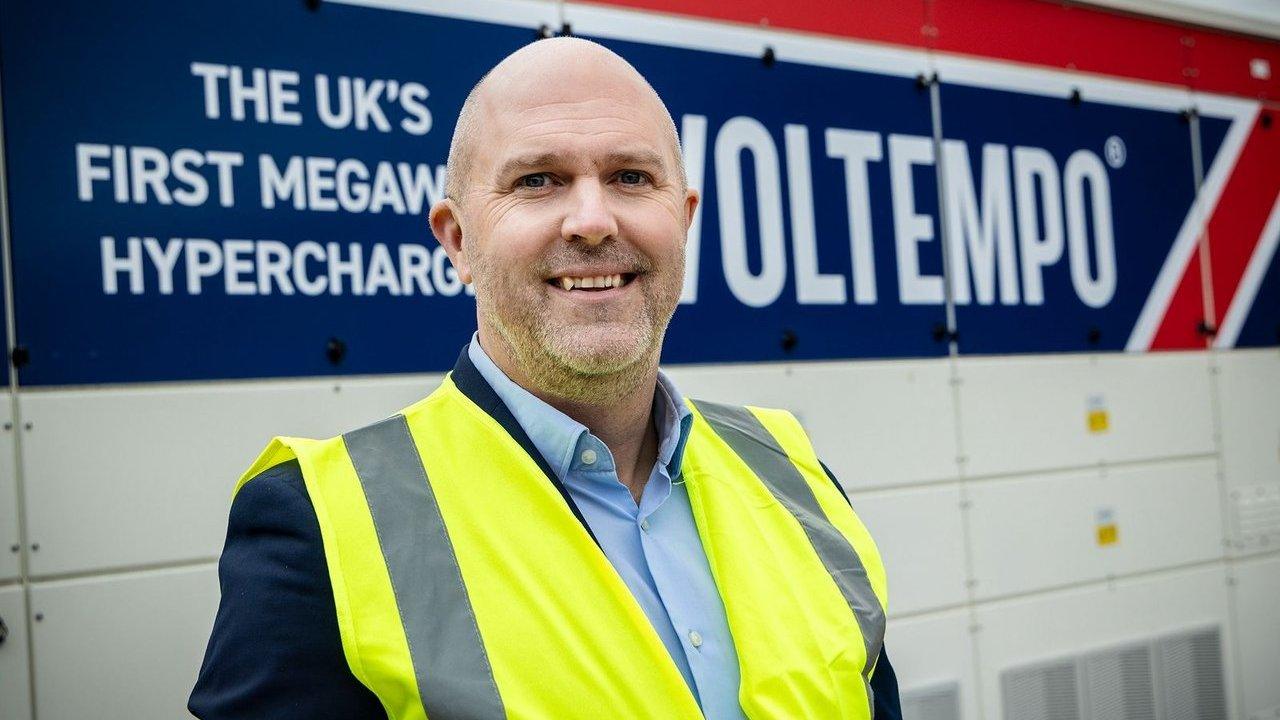
Simon Smith, CEO at Voltempo, said:
“Diesel at these prices changes the commercial conversation around electric trucks. For years, operators have been told that electrification means choosing between doing the right thing and making money. That choice is disappearing for a growing number of operations.
“Electric trucks, intelligent depot charging and competitively priced energy can give hauliers greater control over one of their biggest operating costs. Shared charging offers another opportunity to strengthen the economics by making better use of infrastructure.
A Small Electric Share
Diesel still dominates the UK truck market. New AutoMotive reports that 97% of new trucks registered in 2025 were diesel, while electric trucks represented just over 1% of registrations during the first eight months of 2026.
The gap between current sales and the potential outlined by Welch Group highlights the importance of reliable charging access, workable energy tariffs and policy certainty. Vehicle type, mileage, payload, purchase costs and charging arrangements will all affect the financial result for individual fleets.
Ben Nelmes, CEO at New AutoMotive, said:
“Hauliers are paying tens of millions of pounds more every week for diesel, and almost every new truck sold in Britain still depends on it. Electric trucks offer a way out of that exposure, but operators and manufacturers cannot plan around a policy that does not yet exist. The government asked the industry for its views at the start of the year. It now needs to get on and decide, so that fleets can invest with confidence.”
Economics Drive Fleet Decisions
For Welch Group, the central question is not only the purchase price of an electric truck, but the cost of operating it throughout its working life. Its model presents shared charging infrastructure as a route to making those costs more competitive, while reducing exposure to volatile diesel prices.
The business case will vary between fleets, but the company’s projections show why operators are examining electrification through the combined lenses of energy costs, infrastructure use and margins. As diesel costs remain high, commercial fleet planning is likely to place greater attention on what a charging network can deliver alongside the vehicles it serves.
Wen Han, Founder / CEO at Windrose, said:
“The structural economics of electricity versus diesel are increasingly making electric trucks the clear choice for operators. We have seen a huge increase in orders as diesel prices have risen, and the change in customer behaviour is striking. Operators are not only ordering more trucks, they are increasingly prepared to pay for them before they even arrive on site.