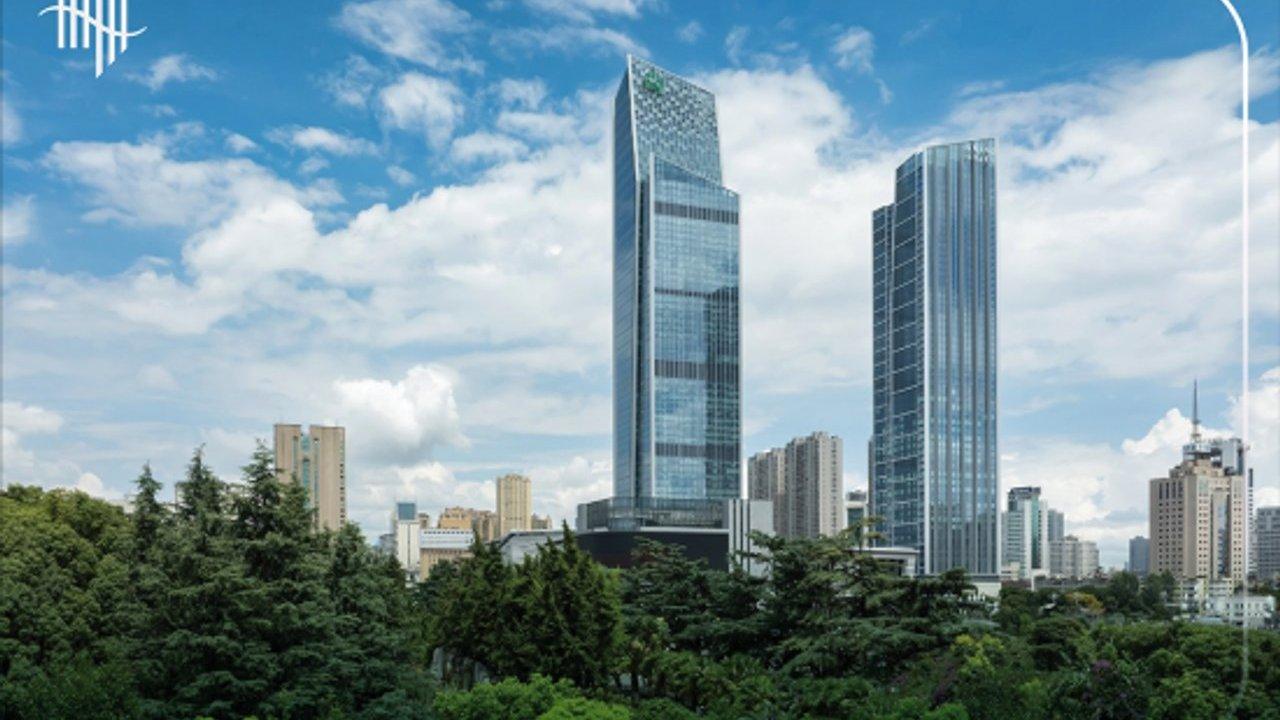
Hang Lung Properties will achieve 100% renewable electricity coverage across all 11 of its operating properties in the Chinese Mainland when Riverside 66 in Tianjin completes its transition on 1 October 2026. The milestone covers 2.65 million square metres of gross floor area across nine cities and follows a five-year programme that began in Kunming in 2021. By the end of 2026, the property group expects to procure around 440,655 MWh of renewable electricity, avoiding an estimated 227,513 tonnes of greenhouse gas emissions. The portfolio-wide move is a notable marker for China’s commercial real estate sector, extending renewable power procurement to both landlord operations and tenant electricity use.
Portfolio Wide Renewable Procurement
Hang Lung procures renewable electricity from wind and solar generation sources through China’s green power policy framework and electricity market, obtaining both the electricity itself and its associated green attributes. Its whole-building model applies across landlord-managed operations and tenant spaces, an approach that can help occupiers account for electricity-related emissions within their own sustainability programmes.
The group’s Mainland portfolio includes mixed-use and retail properties in Shanghai, Shenyang, Jinan, Wuxi, Tianjin, Dalian, Kunming, Wuhan and Hangzhou. Riverside 66 is set to become the final site covered, completing a rollout that began with Spring City 66 in Kunming in December 2021.
The development aligns with China’s dual carbon goals while supporting Hang Lung’s own stated objective of achieving 100% renewable electricity across all operations by 2050. For a landlord with major retail and commercial premises, incorporating tenant consumption into renewable procurement broadens the scope of the intervention beyond building management alone.
Adriel Chan, Chair of Hang Lung Properties and Chair of the Sustainability Steering Committee, said:
“Leadership is defined by delivery, not just ambition. By achieving full renewable electricity coverage across our entire Chinese Mainland portfolio, we’re creating value for our business and our tenants, strengthening energy resilience, and doing our part to support China’s dual carbon goals.”
Five Years Across Nine Cities
The programme’s chronology shows how Hang Lung expanded renewable electricity procurement property by property as market conditions developed in different provinces. Spring City 66 was the company’s first renewable electricity-powered site and the first commercial complex in Yunnan Province to make the change.
Parc 66 in Jinan followed in January 2023, becoming the first commercial property in both Jinan and Shandong Province to use renewable electricity. In April 2024, Plaza 66 and Grand Gateway 66 in Shanghai, alongside Center 66 in Wuxi, began using renewable power.
Coverage expanded sharply in May 2025, when Forum 66 and Palace 66 in Shenyang and Olympia 66 in Dalian became the first commercial developments in Liaoning Province powered by renewable electricity. Heartland 66 in Wuhan became the ninth covered property in January 2026 and the first commercial complex in Hubei Province to reach the milestone. Westlake 66 in Hangzhou joined in May, ahead of Riverside 66 in Tianjin.
These first-in-market claims across Yunnan, Shandong, Liaoning and Hubei illustrate the regional variability that property owners face when sourcing renewable electricity. Hang Lung describes the work as taking place within a rapidly changing market and under tight timeframes, making its progression across multiple cities particularly relevant to other operators assessing similar procurement models.
Tenant Climate Commitments
The whole-building arrangement also has implications for the brands, banks and multinational companies operating in Hang Lung’s properties. Retail occupiers can benefit from a building-level renewable electricity supply arrangement while pursuing their own climate commitments, creating an area of practical alignment between owner and tenant.
Luxury group LVMH is among the tenants connected to the portfolio-wide shift. The company’s boutiques and offices in Hang Lung properties now run on 100% green electricity, according to its Group Environment Development Director.
Hélène Valade, LVMH Group Environment Development Director, said:
“Renewable electricity is a priority for our Group and our Maisons, notably through our LIFE 360 environmental program. Thanks to Hang Lung’s commitment, our boutiques and offices now run on 100% green electricity. This milestone highlights the strength of our partnership: when a landlord and a tenant share the same climate ambition, real progress becomes possible. We are very pleased to celebrate this major achievement with Hang Lung.”
A Commercial Property Benchmark
Commercial real estate owners have an important role in accelerating access to renewable electricity because of the scale of their operational loads and the concentration of businesses within their buildings. Hang Lung’s approach places procurement at portfolio level, combining demand from multiple assets while extending coverage beyond common areas.
The Institute of Public & Environmental Affairs highlighted the practical learning involved in securing coverage across nine cities. The organisation’s comments position the achievement as a useful example for the wider property sector, particularly as electricity market rules and policies continue to develop.
Ma Jun, Director of the Institute of Public & Environmental Affairs, said:
“China’s electricity markets and policies are evolving quickly. To achieve full renewable electricity coverage for 11 properties in nine cities, Hang Lung has had to overcome a steep learning curve, and its example can now serve as an inspiration to others. We hope more property developers and operators will expand their procurement of renewable energy—an essential step for sector-wide decarbonization—creating sustained market demand and enabling a cleaner and more secure future.”
Progress Towards Net Zero
With Riverside 66 scheduled to complete the transition in October, Hang Lung will have brought renewable electricity procurement across its entire operating Mainland portfolio. The achievement connects a substantial estimated emissions reduction with a model designed to support tenants as well as the company’s own operations.
For China’s commercial property market, the result offers a clear demonstration that full renewable electricity coverage can be achieved across a geographically dispersed portfolio. Hang Lung’s five-year rollout provides a credible operational milestone on its longer-term net zero pathway, while establishing a strong reference point for renewable procurement in the sector.