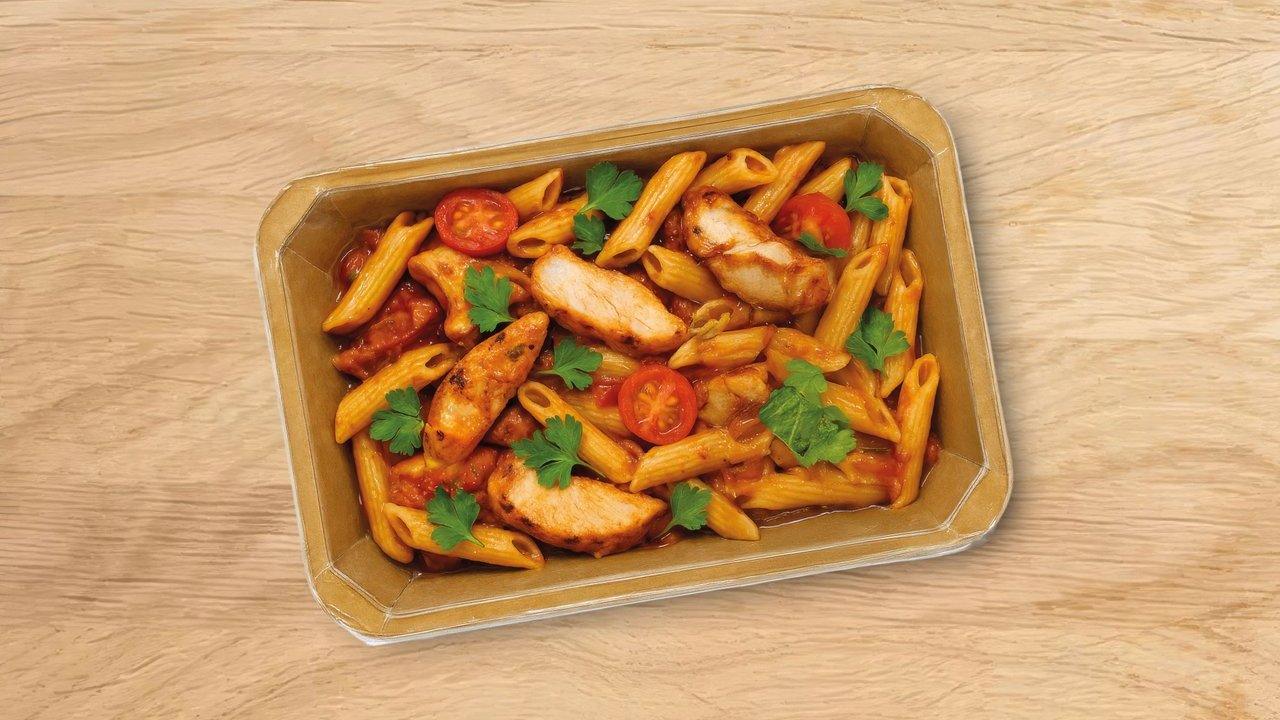
Solidus has launched Futurline Heat&Eat, a fibre-based modified atmosphere packaging tray range for ready meals heated in a microwave, conventional oven or air fryer. Designed for chilled and frozen applications, the trays protect food and support extended shelf life while allowing consumers to heat and serve meals in the same pack. The format uses up to 90% less plastic than conventional plastic MAP trays and is made from solid board containing more than 90% recovered fibre. With compatibility for standard tray-sealing equipment, the new range presents a practical packaging option for food producers, retailers and foodservice operators.
Ready Meals In One Tray
Futurline Heat&Eat is Solidus’ new trademark for its fibre-based MAP tray portfolio, developed around the requirements of ready meals. The packaging maintains the protective atmosphere inside the pack, helping food producers preserve freshness and extend shelf life across chilled and frozen meal formats.
The launch responds to demand for meal packaging that combines convenience with easier material separation after use. Consumers can heat a meal directly in the tray rather than transferring it to separate cookware or tableware, whether preparing it in a microwave, conventional oven or air fryer.
For brands supplying ready meals, the tray format brings food protection and serving convenience into a single piece of packaging. It also supports the presentation of prepared food at retail, with high-quality offset printing available for the solid board surface.
Less Plastic In MAP
The central material proposition is a substantial reduction in plastic use. Compared with conventional plastic MAP trays, Futurline Heat&Eat uses up to 90% less plastic while retaining the functionality needed for modified atmosphere packaging applications.
The trays are manufactured from solid board made with more than 90% recovered fibre. They are also available with FSC® and PEFC-certified materials, providing options for customers seeking certified fibre inputs for their packaging specifications.
This combination is particularly relevant for food businesses reviewing how ready-meal packaging can reduce plastic consumption without sacrificing the protective environment required for sensitive products. Rather than replacing MAP performance with a different format, Solidus has focused on bringing that performance to a fibre-based tray.
Designed For Recycling Streams
End-of-use separation is built into the product design. Consumers can separate the barrier film from the fibre tray after the meal has been used, allowing each component to enter its respective recycling route.
The barrier film can be disposed of through plastic recycling streams, while the tray can be recycled through existing paper recycling systems. This clear division between film and tray gives the format a straightforward post-use pathway, while retaining the barrier needed for its MAP function before consumption.
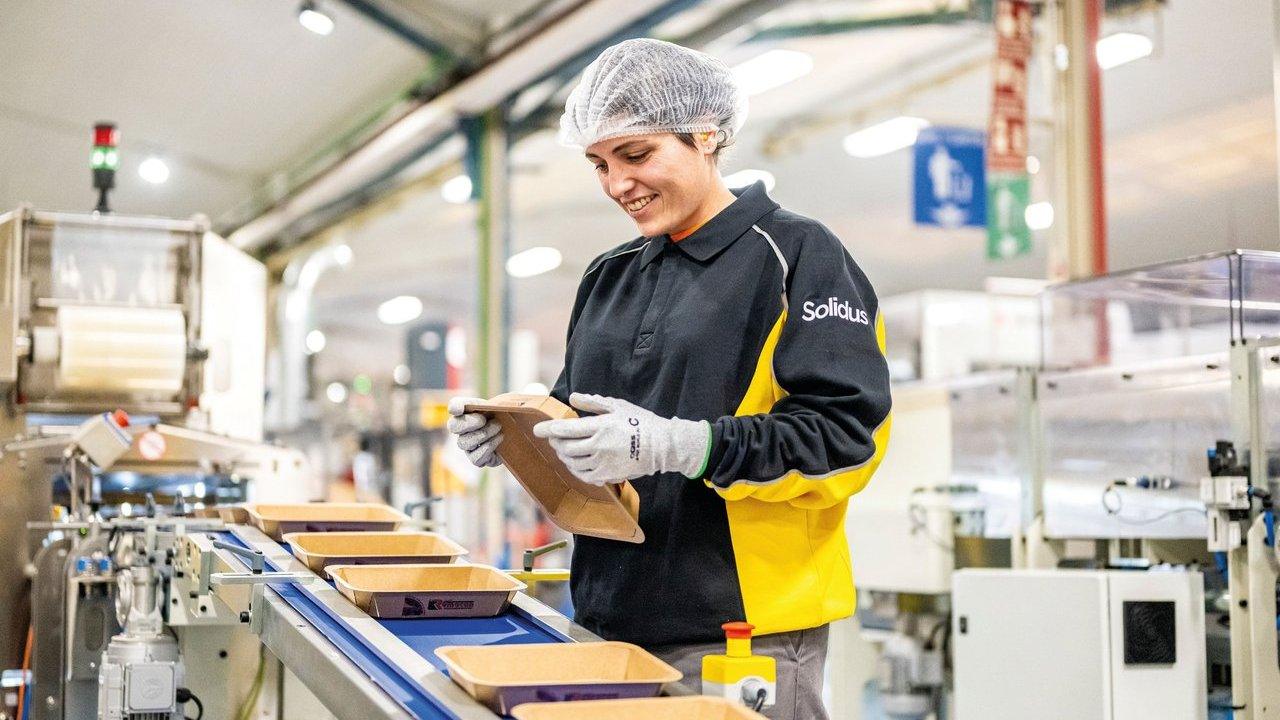
For food brands, this offers a route to pair reduced plastic use with a packaging format designed around established paper and plastic recycling streams. The tray’s recovered-fibre composition also places fibre content at the centre of the product rather than treating it as a secondary material feature.
Supply Chain Compatibility
Solidus has designed the MAP trays to operate across the food value chain, from packing and sealing through to storage, transport, retail and foodservice. Compatibility with standard tray-sealing equipment means producers can integrate the trays into existing packaging lines with minimal adjustments.
The moisture-resistant solid board construction is intended to maintain strength and stability during storage, transport and cold-chain distribution. That resilience is important for ready meals, which may move through refrigerated or frozen supply chains before reaching consumers.
The direct-heating capability also gives retailers and foodservice operators flexibility in how meals are presented and prepared. A single tray can carry the product through packing, distribution, shelf display, heating and serving, without departing from the protection associated with modified atmosphere packaging.
A Fibre Based Packaging Option
Futurline Heat&Eat expands Solidus’ ready-meal packaging offer with a format that addresses several requirements in parallel: food protection, shelf-life extension, heating convenience and reduced plastic usage. Its focus on microwave, oven and air fryer use reflects the variety of appliances consumers use to prepare ready meals at home.
By combining a fibre-based solid board tray with a separable barrier film, Solidus has created a considered alternative to conventional plastic MAP trays. For food businesses seeking packaging that can support product quality through the supply chain while giving consumers an easy heat-and-serve experience, Futurline Heat&Eat offers a notable new option.