The Florida Department of Environmental Protection reports that Florida collected about 19.4 million tons of construction and demolition debris in 2025. About 64% of that material was recycled. For homeowners planning a renovation, a dumpster booking is a chance to decide which materials can be kept in use and which need disposal.
Start by identifying what can be reused or recycled, then choose containers for the remaining waste and any materials that need separate collection. Because Fort Lauderdale’s bulk trash service excludes construction debris, homeowners arranging a residential dumpster rental in Fort Lauderdale should ask which local recycling facilities will receive their separated renovation materials.
Sort for Reuse and Recycling First
Think twice before throwing away old cabinets, doors, appliances, and fixtures. If they are still in usable condition, local donation centers or salvage stores may accept them. For bigger projects, removing these items carefully before demolition can help save materials that would otherwise be discarded.
A home renovation can leave behind plenty of material that does not need to go to a landfill. Metal, wood, and cardboard may be accepted at recycling facilities. Keep these materials separate where possible, and ask your dumpster provider if separate containers are available. Before booking, confirm the receiving facility’s accepted materials and sorting rules. Ask where each load will be taken, and follow the facility’s instructions so mixed-in waste does not make the recyclables unacceptable.
Choosing the Right Size for Sorted Waste
Estimate reusable and recyclable materials separately, then size the general-waste dumpster for what remains. Size any separate recycling container for the materials it will carry. Dumpsters are measured in cubic yards. Order too small, and you pay for a second haul; order too big, and you pay for space you never use. Here is a quick breakdown:
● 10-Yard: Holds roughly 3 pickup truck loads. Good for small bathroom remodels, garage cleanouts, or minor deck removal. Expect $200 to $400.
● 20-Yard: Holds about 6 pickup truck loads. Fits carpet removal, decluttering a few rooms, or roofing jobs up to 2,500 square feet. Expect $350 to $550.
● 30-Yard: Holds around 9 pickup truck loads. Built for major additions, large demolition, or a full house cleanout. Expect $450 to $700.
● 40-Yard: Holds close to 12 pickup truck loads. Meant for commercial work or big home rebuilds. Expect $500 to $800.
When you are stuck between two sizes, go up one. A larger container almost always costs less than a second pickup.
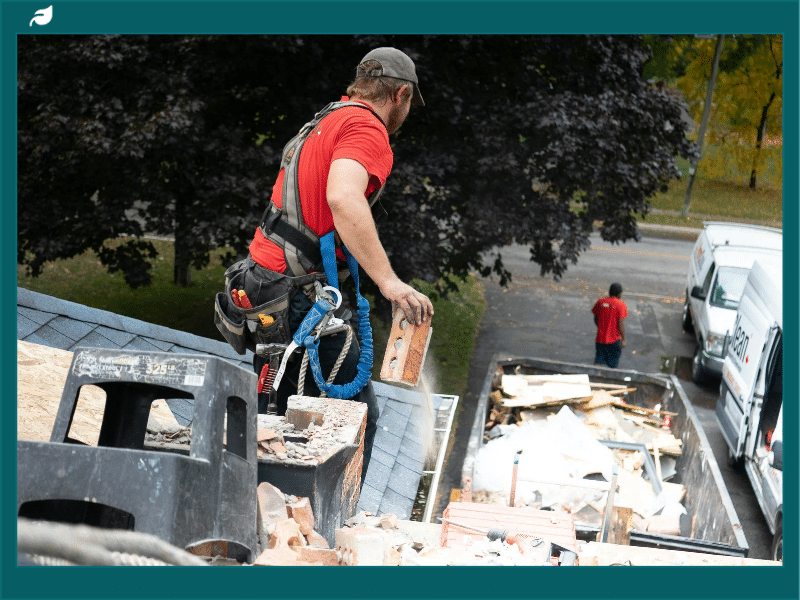
Heavy materials: Concrete, brick, and dirt can reach weight limits before a dumpster looks full. These materials are usually excluded from standard mixed-waste containers because of weight, not because concrete and brick cannot be recycled. For masonry work, ask about a dedicated heavy-debris or clean-fill container, confirm which materials can be loaded together, and arrange delivery to a recycler that accepts the load.
Know What You Cannot Toss
Haulers turn away certain materials because state and federal law says so, and slipping banned items in leads to steep fees. But there is another reason to pay attention to the restricted-items list: some materials can harm the environment if they end up in the wrong disposal site. Before you load anything, learn your local rules, including how electronics recycling is handled, since many states ban screens and devices from the trash. The usual banned list includes:
● Hazardous waste: Paint, stains, varnish, motor oil, pesticides, and chemical solvents are off limits.
● Appliances and electronics: TVs, computers, and refrigerators often need special handling. Fridges hold freon, which has to be removed by a pro.
● Tires and batteries: Car batteries and rubber tires do not belong in standard landfills.
Check with your dumpster provider before putting any of these materials in the container. Local collection facilities may have specific drop-off requirements, so it is better to find out before the cleanup begins.
Rental Periods, Weight, and Fees
Most agreements run 7 to 14 days, but the fine print is where the real costs hide. Every rental comes with a set weight allowance, often 2 to 4 tons, and going over it means paying an overage fee for each extra ton.
Timing matters too. If you need the container longer than planned, call before your pickup date and buy extra days, since waiting until the truck arrives costs more. It also helps to ask about flat-rate pricing upfront, where reliable companies fold delivery, pickup, disposal, and a weight limit into one number. Ask what disposal services are included as well, especially if you plan to separate recyclable materials.
Permits and Placement
Where the dumpster sits matters more than most people think. If you keep it on your own driveway or yard, you usually will not need a permit. Just choose a flat spot that is clear of low branches and power lines.
Things change once the container leaves your property. Dropping it on a street, sidewalk, or alley usually calls for a permit from your city office, with fees of $10 to $150 and approval taking a few days. And if you live under a Homeowners Association, call before delivery, since many neighborhoods limit how long a container can sit out front.
Prep the Drop Spot
A few minutes of setup protects your property and keeps delivery smooth. Lay plywood on your driveway so the metal frame does not scratch or crack the surface, and clear roughly 60 feet of straight-line space for the truck plus 22 to 23 feet of overhead room free of wires and branches. Before the driver arrives, move any cars, bins, or other obstacles out of the path.
Before delivery, set aside a separate area for reusable fixtures, cardboard, metal, and other recyclables. Keeping these items apart from general waste makes them easier to collect and handle properly.
The Bottom Line
Keeping renovation waste out of landfill starts before you book. Set aside reusable items, confirm recycling routes, and match each container to the materials it will carry. Read the weight and rental terms, keep banned items out, and clear a safe spot for drop-off. Ask for weight tickets or recycling reports where available to check how much material was diverted.