The Datai Langkawi has published its fifth annual sustainability report under The Datai Pledge, offering an unusually candid and data-driven look at how luxury hospitality can be a genuine force for environmental and social progress. At the center of the report is a focus on what the resort calls “solutions-led storytelling” – an approach that turns complex sustainability challenges into relatable, action-oriented narratives.
“Luxury travel should not just be about hotels that look after you – not when it can also mean supporting inspiring ways to look after everyone,” said Arnaud Girodon, Chief Executive Officer of Datai Hotels and Resorts. “Sustainability has never been a ‘nice-to-do’ for us – it’s just who we are.”
Solutions-Led Storytelling as a Sustainability Strategy
For Sustainable Business Magazine’s readers, The Datai Langkawi’s approach offers a practical case study in linking hospitality with measurable sustainability outcomes. Solutions-led storytelling, officially launched through the 2024 Impact Report, reframes traditional environmental reports by blending hard data with human stories. The strategy is designed to engage both the resort’s guests and broader audiences by presenting clear problems alongside visible solutions.
This year’s report highlights results across four pillars: Fish For The Future, Pure For The Future, Wildlife For The Future, and Youth For The Future. These initiatives encompass marine conservation, zero-waste strategies, biodiversity protection, and community education.
Marine Conservation Anchored in Data
Through its Fish For The Future pillar, The Datai Langkawi addresses marine ecosystem degradation by partnering with MareCet, Malaysia’s only NGO dedicated to marine mammal conservation. In the last year alone, 253 coral nubbins were planted in Datai Bay, marking a 58% increase since 2023. Additionally, five fish aggregating devices (FADs) have been deployed since 2019 to steer fishing activity away from vulnerable coral reefs.
The Datai team also facilitated 23 house reef surveys, including ghost net removals, and installed 22 reef stars designed to replicate the function of natural reefs. Guests are involved too, with 32 participating in coral conservation experiences.
Zero-Waste Operations: From Waste to Wealth
The Pure For The Future initiative focuses on circular economy principles, achieving a 96% solid waste processing rate at the resort. According to the report, 147 tons of food waste were redirected as animal feed, while 16,772 kg of fertiliser was produced from food waste – a 59.8% increase from 2023. An additional 9,588 kg of used cooking oil was converted into biofuel.
This pillar also supports local communities. The KanshaLife Project, a social enterprise partner, upcycled 10,862 recycled candles in the last year – a 111% increase from the previous year. The initiative specifically creates income opportunities for single women and widows in Langkawi, addressing gender disparities in the island’s job market.
Protecting Langkawi’s Rainforest and Wildlife
Langkawi’s rainforest biodiversity faces threats from habitat loss, illegal wildlife trafficking, and diminished appreciation for native species. The Wildlife For The Future pillar tackles these issues with a range of initiatives. Since January 2022, 5,960 saplings have been planted by the resort’s Native Tree Nursery, increasing the recorded tree species count to 153.
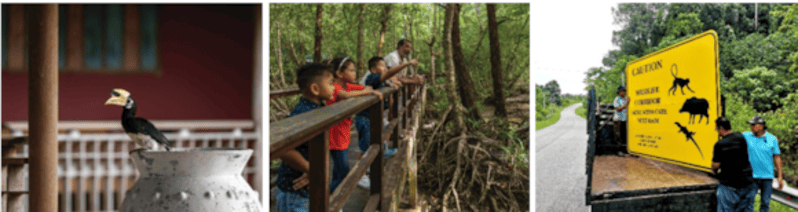
The report also notes that 857 stray dogs were spayed between 2022 and 2024 to reduce ecosystem disruption, while 1,500 mangrove saplings were planted along the Kubang Badak BioGeo Trail. A key focus has been supporting hornbill conservation by installing artificial nests and tracking predator movements using camera traps.
Investing in the Next Generation
Education plays a central role in The Datai Pledge through its Youth For The Future pillar. In 2024, 192 students and 53 teachers participated in six Eco-School projects endorsed by the United Nations. These initiatives range from teaching sustainable beekeeping practices to collaborating with the Young Reporters for the Environment programme.
The resort’s partnership with Green Growth Asia Foundation and RASMA under Dr Jane Goodall’s Roots & Shoots Malaysia illustrates its broader educational strategy. Ten volunteers participated in conservation education activities over the last four years.
Setting a Benchmark in Sustainable Hospitality
While many hospitality brands publish sustainability reports, The Datai Langkawi’s Impact Report stands out for its specificity and measurable outcomes. According to the report, its initiatives have avoided 187 metric tons of CO₂ emissions through waste management alone. The resort has earned multiple certifications, including ASEAN Green Hotel Standard Certification 2022-2024 and EarthCheck ECO Certification (Silver) for terrestrial tourism projects.
The growing trend of nature-positive tourism is backed by organizations such as the World Travel & Tourism Council (WTTC), which has highlighted the need for hotels and resorts to embed sustainability into their core strategies rather than treating it as a peripheral concern.
Beyond Carbon Footprints: Building a Brainprint
One of the more thought-provoking aspects of The Datai Langkawi’s approach is its emphasis on creating a “brainprint” alongside reducing its footprint. This concept refers to influencing guests, staff, and the wider community through shared learning and storytelling.
The Datai Pledge’s combination of transparent reporting, community engagement, and creative communication aligns with broader industry movements toward regenerative tourism. By investing in measurable, data-backed projects, the resort sets an example of how luxury hospitality can be part of the solution rather than the problem in sustainability conversations.
For readers tracking leadership in sustainable business practices, The Datai Langkawi offers both inspiration and tangible benchmarks. Its approach underscores that responsible tourism doesn’t just reduce harm – it can actively create positive environmental and social impact.