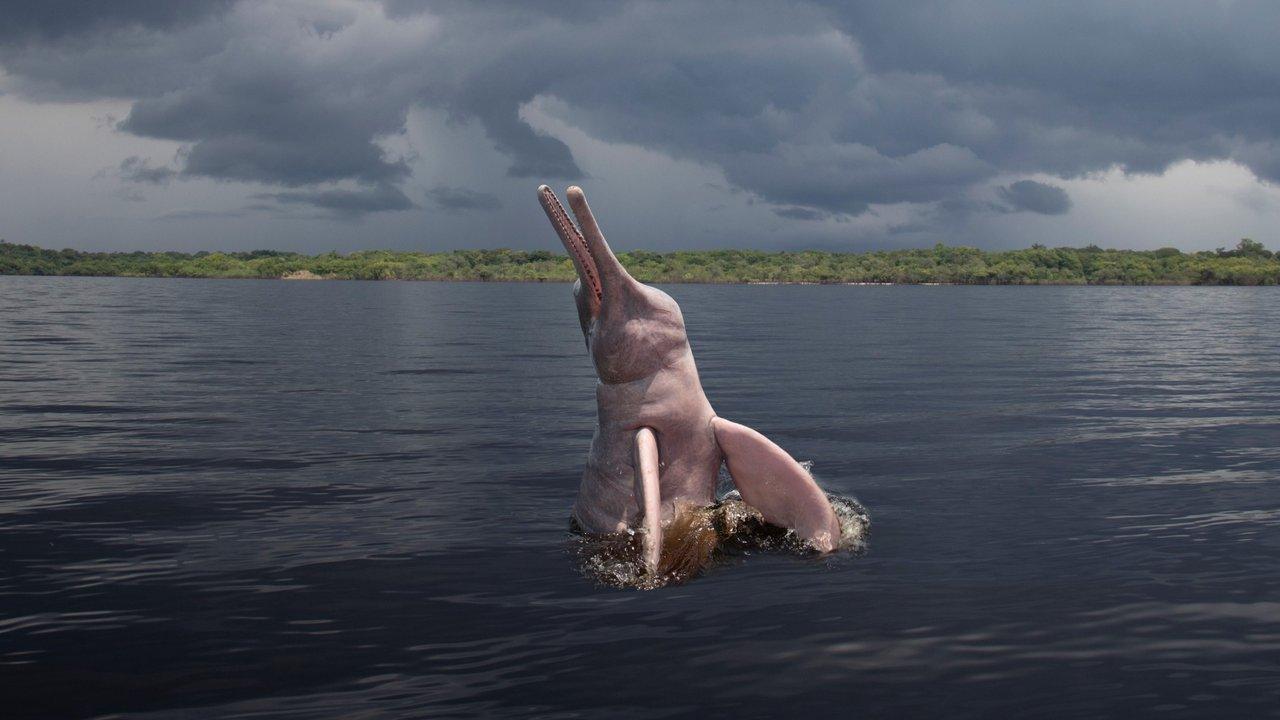
The Wildlife Conservation Society has reported the first documented evidence of the Amazon river dolphin, Inia geoffrensis, in Bolivia. Three records collected between 2025 and 2026 confirm the species’ presence in the Acre River basin in Pando, near Cobija. The findings, published in Neotropical Hydrobiology and Aquatic Conservation, combine audiovisual records with knowledge shared by local fishers. The discovery adds a new mammal species record for Bolivia and draws attention to the ecological links between the country’s river systems and the wider Amazon basin.
A New Record For Bolivia
The Amazon river dolphin is recognised for its pink colour and its ability to thrive in murky river waters. Until this study, research on river dolphins in Bolivia had focused mainly on the Bolivian river dolphin, Inia boliviensis, found in the Mamoré and Iténez river basins.
The Acre River forms part of the Purús basin and connects with the wider Amazon River system. Its location offers suitable conditions for Inia geoffrensis and gives researchers a clearer picture of river connectivity between Bolivia and Brazil.
Ximena Morales, Shimanú Amazon Conservation Program, said:
“It was a wonderful surprise for us, and we immediately recognized the importance of filming and photographing the dolphins for the City Nature Challenge,”
“This encouraged us to organize ourselves and interview local people, especially fishers. They were already aware of the dolphins and even had additional video footage, allowing us to confirm their presence in the Acre River. We hope this record inspires more people to participate in citizen science initiatives and, above all, helps promote conservation efforts along the Acre River.”
Citizen Science Builds The Evidence
The first record was made on 27 April 2025, during Cobija’s first participation in the City Nature Challenge. Two dolphins were observed in the Acre River near the Junín neighbourhood. Local fishers later provided two more records, one near Puerto Alto in November 2025 and another near the Frontera neighbourhood in May 2026.
This collaboration made local experience central to the research. Between May and June 2026, researchers interviewed 34 fishers from San Pedro, Junín and Brisas del Acre. Some had more than 30 years of fishing experience, providing observations on dolphin presence and sighting frequency alongside the videos and photographs.
Dr. Robert Wallace, Senior Conservation Scientist at Wildlife Conservation Society, said:
“This is an extraordinary discovery,”
“We are talking about a mammal that can weigh between 100 and 200 kg, depending on its age and sex, and which now represents a new species record for Bolivia. It highlights how much we still have to learn about the country’s extraordinary natural wealth and fantastic biodiversity. The fact that the discovery emerged through a global citizen science initiative seems almost poetic, emphasizing the role that all of us can play in science and conservation.”
Research Partnership In Pando
The study was carried out by researchers from the Shimanú Amazon Conservation Program, the Institute of Ecology at the Universidad Mayor de San Andrés, Juventud Proactiva de la Amazonia and the WCS Bolivia Program. Local fishers also contributed to the research.
The findings demonstrate the value of combining formal research with observations from people who work daily on the river. In a region where the species has been poorly studied, locally gathered evidence has helped establish a starting point for future monitoring.
Questions remain about the dolphins’ population size, movements and seasonal use of the Acre River. Further studies will be needed to establish whether the animals remain in the river throughout the year and how their presence relates to the surrounding Amazon river network.
Protecting The Acre River
Conserving the Acre River will be important for the newly documented dolphins and other species that rely on the ecosystem. The study identifies riverside forest protection, water quality and ecological connectivity across the basin as priorities.
The basin is shared by Bolivia, Brazil and Peru, making cross-border monitoring and scientific exchange especially relevant. Protecting habitat across this connected river system could support a stronger understanding of the species while maintaining the wider ecological value of the Acre River.
The discovery gives Bolivia a clear new conservation reference point. It also shows how community observations, citizen science and focused research can reveal wildlife records that might otherwise remain undocumented.