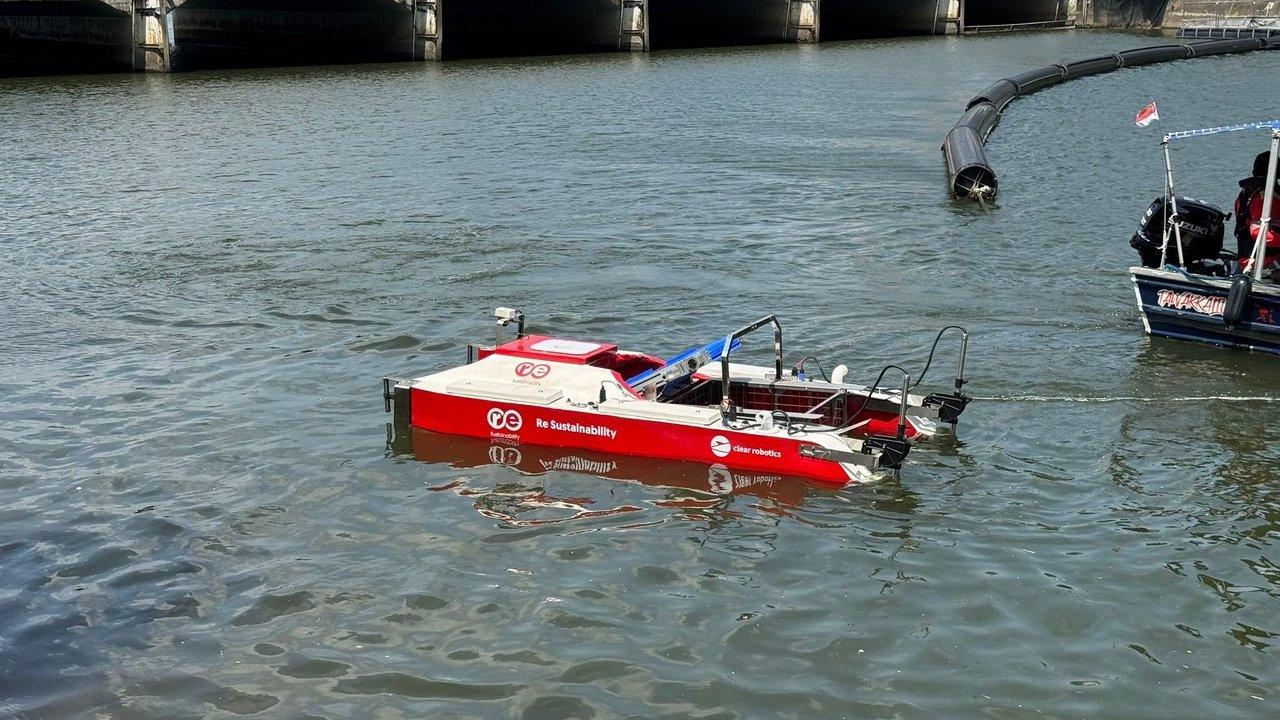
Clear Robotics and ReSustainability have deployed a 100% electric, semi-autonomous vessel for daily debris interception on Singapore’s Pandan River. The project replaces diesel workboats and changes a previously four-person operation into a dock-based role for one operator. Designed to prevent floating waste reaching open waters, the Clearbot Class 2 also applies AI post-processing to classify collected material for automated ESG reporting. The commercial deployment presents a practical combination of emissions reduction, worker safety and technology-enabled marine operations.
Pandan River Operations
The Pandan River project places an electric vessel in a routine waterway-management role, where it can intercept floating debris before it travels further downstream. Rather than requiring a crew to work from a diesel boat, the semi-autonomous system is operated from the dock, reducing the number of people exposed to operational risks on the water.
For ReSustainability, the deployment is intended to pair cleaner vessel operations with a different type of marine job. The operator role requires staff to work with technology while maintaining oversight of the collection process, offering an alternative to manual, crew-intensive activity.
Re Sustainability, said:
“The autonomous vessel enhances workplace safety by reducing exposure to operational risks, while equipping our workforce with opportunities to take on technology-enabled roles. This allows us to deliver smarter, cleaner and more sustainable waterway management.”
Data From Collected Waste
Beyond physical waste recovery, the Clearbot Class 2 is designed to create data from each collection. AI post-processing classifies the debris recovered from the river, producing information that can be used in automated ESG reporting.
This capability gives asset owners a means to connect day-to-day waterway maintenance with real-time records of collected waste. In a sector where manual collection has often been separated from reporting, the combination of vessel automation and digital classification can make environmental activity more visible and easier to document.
Clear Robotics positions the deployment as a commercial use of deep-tech aimed at regional labour constraints as well as decarbonisation requirements. The company’s approach centres on electric marine assets that can be adapted to distinct operational needs while reducing reliance on fuel-heavy workboats.
Commercial Marine Technology
The Pandan River vessel has been deployed in partnership with a Singapore-based startup, demonstrating how locally developed marine technology can enter operational service. The project also aligns with interest in smart port operations and lower-emission maritime activity.
Joshua Foong, Acting Head, PIER71™, said:
“Clear Robotics exemplifies how homegrown startups can transition from innovation hubs into commercial deployment, driving the maritime industry’s shift toward decarbonization and smart port operations,”

For the marine sector, the project offers a focused example of where electrification and semi-autonomy can be used beyond passenger or freight transport. Debris interception is a recurring maintenance need for waterways, and a dedicated electric platform may allow operators to address it with lower on-water staffing requirements and without diesel emissions from the vessel.
Fleet For Marine Tasks
Clear Robotics is developing a fleet of 100% electric semi-autonomous and autonomous boats for marine waste recovery, surveying and infrastructure management. Its stated applications also include water-quality surveys and weed clearing, reflecting a model based on deploying specialised assets across several marine-management tasks.
The company offers the platform through a Robots-as-a-Service model, supported by SGInnovate and other strategic investors. This approach is intended to make the technology available as an operational service, rather than requiring each customer to build its own robotic vessel capability.
Utkarsh Goel, Founder & CTO at Clear Robotics, said:
“The future of marine management is about replacing fuel-heavy, single-purpose boats with a versatile fleet of zero-emission assets tailored to any challenge,”
Utkarsh Goel, Founder & CTO at Clear Robotics, said:
“Whether it’s waste recovery, water quality surveys, or weed clearing, we offer a proven commercial platform that solves the labor shortage, protects workers, and eliminates carbon emissions.”
A Safer Operating Model
The Pandan River deployment brings together several operational priorities in one project: eliminating diesel vessel emissions, recovering floating debris, reducing crew exposure and generating usable data from waste collection. Its dock-based operator model also signals how marine employers can create technology-enabled roles as automated equipment becomes part of routine service delivery.
For Clear Robotics and ReSustainability, the daily operation provides a concrete test of whether electric semi-autonomous vessels can support cleaner, safer waterway management at commercial scale. By pairing collection hardware with AI-enabled reporting, the project gives environmental asset owners both a practical collection tool and a clearer record of the materials removed from the river.