The role of nature’s greenest metal in the energy transition
On the journey to Net Zero, electricity is our main tool, and the backbone of our electrical system is copper. In this interview with Sustainable Business Magazine, Bruno De Wachter (BW) and Fernando Nuño (FN), representatives of the International Copper Association and members of the advisory board of international electrical engineering trade show, CWIEME Berlin discuss the challenges facing sustainable use of this ancient metal and why, without copper there can be no Net Zero.
WHY IS COPPER SO IMPORTANT TO THE ELECTRICAL SYSTEM? WHY NOT SOME OTHER MATERIAL?
BW: There are several reasons that copper is the go-to metal for electrical applications. It’s the second most conductive known metal after silver, and more conductive than gold, but the scarcity and price of these two precious metals make them unsuitable for the millions of tonnes required for a global energy network. Copper’s physical properties, such as its ductility and resistance to corrosion make it ideal for countless components like cables, connectors and coils. Lastly, it’s the 25th most abundant element in Earth’s crust and it can be recycled without any significant loss of quality.
FN: Today, more than two thirds (70 per cent) of modern copper production is earmarked for electrical applications. Copper is involved at every stage of the electricity system: generating it, transferring it and using it. Humans have been working with this metal for thousands of years and demand is growing.
WHY IS DEMAND GROWING?
BW: As we move away from fossil fuels and electrical infrastructure develops to replace them, we’ll naturally need more megawatts of power to meet demand. But a side effect of the green energy transition is that each megawatt of electricity end use will be more copper intensive than fossil fuel alternatives.

The main reason is that renewable electricity generation is much more dispersed than conventional thermal generation from fossil fuels, making it more material intensive. For example, each wind turbine of 1 to 5 MW has its own generator, while a coal fired thermal power plant has one generator of typically 400 MW. A more dispersed generation also means that the grid for transferring electricity from where it’s made to where it’s needed must expand.
In addition, generating electricity from sustainable sources is often weather-dependent. While coal can burn nearly 24/7, wind power needs a consistent breeze and solar power only works during the daytime. To compensate for natural low-output periods, we’ll need extra production capability and storage to keep up with demand, meaning more copper for more renewable energy systems. This is another reason why we need a stronger grid: the better all sites of generation and consumption are interconnected, the easier it becomes to tap the electricity from where it is available at that moment.
FN: Generation is one thing, but Net Zero means decarbonising energy at the other end of the chain too: the end user. Carbon-free end-use energy on the roads, for instance, means more electric vehicles, but each requires 2-3 times more copper than an internal combustion engine powered vehicle.
BW: Clean electricity will be the largest consumer of copper by 2040, but copper is also used for some of the non-electrical systems that aid the transition to Net Zero. For example, as an excellent thermal conductor, copper is often used in heating and cooling systems, such as those found in heat pumps, which are playing a major role in reducing fossil fuel use for heating.
Finally, the quest for energy efficiency itself is copper intensive. According to Joule’s law, energy lost as heat in an electrical wire is proportional to resistance and resistance is inversely proportional to wire diameter — so the thicker a copper cable is, the less energy is wasted as heat and therefore the more efficient the system is. This includes the windings of transformers and electric motors. Essentially, the more copper we use in each application, the more energy we save.
IS THERE ENOUGH?
FN: The short answer is yes. Enough resources exist to support the energy transition and meet society’s needs. The question is whether we can extract that copper quickly enough to align with current targets. The International Energy Agency has published two scenarios for future copper demand.
The Stated Policies Scenario (STEPS) is based on what governments have already pledged to do and the more aggressive Sustainable Development Scenario (SDS) is based on reaching Net Zero by 2050. Both scenarios see annual copper demand increasing to 40 Mt by mid-century (from around 26 Mt nowadays), either in 2050 for STEPS or 2040 for SDS.
In the past, the drivers for copper demand were population growth, electrification deployment and electricity usage. Today, it is the green energy transition and improving global standards of living. At present, we have about 41 years’ worth of copper reserves — copper in the ground at operational mines — and up to 250 years’ worth of predicted, but currently unexploited resources.
Surprisingly, the number of years’ worth of copper reserves has been roughly the same for decades. Just like with oil, the scarcer it becomes, the more effort goes into finding more. If growth continues at historical rates and copper production increases in line, as it has done for over 100 years, we don’t need to worry about running out. Meanwhile, changes in the way we produce copper are being introduced.
HOW DOES THE INTERNATIONAL COPPER ASSOCIATION HELP ITS MEMBERS IMPROVE SUSTAINABILITY?
BW: There’s no denying that copper mining has an impact on the environment. Thankfully, it produces less emissions than it helps to avoid, but the impact can be reduced, and work is being done.
The International Copper Association is deeply committed to helping its members achieve greater sustainability through several key initiatives. One of the significant ways we do this is by establishing a pathway to net-zero emissions. This pathway provides long-term predictability on how copper supplies are decarbonised, ensuring that our members can align their operations with global sustainability goals.
FN: Additionally, we’ve developed best practice guidance on greenhouse gas (GHG) measurements. This guidance enhances transparency and comparability across the industry, making it easier for our members to benchmark their performance and identify areas for improvement. You can find more details about this guidance on our website.
BW: We also focus on monitoring and modelling copper stocks and flows. This approach helps us understand the availability of recycled copper streams, their origins and the role of mining and fabrication flows. Such insights are crucial for optimising the use of recycled copper and reducing the reliance on primary copper production.
FN: Strategic partnerships are another cornerstone of our sustainability efforts. We collaborate on initiatives like the Grid Efficiency and Resilience (GEAR) project and United for Efficiency (U4E) with the United Nations Environment Programme (UNEP). These partnerships aim to enhance the efficiency and resilience of electricity grids in emerging markets and promote the adoption of energy-efficient appliances and equipment.
HOW DO THESE INITIATIVES BENEFIT THE COPPER INDUSTRY AND THE ENVIRONMENT?
BW: These initiatives not only help reduce the environmental impact of copper production but also enhance the sustainability of the entire supply chain. By improving the efficiency of copper usage and promoting recycling, we can significantly lower the carbon footprint of the industry. Moreover, the adoption of energy-efficient technologies supported by ICA’s partnerships contributes to broader environmental goals, such as reducing global greenhouse gas emissions.
FN: For instance, our efforts in developing policy roadmaps for energy-efficient appliances in several African countries help ensure that the growing demand for electricity is met sustainably. Projects like GEAR and U4E are pivotal in driving these changes, creating a more resilient and efficient electrical infrastructure that supports the global energy transition.
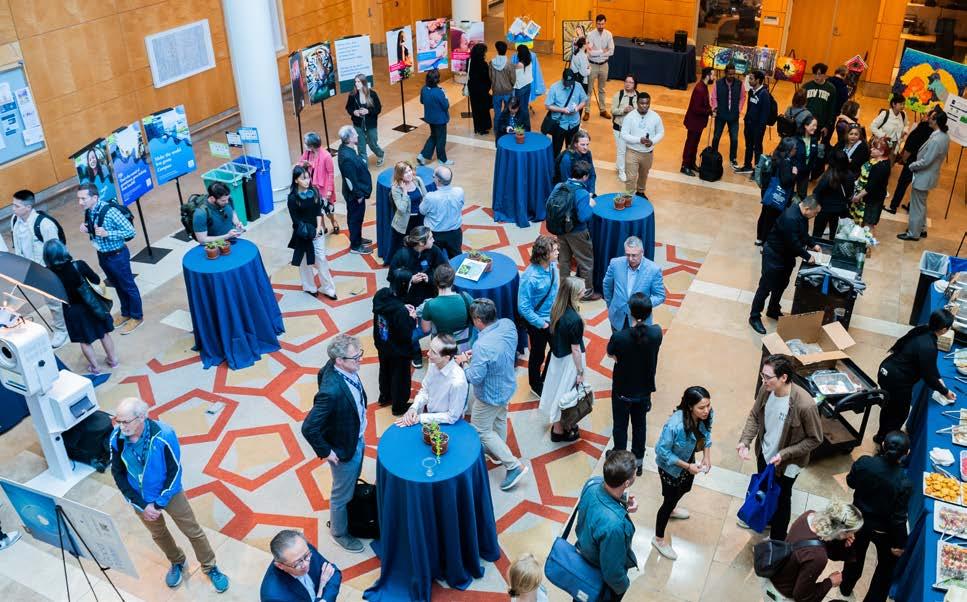
BW: International collaboration and sharing of ideas and expertise at events like CWIEME Berlin can also help the industry collaborate and do its part to maximise the benefits of copper use and reduce the environmental impact of copper production.
Currently, mining existing resources for primary copper is essential. In fact, without mining there can be no Net Zero. While zero impact mining is impossible, mining must be responsible — a careful balance of economic, environmental, political and social challenges.
Humans have been using copper to make life better for thousands of years and, with the right approach, we can continue using it for thousands more — perhaps its greatest era is still to come.