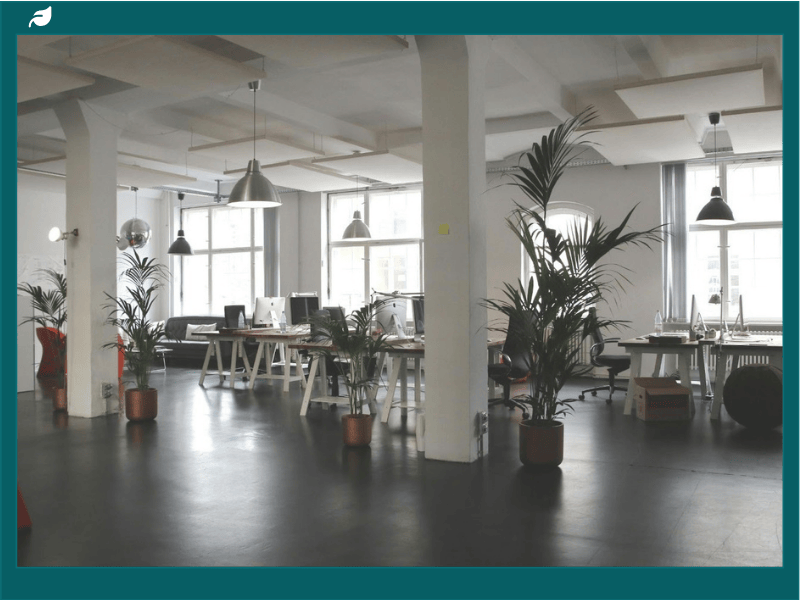
An office fitout usually begins with a quote for new furniture. It is worth starting earlier, with an honest look at what the business already owns and still uses. Fitouts can create waste when orders are bigger than needed, pieces do not suit the space and usable furniture is replaced anyway. Some of that can be reduced at the planning stage.
Start with an inventory
Walk the whole space and list every desk, chair, storage unit, meeting table and screen. Record the quantity, the condition and where each item sits. Note which chairs are uncomfortable, which drawers stick and which tables are in good order but badly placed.
Sort the list into four groups: keep where it is, move to another area, repair or refurbish, and replace. Only the last group is a genuine purchasing need. The sustainability ideas for furniture published by Australia’s Department of Climate Change, Energy, the Environment and Water, written for Commonwealth buyers, take the same view. It says the most sustainable product is the one you did not buy. Before procuring, it suggests regular audits to repurpose redundant furniture, extending the life of current products through upgrades or refurbishment, and sharing arrangements that reduce the quantity needed.
Measure before you buy
Measure the floor, then plan around how people work. Decide which teams need to sit together, where calls and meetings happen and how much storage is actually used. Furniture ordered for an imagined layout is more likely to be the wrong size or the wrong quantity.
Test the plan against a normal week rather than the busiest day. If a team is in the office three days out of five, shared desks may serve it better than one desk per person. A scaled layout also shows how many workstations fit, whether aisles stay clear and whether larger pieces will pass through doors and lifts on delivery day.
Choose for a long working life
Durable, adaptable and modular are easy words to put on a quote and harder to check, so turn them into questions. Can worn parts such as castors or gas lifts be replaced? How long is the warranty? Can the pieces be reconfigured when teams change? Will matching items still be available next year?
The same government guidance suggests looking for products designed with fewer parts or quick disassembly, which makes repair, refurbishment and recycling easier, and for products that are high quality and built to last. It also ranks the evidence behind environmental labels: third-party ecolabels first, then Environmental Product Declarations, then third-party certified claims. A supplier’s own uncertified description is not on that list.
Be specific about environmental claims
The Australian Competition and Consumer Commission recommends that businesses avoid broad terms such as “green”, “environmentally friendly” and “sustainable”. It describes “sustainable” as overly general, because it risks leading consumers to think a product, service or business only uses resources at a rate that will not contribute to environmental harm. Buyers can apply the same test to what they are told. If a product or fitout is described as sustainable, ask which material, which evidence and which conditions the description depends on.
The same discipline applies to your own reporting. The ACCC says claims need clear evidence behind them, and that independent, scientific evidence is the most credible. A fitout is easier to defend when you can say what you did, such as how many existing workstations were kept and how many items were redeployed, than when you rely on a general label.
Buy in stages and coordinate the work
Where headcount or layout is uncertain, buy what is needed on day one and leave other areas until the team has used the space. Over-ordering leaves furniture sitting unused, which becomes the next disposal problem. Staging has a trade-off, because later batches may differ in finish, so ask whether a range is likely to continue.
Coordination matters as much as quantity. Layout, supply, delivery and installation are often split between separate parties, and the gaps between them produce wrong sizes, duplicate orders and rework. Businesses that do need to buy can look for a supplier that runs the whole sequence. In Melbourne, one option to consider is office fitout furniture from Rose Office Furniture. Rose describes itself as a family-run Melbourne supplier since 1959, and says its fitout service covers layout planning, furniture supply, delivery and installation for projects from a single desk to a full commercial fitout. Whichever supplier is chosen, ask who confirms the measurements, what happens if an item arrives damaged or wrong, and who removes the packaging.
Plan for the furniture you remove
Decide where displaced furniture goes before the fitout begins. Victoria’s Environment Protection Act 2017 sets out a waste management hierarchy, which EPA Victoria publishes as an order of preference, so far as reasonably practicable: avoidance, reuse, recycling, recovery of energy, containment and, last, waste disposal. EPA Victoria adds that it is better to avoid generating waste than to manage its consequences, and that landfill is the least preferred option.
For office furniture, the federal guidance sets out end-of-life options in order of preference. Create an on-site repository of furniture for reuse, then donate unused or refurbished items to other organisations. Next, prefer suppliers with take-back schemes, checking that the scheme is active and accessible in your location. After that, repair or refurbish existing furniture, then recycle through a service that offers disassembly, with landfill as the last resort.
The order matters because recycling options are narrow. The guidance says that unless furniture is wholly metal, plastic or untreated timber, it is not recyclable in Australia, and that furniture which cannot be reused, repaired or upcycled goes to landfill. Confirm in advance that a charity, school or community group will accept the items, and agree collection dates before the fitout programme is fixed.
Keep a short log of what was kept, moved, repaired, donated, resold, recycled and sent to landfill. The log shows whether the plan worked and gives the next fitout a baseline.