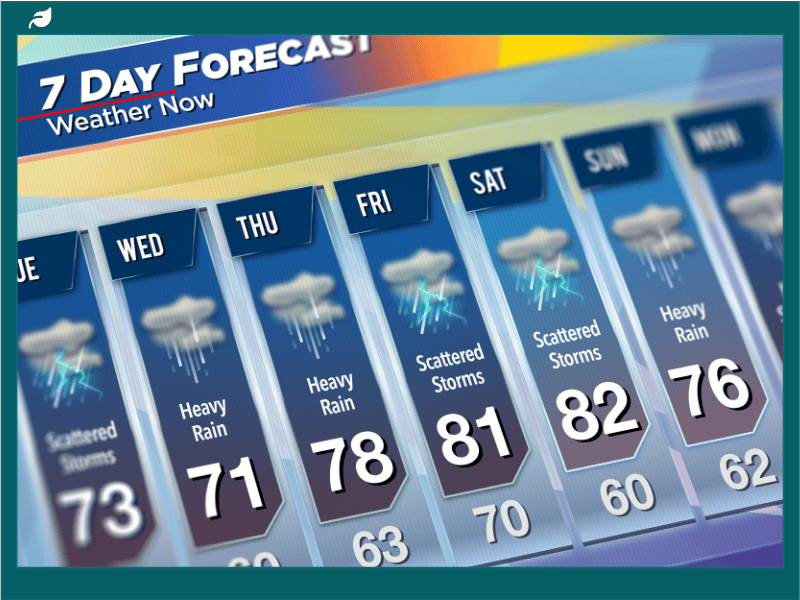
Climate unpredictability is no longer a future challenge—it’s a daily concern for today’s businesses. Floods, heatwaves, and storm events are increasing in both frequency and intensity, often disrupting supply chains, operations, and energy systems with little warning. Between 2020 and 2023, economic damage from extreme weather in Europe alone averaged about €44.5 billion per year, more than double the losses of the previous decade, a trend linked to intensified heat, floods, and droughts.
At the same time, companies are under growing pressure to align with sustainability goals, meet ESG targets, and future‑proof their practices. To keep up with these demands, sustainable businesses are turning to a new kind of support: AI‑powered weather forecasting.
Unlike traditional forecasts, which offer broad, short‑term insights, these AI‑driven systems deliver location‑specific, real‑time weather intelligence that helps companies plan smarter, act faster, and operate more efficiently.
In this article, we explore how AI‑enhanced forecasting works, how it differs from conventional tools, and the key ways it helps businesses make more sustainable, climate‑resilient decisions.
What Is AI-Powered Weather Forecasting
AI-powered weather forecasting refers to advanced systems that use artificial intelligence, machine learning, and vast climate datasets to generate precise, adaptable forecasts. These tools process real-time sensor data, satellite imagery, and historical trends to detect emerging weather shifts and deliver insights businesses can act on.
Unlike traditional models, AI forecasting improves continuously. It learns from past anomalies, adapts to local conditions, and delivers location-specific predictions tailored to operational needs. There are now platforms and tools that help understand how the weather will affect supply chains, infrastructure, workforce safety, and resource management.
In fact, trusted tools like AskWeather.ai are built specifically for sustainable business use. Alongside hyperlocal forecasts and predictive dashboards, it offers:
- Real-time risk alerts based on region and industry
- Scenario planning tools that simulate weather impact
- Seamless API integration for automating climate responses within existing systems
- A user-friendly interface that turns complex data into clear, timely decisions
Instead of vague forecasts, these tools empower businesses to respond with precision, plan smarter, and stay ahead of climate disruptions.
How AI-Powered Weather Forecasting Helps With Business Planning?
AI-powered weather forecasting isn’t just about knowing tomorrow’s temperature, but about turning climate data into real-time, strategic decisions. Here’s how it actively supports smarter business planning across key areas.
1. Anticipating Extreme Weather to Minimize Disruption
As extreme weather events become more common, the ability to forecast them with precision has become essential. AI forecasting tools give businesses earlier and more accurate warnings of storms, floods, snow, or heatwaves—helping them shift operations before the worst hits.
For example, logistics companies can use predictive alerts to reroute deliveries, avoid road closures, or reschedule shipments before disruption occurs. This not only protects drivers and goods but also helps reduce fuel waste caused by delays or detours.
AI-driven alerts also support internal planning. Office closures, remote work shifts, or shutdowns of outdoor sites can be coordinated proactively, instead of reactively. Over time, this minimizes losses, supports employee safety, and reduces the carbon footprint of last-minute adjustments.
2. Optimizing Renewable Energy Operations
In the renewable energy space, weather isn’t just a background factor. Instead, it is central to daily output. Solar, wind, and hydro systems all depend on consistent environmental conditions. But with increasing climate variability, sudden cloud cover, low wind days, or unseasonal droughts can significantly disrupt energy generation.
That’s where AI-powered weather forecasting makes a measurable difference. These systems analyze environmental data in real time and deliver accurate, location-specific forecasts that help energy managers stay one step ahead.
With AI forecasting, renewable energy providers can:
- Predict dips in solar or wind output several hours—or even days—in advance
- Adjust grid contributions dynamically to maintain supply balance
- Schedule downtime or repairs during periods of low production
- Optimize energy storage systems to reduce overuse or waste
- Improve load forecasting for smarter energy distribution
These forecasts help providers deliver clean energy more reliably by minimizing downtime and stabilizing production. This strengthens customer trust and supports broader sustainability goals like decarbonization, grid efficiency, and responsible resource use.
3. Supporting Climate-Smart Agriculture
In agriculture, weather determines everything, from planting and irrigation to harvesting and pest control. But shifting climate patterns have made farming more unpredictable and resource-intensive.
AI forecasting tools provide farmers with tailored insights into local weather risks. They can predict rainfall timing, temperature fluctuations, and even humidity shifts that may affect crop health.
Armed with this data, agricultural businesses can water crops more efficiently, reduce reliance on chemical treatments, and time their planting or harvesting for optimal yield. This leads to less resource waste, lower emissions, and more resilient food systems—all key components of long-term sustainability.
4. Improving Construction and Infrastructure Resilience
Construction firms and infrastructure planners need weather data to avoid delays, protect workers, and build climate-resilient structures. But static forecasts can fall short when working across multiple locations and timelines.
AI-based forecasting gives site managers advanced notice of wind conditions, precipitation, extreme heat, or frost, all of which can affect build quality and scheduling. Materials can be adjusted based on environmental stressors. Worker safety protocols can be updated based on real-time alerts.
Over the long term, this data supports better infrastructure design by helping planners understand weather patterns in specific regions—allowing for smarter site selection, drainage design, or material choice. The result? Projects that are both more efficient and better prepared for the future climate.
5. Reducing Resource Waste Through Better Timing
One of the most powerful aspects of AI forecasting is its ability to support precision timing. Instead of over-producing, over-staffing, or over-scheduling “just in case,” businesses can make leaner, data-driven decisions.
For example:
- A manufacturing plant might delay a shipment to avoid storm-related spoilage.
- A retailer may adjust inventory based on heatwave-related buying patterns.
- A farm might reduce irrigation ahead of unexpected rain.
These small shifts add up. Less energy use, fewer materials wasted, and more efficient staffing—all of which align with ESG metrics and sustainability KPIs. Better timing helps businesses reduce emissions without compromising output.
Conclusion
AI-powered weather forecasting is quickly becoming a key tool in sustainable business planning. With the growing impact of climate change, organizations can’t afford to rely on outdated or overly generalized forecasts.
Online platforms are helping close the gap by providing accurate, timely, and business-relevant weather insights that drive smarter choices across sectors. From energy and agriculture to infrastructure and logistics, this kind of predictive intelligence is proving essential for companies that want to thrive in an uncertain climate.
Planning smarter starts with knowing what’s ahead. With AI-enhanced weather tools, sustainable businesses can lead with confidence, resilience, and responsibility.