Overview of Arizona’s Salt River Lakes Expansion
In 1911, workers closed the last gate on the Theodore Roosevelt Dam, and the dry ground behind it started filling with water. Within months, land that had grown nothing but cactus and mesquite was irrigated farmland. That’s a hard thing to pull off in a state that gets most of its water from snowmelt and a handful of rivers. It’s also the entire reason the Salt River Lakes exist.
More than a century later, Arizona is expanding that same system, and the way it’s being done tells you a lot about what it actually takes to keep a desert state growing without running dry.
You don’t build a water system like this once and walk away from it. So the Arizona Salt River Lakes expansion, led by the Salt River Project, is really just the newest chapter in a century-long balancing act. Get water to farms, cities and taps. Keep the lakes and rivers healthy enough for the wildlife that depends on them. The dams and reservoirs along the Salt River are managed for more than water supply and hydropower, too; Salt River Project notes that flood control is part of the job as well, with operations carried out in coordination with the U.S. Bureau of Reclamation.
Do both while Arizona’s population keeps climbing and rainfall stays exactly as unpredictable as it’s always been. None of that happens by accident, and none of it happens quietly, not with this many stakeholders watching every move. Here’s how the pieces actually fit together.
SRP itself dates back to 1903, and it’s carried the job of managing the state’s water and power resources ever since. That’s a long time to keep a single mission intact, and the organization has had to keep modernizing just to hold the line: canal systems that carry water to both urban and rural communities don’t stay efficient on their own, and neither does a network of dams built decades apart under very different engineering standards. Every upgrade has to answer the same question the last one did. Does this get water where it needs to go without hollowing out the desert around it.
That question gets harder to answer every year, as Arizona’s population keeps rising and its winters keep delivering less snowpack than the system was originally built around. Engineers today are working with the same rivers the original builders had, but with a smaller and less reliable snowmelt supply feeding them, which means every gallon has to be tracked and moved with far more precision than it once needed to be.
The Role of SRP in Managing the Expansion
SRP sits at the center of all of it, and its job really is two jobs at once: keep water moving to the people who need it, and keep the ecosystems around that water intact. The organization modernizes the infrastructure doing the heavy lifting, from the dams themselves to the canal networks that carry water out to cities and farms, and it tries to do that without treating environmental preservation as an afterthought bolted onto the end of a project once the engineering decisions are already locked in.
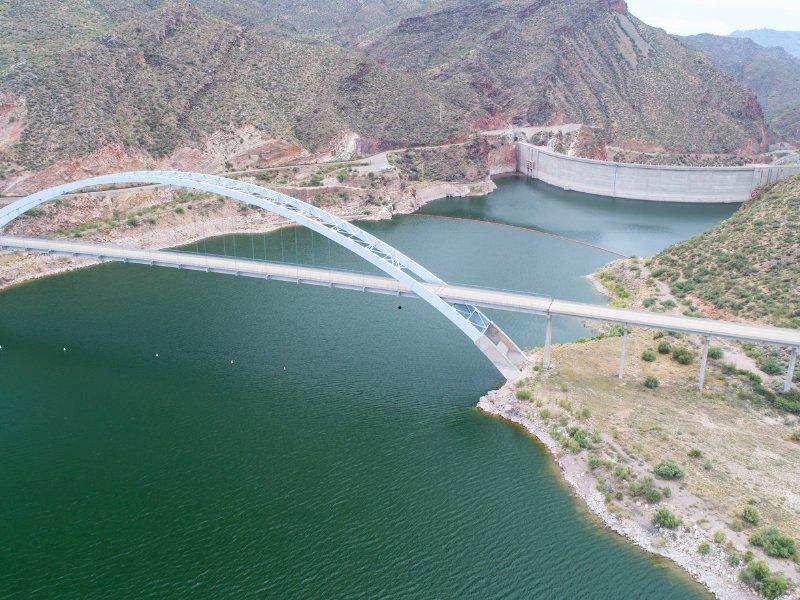
Roosevelt Dam is the clearest example of what this looks like in practice. Since the early 1900s it’s supported the state’s water supply and backed the growth of Arizona agriculture, and it’s still doing both jobs today. But building a dam means building a reservoir, and a reservoir changes everything downstream and around it. SRP’s answer has been to work directly with environmental partners rather than treat wildlife impact as somebody else’s problem, folding advanced technology, renewable energy and real community engagement into how it runs the whole system.
None of it happens in isolation, either. SRP works alongside federal and local entities, and that collaboration is what lets it manage water resources in a way that actually benefits the environment and the community rather than pitting one against the other. Educational programs and public engagement initiatives round out the picture, building the kind of community support and awareness that keeps a century-old water strategy workable instead of merely historical. Without that public buy-in, even the best engineering plan tends to stall the moment it meets a budget vote or a drought year that forces hard tradeoffs.
Historical Context of the Roosevelt Dam
Roosevelt Dam went up between 1905 and 1911, and it wasn’t built for prestige. Arizona needed reliable water management and irrigation, and fast, because agriculture and the growing cities around it couldn’t afford to wait. Engineers picked its spot on the Salt River deliberately, choosing a location that would let them control water flow and guarantee a steady supply for both farms and communities. They built it to last, too, using materials sourced from the rugged terrain nearby, and that durability is exactly why the dam is still standing more than a hundred years on, largely unchanged in its basic footprint even as everything managed around it has changed completely.
It didn’t stay the same dam the whole time, either. Over the following decades, crews heightened and reinforced its walls, which boosted storage capacity and strengthened its role in flood control at the same time. The U.S. Bureau of Reclamation records that the modification project carried out between 1989 and 1996 raised the dam by 77 feet, increasing its storage capacity by 20 percent and adding dedicated flood-control space to the reservoir. Roosevelt Dam isn’t just an engineering story, though. It’s tangled up with the history of Phoenix itself, and it embodies something bigger: the tenacity of early settlers who looked at the Salt River and saw a way to turn arid desert into fertile land.
When the dam was finished, the state celebrated, and rightly so. It marked a genuine turning point, one that reshaped where and how people could farm, live and build across the entire valley. Today, ongoing maintenance and upgrades keep it meeting current environmental and operational standards, and the partnership between SRP and government bodies is what keeps a century-old structure relevant to a distinctly twenty-first-century problem, one the original builders never had to plan for at all.
Impact of Dam Construction on Desert Reservoir Environments
Here’s the tension nobody gets to skip past: build a dam in a desert region and you’re going to reshape habitat, full stop. Species that evolved for arid conditions suddenly have a lake where there used to be dry ground, and that disrupts life cycles and migration patterns in ways that take real, careful management to offset. It’s not a footnote to the expansion. It’s a core part of what SRP has to manage every single day, and it doesn’t get easier just because the dam has been standing for a hundred years.
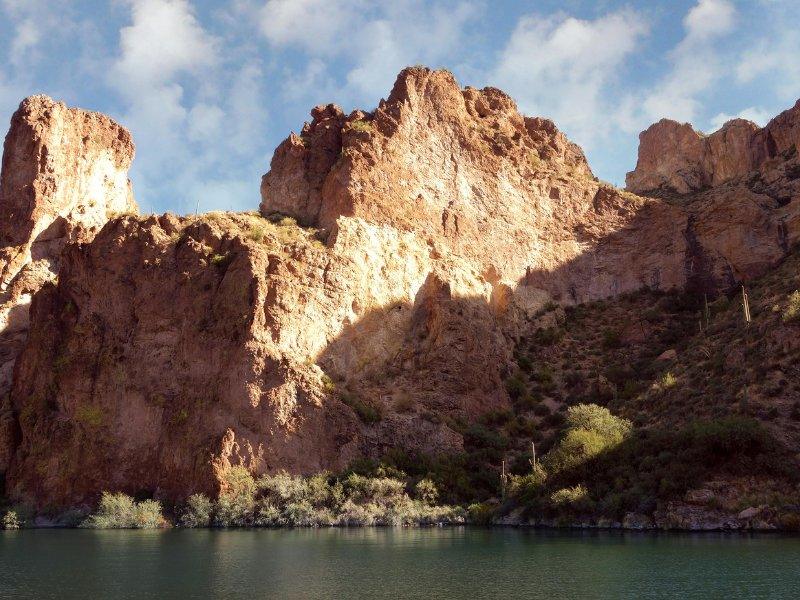
SRP oversees the reservoirs this creates, including Horseshoe Lake and Apache Lake, and it treats area wildlife as a genuine priority rather than an inconvenience, something that’s easy to skip in large-scale water projects and hard to walk back once it’s been skipped. The organization partners with environmental groups to limit the damage and support biodiversity, and it keeps real environmental monitoring running rather than checking a box once and moving on. As Arizona’s climate keeps shifting and precipitation gets more erratic, that balance only gets harder to hold, and it only gets more necessary to hold well.
Environmental Considerations for Local Wildlife
Change the flow of a river and you change its temperature, and that hits native fish populations directly. That’s why fish ladders and similar interventions exist: without them, migration simply doesn’t happen the way it used to before the dam went in. Reservoir expansion brings its own separate problem, too, in the form of increased sedimentation, and that doesn’t stop at the fish. It works its way up from the smallest invertebrates to the birds that depend on these waters for food and shelter, and a change at the bottom of that chain eventually shows up at the top of it.
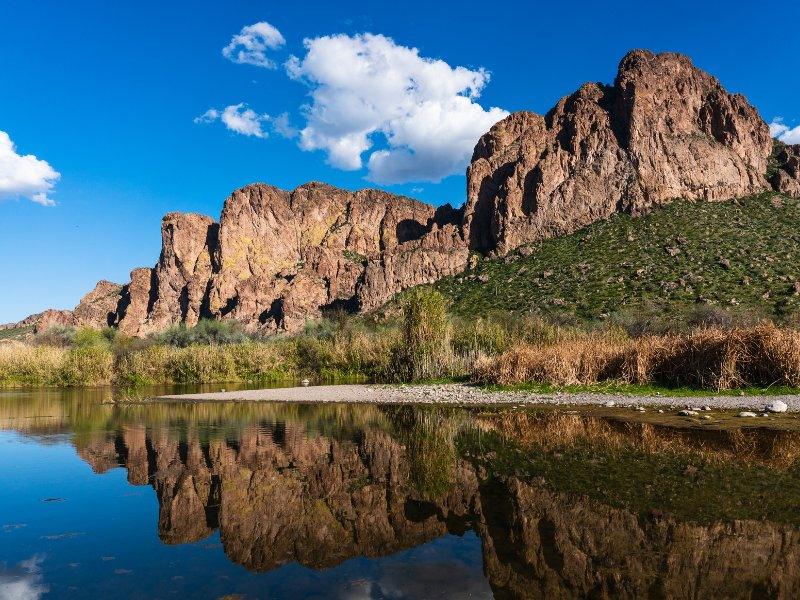
None of this is unsolvable, though. Enhancing shoreline vegetation gives nesting birds somewhere to go and gives smaller animals real shelter, and restoring native plant species does double duty: better soil stability and better water quality, both of which ripple out to support the wildlife sharing this stretch of desert with a dam. Dams can serve human needs and still leave room for a functioning ecosystem. It just doesn’t happen without deliberate work, done in the right order.
Get the sequencing wrong, plant vegetation before you’ve stabilized the shoreline, say, and the work has to be redone from scratch at real cost, so SRP treats these projects as long, layered efforts rather than one-off fixes it can check off a list.
The Balance Between Water Supply and Recreation
Reservoirs like Apache Lake and Horseshoe Lake are doing double duty for people too. They supply water to a growing population, and at the same time they’re recreational destinations that draw locals and tourists alike, year after year. Boating, fishing, hiking: these aren’t side benefits. They matter to the regional economy and to quality of life, and Arizona’s arid climate means water supply still has to come first when the two priorities collide, even when that’s an unpopular call to make.
That’s where things get complicated. Water levels rise and fall based on operational needs, and when they do, it directly affects how accessible and usable these recreational spaces are for the people counting on them. Managing that well takes real planning and honest communication with the people who use these lakes, not just a press release after the fact once the water’s already dropped. SRP’s approach includes designating specific zones for recreation and adapting facilities as water levels change, alongside public engagement programs that explain why conservation matters in the first place, before people start asking why a boat ramp suddenly doesn’t reach the water anymore.
Get that balance right and a lake serves the water system and the community at the same time. Get it wrong and you lose people’s trust in the system fast, and trust is a much harder thing to rebuild than a boat ramp. A ramp stranded above a dropping shoreline or a marina that can’t open on schedule does more damage to public confidence than most agencies realize until it’s already happened, which is exactly why SRP treats communication about water levels as part of the infrastructure itself, not an afterthought bolted on once decisions are already made and the water’s already moved.
The Role of Lakes in Arizona’s Ecosystem
Saguaro Lake, Apache Lake and the rest of the Salt River Lakes aren’t single-purpose infrastructure, and it would be a mistake to treat them that way. Each one is simultaneously a water resource, a recreation spot, and a habitat for species that have nowhere else to go in this stretch of desert. That’s a lot of weight to put on one body of water, and it’s exactly why community initiatives and organizations like SRP keep pushing sustainable practices rather than treating any single one of those roles as the only one that counts. Lose sight of any one of those functions and the other two suffer along with it, since a lake stressed past its ecological limits can’t reliably keep supplying water or supporting recreation either, no matter how well engineered the dam behind it is.
Importance of Power Generation in Water Management
Hydropower is one of the more overlooked parts of this whole system, and it deserves far more attention than it usually gets. The Salt River and its reservoirs, Saguaro Lake and Apache Lake among them, generate a renewable energy source while also helping regulate the river’s flow, which means the same released water is doing double duty: producing electricity and keeping the broader ecosystem in balance at the same time, without needing a second source of water to do either job.
The timing of these water releases isn’t arbitrary, and it never has been. It’s calculated to optimize power production while keeping reservoir levels where wildlife habitats and recreational users need them to be, week to week and season to season. That precision is what keeps power generation from working against the very ecosystems the reservoirs support. Even the hardware has been rethought with this in mind: modern turbines are built to be more fish-friendly, cutting down on harm to aquatic species that migrate through dammed stretches of river that once posed a hard barrier to them.
Pair that with public campaigns connecting clean energy to environmental health, and you get a system where generating power and protecting the river aren’t pulling in opposite directions anymore. It’s a quieter kind of innovation than a new dam or a bigger reservoir, but it’s arguably done more to reconcile power generation with river health than any single piece of infrastructure built in the last few decades, precisely because nobody notices it working when it’s working right.
How Community Initiatives Support Lake Preservation
None of this holds together without the people who live near these lakes actually showing up for them, year after year, not just when there’s a crisis. Grassroots education and outreach efforts, public seminars, workshops and lake clean up events all add up to something real: measurable improvements in ecological health and water quality that wouldn’t happen through top-down management alone, no matter how well funded that management is. When people feel a sense of ownership over a lake, they act differently around it, and that shift in behavior is worth more than any single policy handed down from above.
Partnerships with environmental organizations extend that further, focusing on habitat restoration, invasive species management and water quality monitoring that meets real scientific standards rather than a vague promise of care. One approach worth calling out specifically is the participatory management model, which puts local input directly into decisions about water and power use. It’s not symbolic. It genuinely changes outcomes by making sure the people affected by a decision get an actual say in it, rather than hearing about it after the fact.
Citizen science programs push this even closer to the ground, with local volunteers gathering water samples, reporting changes in biodiversity and tracking how climate variation is affecting these lakes over time, one data point at a time. That kind of engagement does two things at once: it produces useful data, and it deepens the relationship between communities and the water they depend on for everything from drinking supply to weekend recreation. Arizona isn’t the only place that could learn from this model. It’s the kind of approach other regions facing similar pressure could reasonably copy, and some already are.
What makes it work is that none of these programs ask residents to trust an agency’s word alone. They hand people the actual tools, water sampling kits, biodiversity tracking sheets, a direct line into decision-making meetings, and that transparency is what turns a policy into something a community will actually defend when budgets get tight and someone proposes cutting it.
Future Prospects for the Salt River Project
SRP isn’t coasting on a century of engineering history, and it can’t afford to start now. As Arizona faces rising demand for water in a changing climate, the organization is leaning into strategies built for what’s coming next rather than what already worked a generation ago. That means advanced sensor technology and real-time data analytics that can actually predict water availability and optimize storage capacity across the Salt River Lakes, instead of reacting to shortages only after they’ve already started to bite.
Big Data and IoT devices are doing a lot of the work here, letting SRP monitor water levels, anticipate shortages before they hit, and coordinate the timing of releases, all without compromising the ecosystem that depends on those same waters for survival. This is a shift from managing a water system reactively to managing it with real foresight, and that shift matters more every year the climate gets less predictable and less forgiving of mistakes. A dry winter that once meant scrambling to adjust releases after the fact can now be modeled weeks or months out, giving SRP room to plan storage and distribution before a shortage actually forces the issue and starts costing people water they were counting on.
Innovations in Sustainable Dam Management
Renewable energy is becoming a bigger part of how dam operations run day to day, with SRP exploring solar and wind to support the infrastructure directly rather than leaning solely on hydropower the way it once did. Hybrid systems that pair hydropower with solar power cut reliance on fossil fuels and reduce greenhouse gas emissions while still guaranteeing an uninterrupted energy supply, which is exactly the kind of tradeoff that used to feel impossible to pull off at this scale.
The ecological side hasn’t been left behind either. Restoring native vegetation around reservoir perimeters gives birds and insects habitat they’d otherwise lose, and innovative fish passage solutions paired with sediment management techniques help native fish species keep thriving along these watercourses instead of getting cut off by the very infrastructure meant to serve everyone else who lives here. SRP keeps this connected to the public too, partnering with educational institutions and inviting community participation in reservoir stewardship programs, because a water strategy that only lives inside an agency’s own walls doesn’t hold up long term, no matter how sound the engineering behind it is. Put together, these innovations aren’t a side initiative bolted onto the main project.
They’re the model SRP is building toward: a system that can adapt to climate uncertainty and still meet the state’s water needs, and one that other regions dealing with the same pressures might reasonably want to copy for themselves.
The expansion of the Arizona Salt River Lakes through dam construction carries real potential to strengthen water resources and support ecological balance, but that potential only pays off if the environmental impacts on local habitats and wildlife get assessed honestly and mitigated deliberately, not treated as an afterthought once the concrete’s already poured and the reservoir’s already filling. Taken the right way, these initiatives can deliver a dependable water supply for Arizona’s communities while still protecting the fragile ecosystems that desert reservoirs support alongside them. Balancing human need against environmental stewardship isn’t a one-time decision you get to make and move past. It’s the ongoing work that will decide whether the Salt River Lakes stay a working resource and a natural haven for the many decades still to come.
Roosevelt Dam proved more than a century ago that a desert state can build storage capacity without sacrificing the land around it, and the current expansion is really the same wager made again, with better tools, sharper data and a lot more people watching closely to see if it pays off the same way it did the first time.