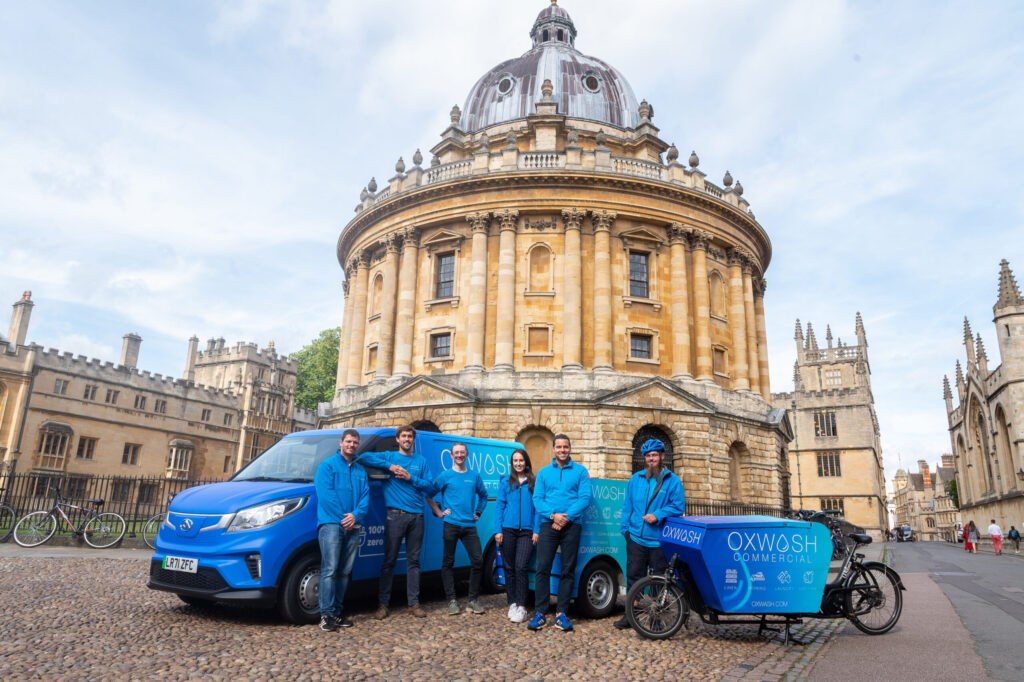
By 2023, an on-demand laundry service provider aims to be a net-zero company, aiding the United Kingdom’s goal of becoming carbon neutral by 2050.
The on-demand laundry service, named Oxwash, was founded in 2018 by former NASA scientist Dr Kyle Grant with a business model that would create a convenient laundry service for both businesses and individuals while limiting the negative effect that some laundry models can have on the planet.
In the UK, washing and drying a load of laundry every two days creates around 440 kg of carbon dioxide emissions every year. One T-shirt on its own emits at least 15 kg of carbon dioxide over the course of its lifetime.
Oxwash have therefore committed to being carbon neutral for Scope 1 and 2 emissions by 2022, with the aim to be net-zero for Scope 3 carbon emissions by the following year.
The on-demand laundry service uses ozone technology to sterilise fabrics at lower temperatures, thermal and biodegradable chemical processes to achieve higher disinfection, as well as dissolvable laundry bags, and electric cargo bikes for hyper local pickups and deliveries.
“Our biggest barrier to achieving carbon neutrality with our laundry operations is the natural gas we burn in our tumble dryers,” said Tom de Wilton, Chief Sustainability Officer of Oxwash.
“The price of electricity combined with the time taken to dry large quantities of textiles using electricity makes this a prohibitively expensive option.
“We are working on several patented inventions to improve the efficiency of electrical drying to allow us to make the important jump from gas to renewable electricity as our primary heat source.”
Oxwash has been selected by the growth platform, Tech Nation, as one of their cohort members, as well as being spotlighted by 40 specialists, ranging from climate specialists to representatives from Google and the National Grid.
In the future, the on-demand laundry service plans to raise investment to continue developing their IoT connected lagoons (dry and wet cleaning hubs), in order to maximise the amount of water and carbon dioxide emissions saved in their washing processes.