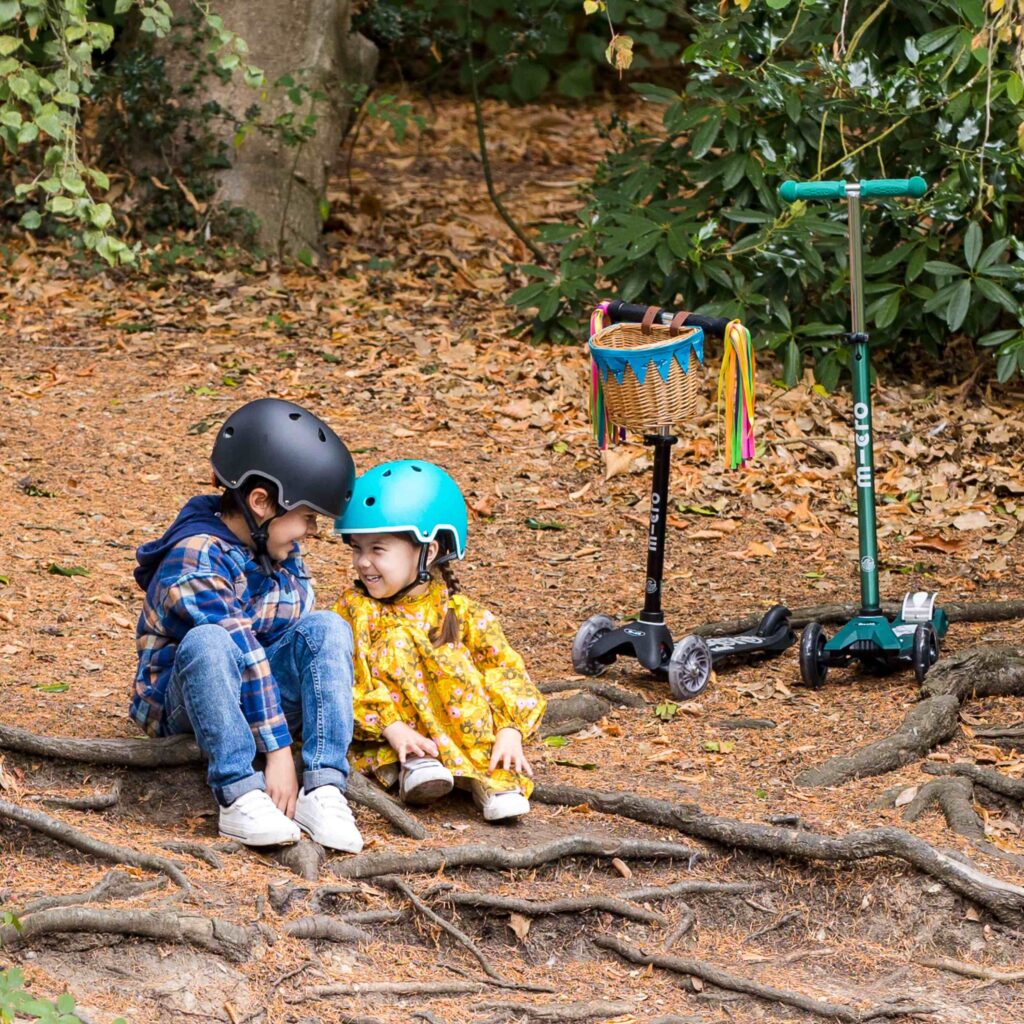
In 2004, Anna Gibson and Philippa Gogarty started selling Swiss-made Mini Micro scooters at the school gates.
Twenty-plus years later, over one million UK children scoot to school on a Micro every single day. Micro Scooters are renowned for premium, impeccably engineered scooters for kids and adults. They are also at the forefront of the micro-mobility movement, revolutionising the school run with their three and two-wheel scooters and encouraging adults to scoot the commute.
Micro was extending the lifecycle of its scooters and designing a product with ‘circularity’ in mind before it became a buzzword or a headline for sustainability campaigns. Nor has Micro been complacent in recent times, with a concerted effort to grow its sustainable manufacturing capabilities and decrease the carbon footprint of a Micro Scooter, gaining B Corp and Carbon Neutral certifications along the way.
Here’s a deeper dive into the craftsmanship, sustainability, and innovation that goes into each Micro scooter.
Sustainable manufacturing capabilities.
Micro’s manufacturing processes are multi-faceted. They are also the most significant contributor to their carbon footprint. Where they can, however, they’ve made a start. With their range of 3in1, Mini and Maxi scooters made with decks using discarded maritime plastic and a range of accessories made by transforming ocean plastics into rPET – recycled polyester yarn, which now make up over 50% of their accessory range (excluding helmets).
Approximately 10% of plastic waste in the oceans derives from fishing. Each year, an estimated 640,000 tons of rope, net and other fishing equipment are left behind in the oceans. The plastic on Micro ECO Scooters is manufactured from sections of this waste, which is collected in landfills and then recycled. The material used for the Micro ECO Kids Scooters are not so-called “ghost nets”, which are fished out of the ocean, but rather discarded and obsolete fishing equipment, ropes, trawl nets, etc., that have been used for fishing across the world and would have ended up in the sea if not disposed of in the appropriate dumps.
More recently, they introduced an Eco Sprite, their first eco 2-wheeled scooter, featuring sustainable cork handle grips, plastic made from discarded fishing equipment and finished with water-based paint, and a new and improved eco range of helmets.
Ensuring an extended lifecycle.
Every Micro Scooter is designed to last multiple generations. Central to this is a suite of replaceable parts, which means every Micro can be revamped, repaired, and given a new lease of life instead of ending up in landfills. Every Micro Scooter is made with the highest-quality materials designed to last. Every Micro Scooter is the result of brilliant engineering, which means any damaged or worn parts can be easily removed and replaced.
Micro goes the extra mile to encourage and support customers to extend the life of their scooter. From a steady stream of scooter maintenance advice and instructional videos (their YouTube channel hit 7M+ views this year) to free video calls with one of their very own Micro engineers. From practical support to keep your scooter running smoothly – such as expert advice and engineer calls. To easy ways to revamp your scooter and pass it on.
And then there is ScooterAid…
Micro’s pioneering scheme of rehoming used scooters enables children in need to enjoy the many benefits of scooting while ensuring each scooter has the most extended possible life. The premise is simple. Every Micro Scooter is built using replaceable parts. So, when a child has outgrown theirs, send it back to Micro, and they’ll do the rest. Specialist scooter engineers will recondition the old Micro Scooters and rehome them with children across the UK who otherwise would not have the opportunity to scoot. Every preloved scooter donated is another child helped. Micro partner with the charity In Kind Direct to get the scooters to the charities and community organisations that need them the most.
So far, Micro’s customers have helped bring the scooting feel-good factor to thousands of children nationwide, refurbishing and distributing 4,161 scooters and counting.
Micro’s sustainable business approach aligns eco-friendly products with advocacy for behaviour change and the results speak for themselves – more people getting from a-b in a greener, cleaner healthier way.