Fashion for Good has launched the Cotton Reloop Matrix Project, a cross-industry initiative intended to help bring recycled cotton yarns into commercial use at greater scale. Convened with partners Arvind, BESTSELLER, C&A, Interloop, Reformation and Shahi, alongside ecosystem partner Uster, the project will map and physically validate commercially available recycled cotton yarns against brand specifications. Its work will examine the relationship between quality, price and recycled content, giving participants a shared view of the material trade-offs involved. The project arrives as cotton accounts for 19% of global fibre production and remains a central material in apparel supply chains.
A Shared Reference Point
The Cotton Reloop Matrix Project responds to a practical gap between recyclers, spinners and brands. Recycled cotton yarns are assessed through separate data sets, often without a common reference point that can compare available materials against the requirements set by brands.
Fashion for Good’s project will create that comparison through both mapping and physical validation. Rather than treating recycled cotton as a single material category, the work will assess commercially available yarns in relation to their recycled content, quality characteristics and price.
This approach can give participating businesses clearer evidence when selecting yarns for specific applications. It also places material performance alongside commercial considerations, recognising that yarn selection depends on more than recycled-content percentages alone.
Mechanical Recycling Limits
Mechanical recycling remains an important route for turning cotton-rich textile waste into recycled cotton yarns and fabrics. Other recycling pathways can use cotton-rich textile waste feedstock, but do not produce a cotton output, making mechanical recycling a key part of the available material system.
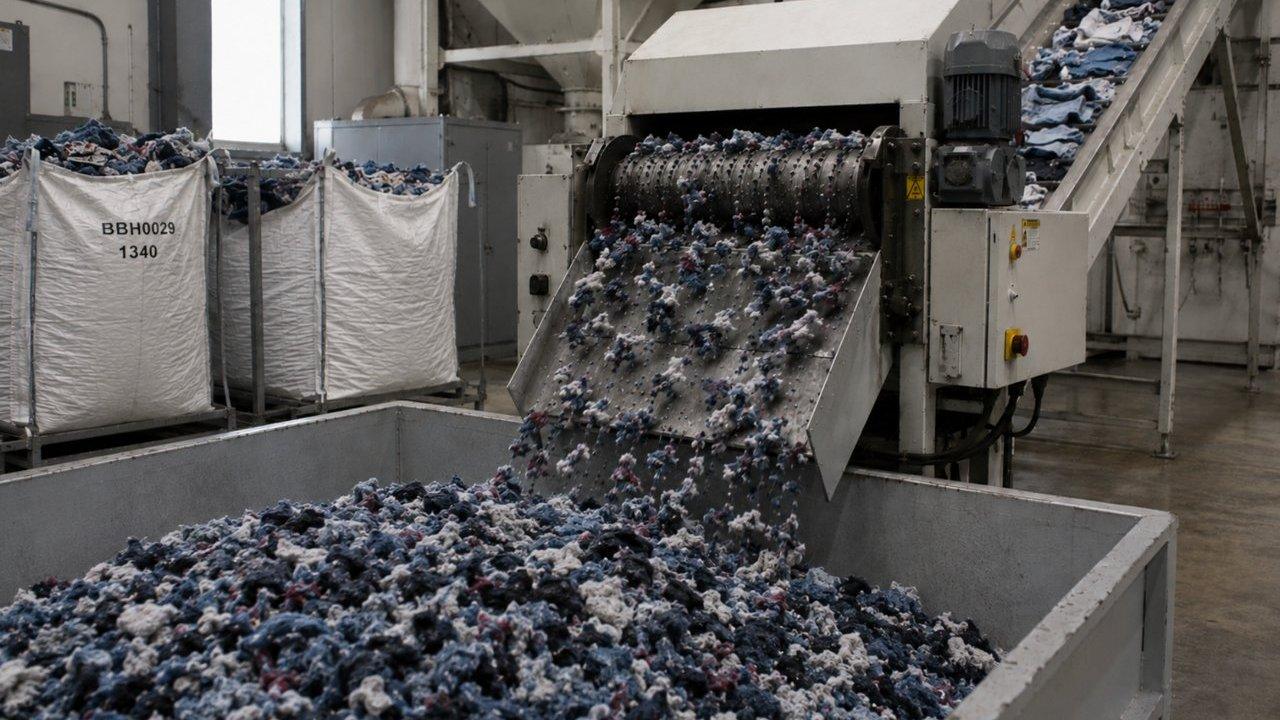
During mechanical recycling, textile waste is shredded and re-opened into loose fibres before being respun into yarn. This process shortens and weakens fibres. Only 45 to 50% of the original input remains usable, while the balance is lost as short fibres and processing waste.
The surviving recycled fibres are shorter than virgin cotton fibres, which restricts the share that can be blended into new yarn. In many cases, yarns are capped at around 10% recycled content because higher proportions can prevent fabric from meeting commercial durability requirements.
Fit For Purpose Materials
The project identifies a need to move beyond comparisons with 100% virgin cotton. Brands can assess recycled blends against virgin-cotton standards, but that comparison does not always reflect the realistic performance profile of recycled fibres or the requirements of the intended product.
A fit-for-purpose assessment can instead match recycled yarns to product applications that suit their characteristics. Where higher performance is needed, the project points to targeted quality augmentation pathways as part of the route to wider use.
This distinction matters for companies seeking to integrate more recycled cotton while maintaining appropriate performance levels. Recyclers may have capacity available, yet brands still need reliable information on how materials will perform, what they cost and where they can be used effectively.
Cross Industry Validation
The project brings together brands, manufacturers and a yarn-testing ecosystem partner to address those questions through a common process. Arvind, BESTSELLER, C&A, Interloop, Reformation and Shahi will participate with Fashion for Good, while Uster joins as ecosystem partner.
Physical validation is a notable part of the initiative. It moves the discussion beyond broad claims about recycled cotton by assessing yarns against brand specifications, which can help participants identify where current commercial materials align with product needs.
The resulting overview is intended to make the available choices easier to compare. It can also help identify the points where quality, recycled content and price create constraints, allowing brands and suppliers to make decisions from a clearer shared evidence base.
Supporting Recycled Cotton Adoption
Recycled cotton presents a direct opportunity to use textile waste as feedstock for new yarns and fabrics, but technical limits have made higher-content blends difficult to adopt at scale. The Cotton Reloop Matrix Project focuses on the material evidence needed to address that challenge within existing commercial conditions.
By connecting recycling realities with brand specifications, the initiative offers a structured way for the sector to assess where recycled cotton can perform today. Its emphasis on realistic application, validation and shared data reflects the practical work required to increase recycled material use across apparel supply chains.