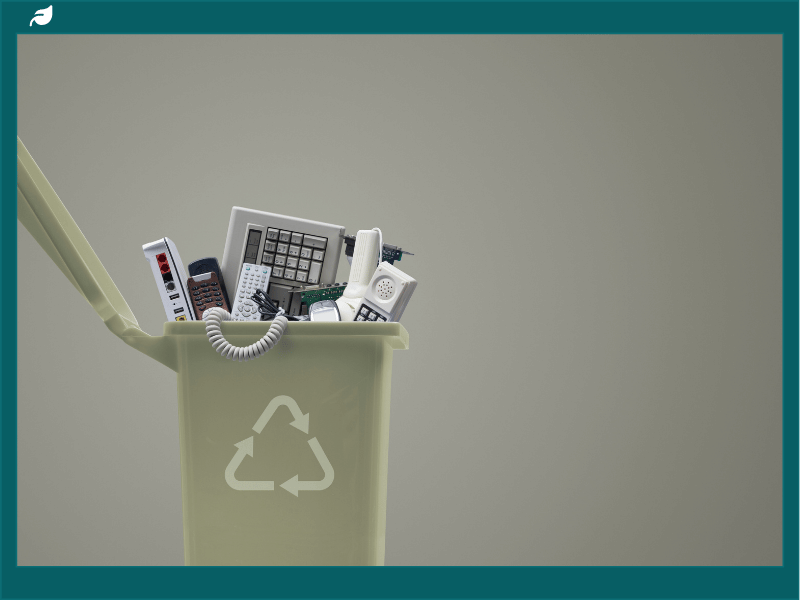
Every sales team has them. The leads that went cold two years ago, the duplicate contacts nobody ever merged, the bounced email addresses still clogging up the pipeline. They don’t cost anything obvious, so nobody bothers clearing them out. But every one of those dead records gets stored, synced and backed up across data centres that already eat up around 1.5% of global electricity. Now multiply that by the millions of businesses running bloated CRMs, and you’ve got a sustainability problem that most people don’t even think about.
So let’s break down why sales databases balloon so quickly, where this overlaps with data protection law, and what a simple annual clean-up can actually do for your carbon footprint, your compliance posture, your pipeline accuracy and your energy bills.
Nobody Gets Rewarded for Deleting Records
CRM bloat is a cultural problem more than a technical one. Sales reps get trained to fill the funnel, not trim it. A lead that hasn’t replied in eighteen months still looks like potential on paper, and deleting it can feel like admitting defeat. Managers don’t ask how clean the database is. They ask how many contacts are in it.
So the outcome is predictable. Over time, CRMs fill up with records that serve no commercial purpose: old trial signups, contacts who’ve changed jobs twice since they were imported, CSV uploads from events that happened before the pandemic, freebie downloads from people who were never actually interested. And these records don’t just sit there quietly. They get synced to email tools, pulled into automation workflows and counted in reports that end up overstating your actual pipeline.
The GDPR Angle Most Teams Overlook
There’s a legal side to this too. Two principles under GDPR Article 5 apply directly to CRM bloat. Article 5(1)(c), the data minimisation principle, says personal data should be limited to what’s necessary for the purpose it was collected. Article 5(1)(e), the storage limitation principle, says you shouldn’t keep personal data in an identifiable form for longer than you need it. If someone enquired about your product three years ago and never responded again, keeping their name, email and phone number in your CRM will be hard to justify under either standard.
Most companies know about GDPR in theory but treat their CRM as somehow exempt in practice. Running a retention review once a year will close that gap and shrink your database at the same time.
How to Pick a System That Makes Hygiene Easier
Not every CRM handles data hygiene the same way. Some platforms make deduplication, retention rules and bulk archiving easy to set up and automate. Others bury those features deep in admin settings or charge extra for them. If you’re choosing or switching CRMs, it’s a good idea to compare how each one handles data models and admin overhead. Comparison resources like GTM Tools break down those differences across rival platforms, which is exactly where hygiene capabilities tend to live.
The bigger point here is structural. A CRM that makes it easy to flag stale records, merge duplicates and enforce retention policies will stay cleaner over time than one that technically allows it but needs a consultant to configure.
A Once-a-Year Clean-Up That Serves Three Goals
You don’t need a complex data governance programme. A single annual routine can cover privacy, emissions, sales performance and reporting accuracy in one pass. Archive or delete any contact that hasn’t engaged in twelve months. Merge duplicate records. Remove bounced email addresses and incomplete entries.
A smaller database means fewer sync cycles, less storage, lower energy use and more accurate reporting. You’ll also have a defensible answer if the ICO ever comes knocking about your retention practices.
Clean Data Is a Sustainability Win Most Businesses Miss
CRM data waste doesn’t show up in carbon reports, and that’s exactly why it sticks around. But the fix is low effort and high return. One annual clean-up and a clear retention policy will cut your stored data, tighten your compliance and give your sales team a pipeline that actually reflects reality.